Greek Salad With Feta and Olives – Bright, Crunchy, and Refreshing
· Samantha Jones
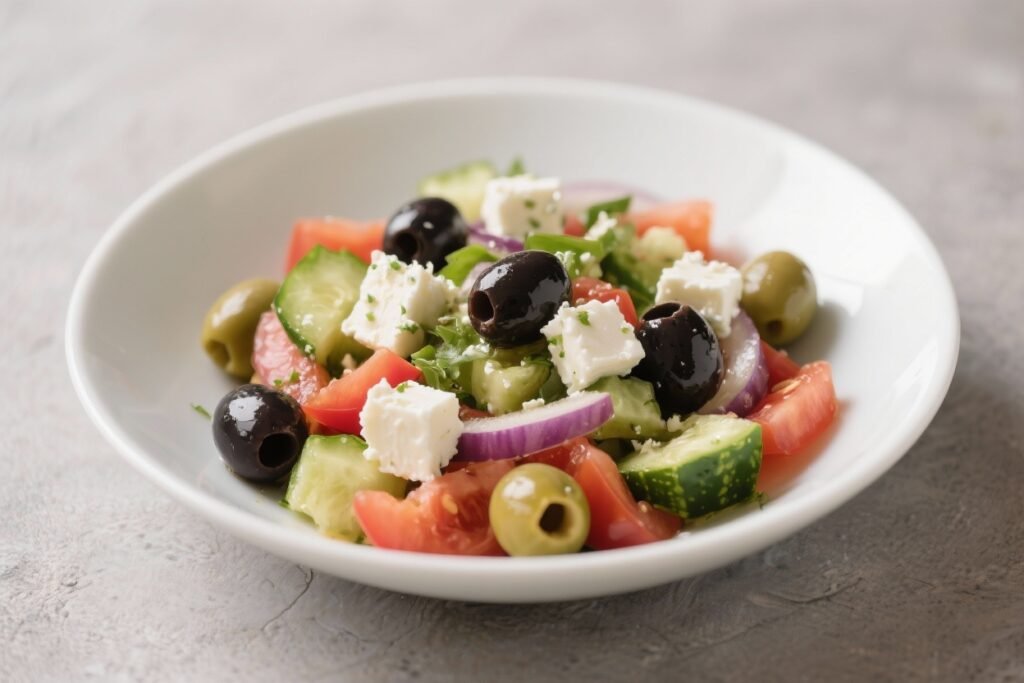
This Greek salad is the kind of dish you’ll want to make on repeat. It’s crisp, colorful, and full of big Mediterranean flavors without any fuss. Juicy tomatoes, cool cucumber, briny olives, and creamy feta come together in minutes.
A simple lemon-oregano dressing pulls it all together. Serve it as a quick lunch, a side for grilled meats, or a light dinner with crusty bread. It’s fresh, satisfying, and tastes like sunshine on a plate.
Why This Recipe Works
Greek Salad With Feta and Olives - Bright, Crunchy, and Refreshing
Ingredients
- Tomatoes: 3–4 ripe medium tomatoes or 2 cups cherry tomatoes, halved
- Cucumber: 1 large English cucumber or 2 Persian cucumbers, sliced into half-moons
- Red onion: 1/4 to 1/2 small red onion, thinly sliced
- Bell pepper: 1 green bell pepper, thinly sliced (or any color you like)
- Kalamata olives: 3/4 cup, pitted (whole or halved)
- Feta cheese: 6–8 ounces, in a block if possible
- Extra-virgin olive oil: 1/3 cup, good quality
- Red wine vinegar: 1–2 tablespoons (start with 1, add more to taste)
- Lemon juice: 1 tablespoon, freshly squeezed
- Dried oregano: 1–2 teaspoons, plus more to sprinkle on top
- Sea salt and black pepper: to taste
- Fresh herbs (optional): a few sprigs of fresh oregano, dill, or parsley
- Capers (optional): 1 tablespoon, drained
Instructions
- Prep the vegetables. Slice the cucumber into half-moons, thinly slice the red onion and bell pepper, and cut the tomatoes into wedges. If using cherry tomatoes, halve them. Keep pieces medium-large for a classic look and better crunch.
- Rinse the onions. If your onion is sharp, soak the slices in cold water for 5 minutes, then drain. This keeps the flavor crisp without the harsh bite.
- Make the dressing. In a small bowl, whisk olive oil, red wine vinegar, lemon juice, dried oregano, a pinch of salt, and black pepper. Taste and adjust acidity with more vinegar if needed.
- Combine the base. In a large bowl, add tomatoes, cucumber, bell pepper, and onion. Pour over about two-thirds of the dressing and toss gently until everything is coated.
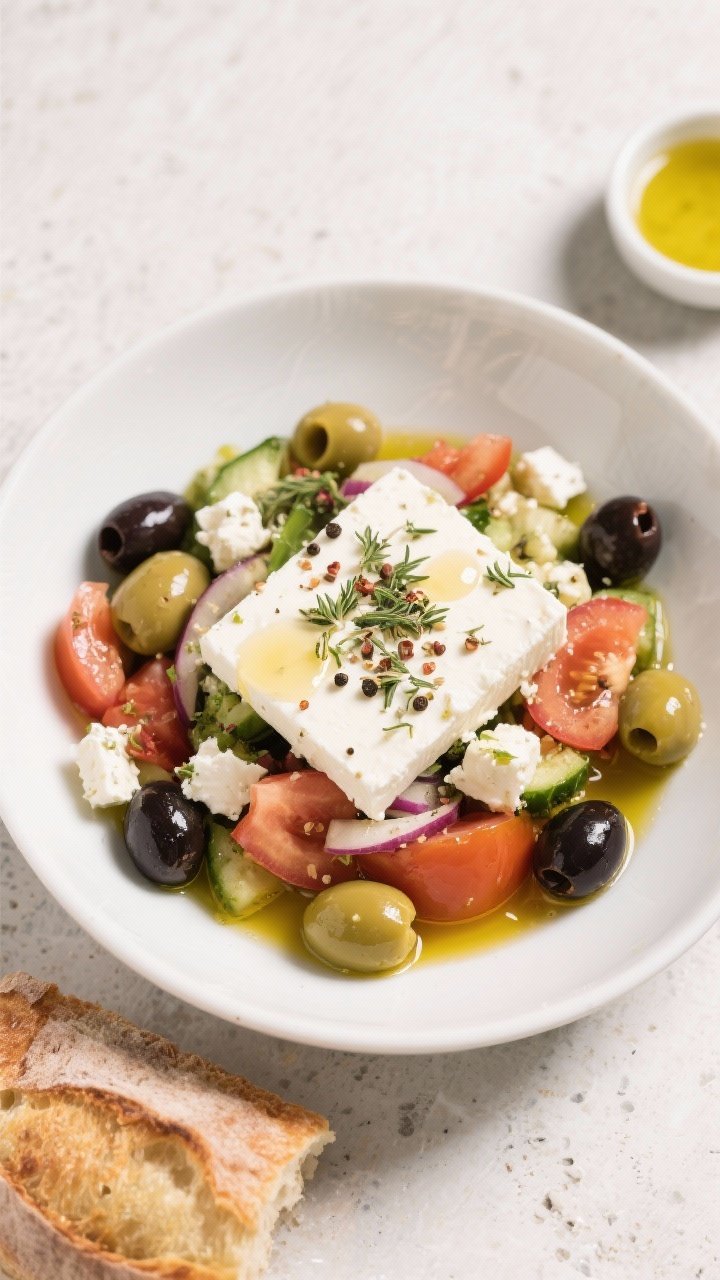
- Add olives and feta. Scatter in the Kalamata olives. Place the block of feta on top or break it into large chunks. Drizzle the remaining dressing over the feta.
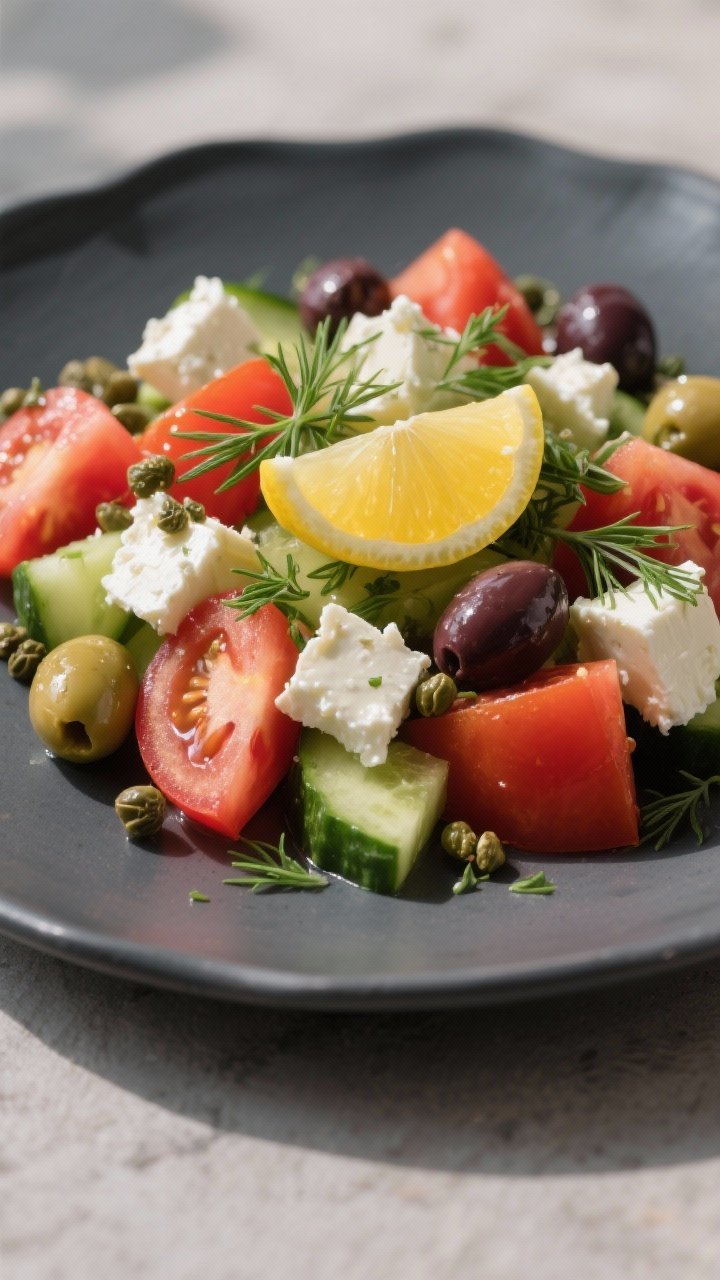
- Season and finish. Sprinkle with more dried oregano, a pinch of salt, and plenty of cracked black pepper. Add capers or fresh herbs if using.
- Rest briefly. Let the salad sit for 5–10 minutes at room temperature so the flavors come together. Serve with crusty bread to soak up the juices.
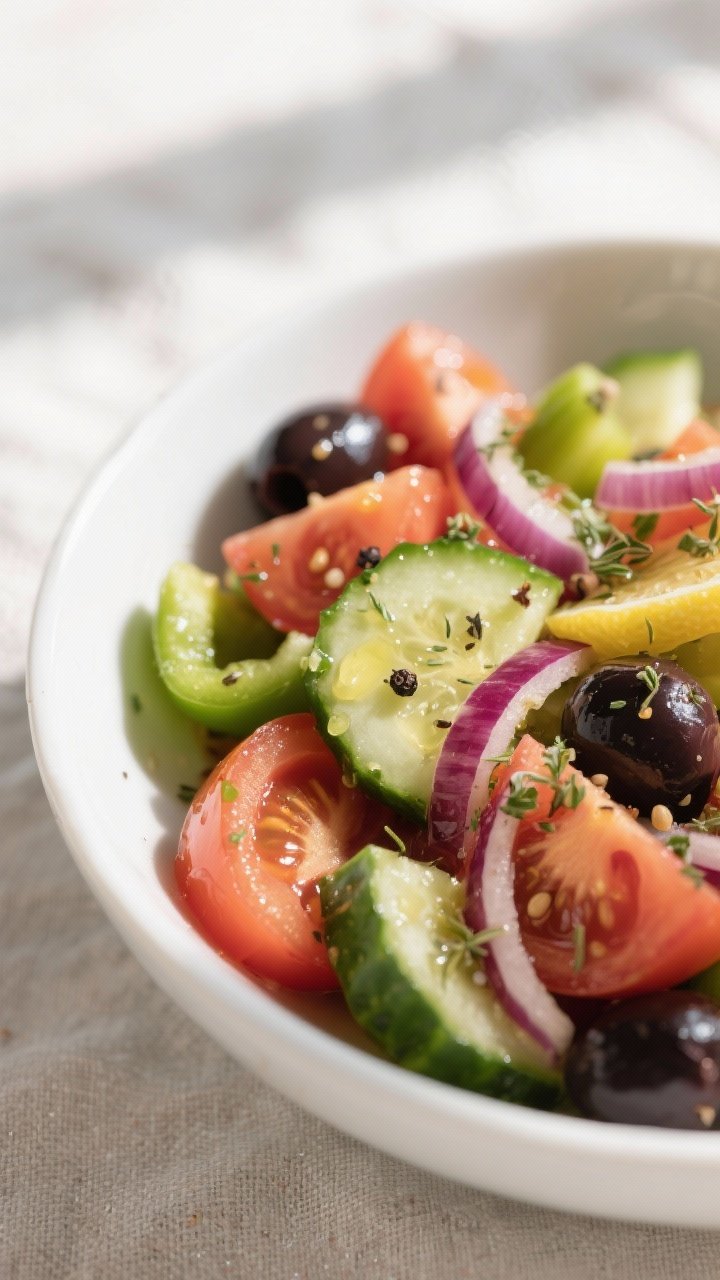
The magic is in the balance of textures and flavors.
You get crunch from cucumber and bell pepper, sweetness from ripe tomatoes, and salty depth from olives and feta. The dressing is straightforward—just good olive oil, lemon, vinegar, and dried oregano—but it wakes everything up.
Keeping the ingredients in larger, rustic chunks helps them stay crisp and hold onto the dressing. Using quality olive oil and a punchy vinegar gives the salad a clean finish without heaviness.
Finally, a short rest after mixing lets the flavors mingle while still keeping that fresh bite.
What You’ll Need
- Tomatoes: 3–4 ripe medium tomatoes or 2 cups cherry tomatoes, halved
- Cucumber: 1 large English cucumber or 2 Persian cucumbers, sliced into half-moons
- Red onion: 1/4 to 1/2 small red onion, thinly sliced
- Bell pepper: 1 green bell pepper, thinly sliced (or any color you like)
- Kalamata olives: 3/4 cup, pitted (whole or halved)
- Feta cheese: 6–8 ounces, in a block if possible
- Extra-virgin olive oil: 1/3 cup, good quality
- Red wine vinegar: 1–2 tablespoons (start with 1, add more to taste)
- Lemon juice: 1 tablespoon, freshly squeezed
- Dried oregano: 1–2 teaspoons, plus more to sprinkle on top
- Sea salt and black pepper: to taste
- Fresh herbs (optional): a few sprigs of fresh oregano, dill, or parsley
- Capers (optional): 1 tablespoon, drained
How to Make It
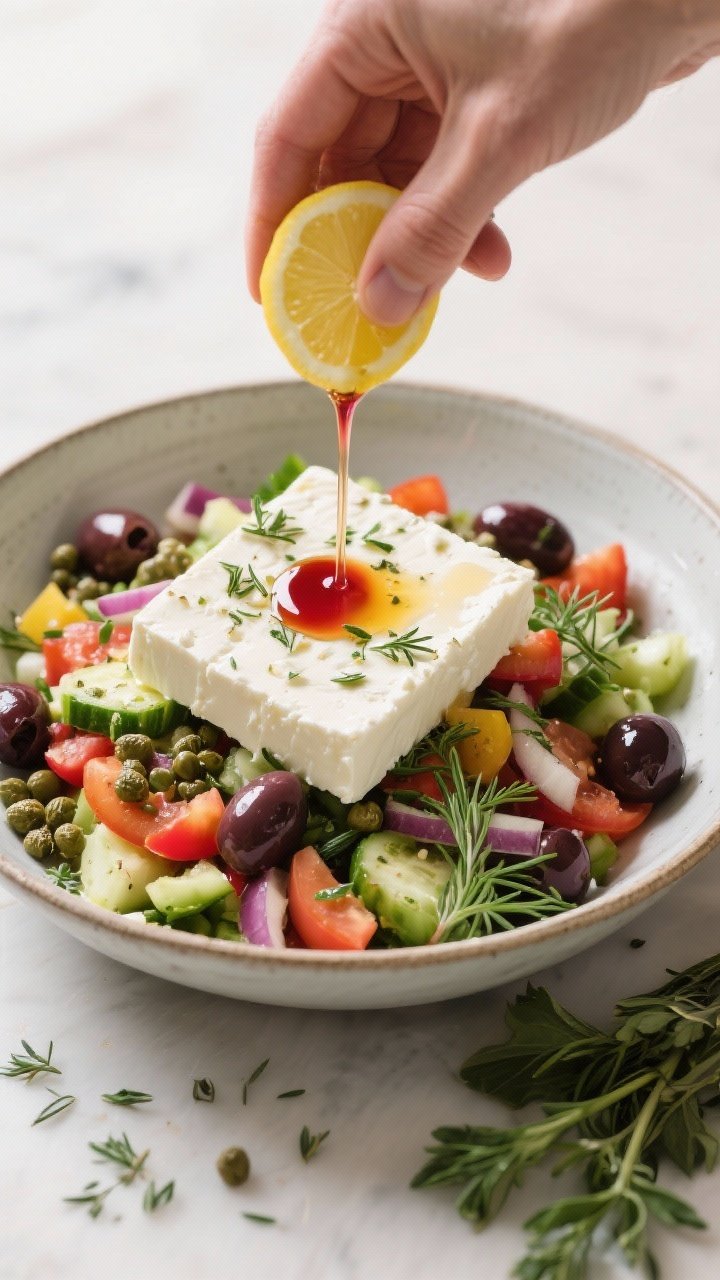
- Prep the vegetables. Slice the cucumber into half-moons, thinly slice the red onion and bell pepper, and cut the tomatoes into wedges. If using cherry tomatoes, halve them. Keep pieces medium-large for a classic look and better crunch.
- Rinse the onions. If your onion is sharp, soak the slices in cold water for 5 minutes, then drain.
This keeps the flavor crisp without the harsh bite.
- Make the dressing. In a small bowl, whisk olive oil, red wine vinegar, lemon juice, dried oregano, a pinch of salt, and black pepper. Taste and adjust acidity with more vinegar if needed.
- Combine the base. In a large bowl, add tomatoes, cucumber, bell pepper, and onion. Pour over about two-thirds of the dressing and toss gently until everything is coated.
- Add olives and feta. Scatter in the Kalamata olives.
Place the block of feta on top or break it into large chunks. Drizzle the remaining dressing over the feta.
- Season and finish. Sprinkle with more dried oregano, a pinch of salt, and plenty of cracked black pepper. Add capers or fresh herbs if using.
- Rest briefly. Let the salad sit for 5–10 minutes at room temperature so the flavors come together.
Serve with crusty bread to soak up the juices.
Keeping It Fresh
Greek salad is best the day it’s made, but it holds up well. If you’re making it ahead, keep the dressing, tomatoes, and feta separate until serving. This helps prevent the tomatoes from getting soggy and the feta from dissolving.
Store leftovers in an airtight container in the fridge for up to 2 days.
The vegetables will soften slightly, but the flavors deepen. If it looks a bit dry the next day, add a splash of olive oil and a squeeze of lemon to revive it.
Health Benefits
- Heart-healthy fats: Extra-virgin olive oil and olives provide monounsaturated fats that support heart health.
- Antioxidant-rich: Tomatoes, peppers, and onions are loaded with vitamins C and A, plus polyphenols that help fight inflammation.
- Protein and calcium: Feta adds a bump of protein and calcium while giving creamy richness.
- Low-carb and fiber-friendly: Plenty of fiber from veggies keeps you full without weighing you down.
- Mediterranean pattern: This salad fits neatly into a Mediterranean-style diet, linked to better long-term health.
Common Mistakes to Avoid
- Over-chopping the veggies: Tiny pieces release more water and turn the salad watery. Keep them chunky.
- Using poor-quality olive oil: The dressing is simple, so the oil matters.
Choose a fresh, peppery extra-virgin olive oil.
- Crumbled feta with additives: Pre-crumbled feta often contains anti-caking agents and dries out. A block of feta in brine tastes creamier and fresher.
- Overdressing: Start with less dressing than you think you need. You can always add more; you can’t take it away.
- Skipping the rest: A short 5–10 minute rest lets the flavors meld.
Serve too soon and it can taste disjointed.
Variations You Can Try
- With lettuce: Not traditional, but you can add chopped romaine for extra crunch and volume. Dress lightly to avoid sogginess.
- Herb boost: Add fresh dill or parsley for a bright, green finish. Fresh oregano is fantastic if you have it.
- Grain bowl style: Toss with cooked and cooled farro, quinoa, or orzo for a heartier meal.
- Protein add-ins: Top with grilled chicken, shrimp, or chickpeas to make it a complete dinner.
- Different olives: Try a mix of Kalamata and green Halkidiki olives for layered briny flavors.
- Creamy twist: Whisk a spoonful of Greek yogurt into the dressing for a tangy, thicker finish.
FAQ
Can I make this salad ahead of time?
Yes, but for best texture, prep the vegetables and dressing separately and combine within an hour of serving.
Add the feta and final drizzle of dressing just before you eat.
What kind of feta should I use?
Choose a block of feta packed in brine. Greek sheep’s milk feta is creamier and tangier than cow’s milk versions. It holds up better in the salad and tastes richer.
Do I have to use red wine vinegar?
No.
Red wine vinegar is classic, but you can use sherry vinegar, white wine vinegar, or add a bit more lemon juice. Balsamic is too sweet and will overpower the flavors.
How do I keep the salad from getting watery?
Use firm, ripe tomatoes and avoid over-chopping. Dress lightly at first and add more only if needed.
If your tomatoes are very juicy, you can seed them or add a pinch of salt and drain briefly before mixing.
Is there a dairy-free option?
Yes. Skip the feta or use a dairy-free feta-style cheese. To keep a creamy element, you can add avocado chunks just before serving.
What can I serve with Greek salad?
It pairs well with grilled chicken, lamb, or fish, warm pita, hummus, or roasted potatoes.
It also makes a fresh counterpoint to rich dishes like moussaka or baked pasta.
Can I use different olives?
Absolutely. Kalamata olives are traditional, but Castelvetrano or green Halkidiki olives add a milder, buttery note. Just be sure they’re pitted for easier eating.
How long does it last in the fridge?
Up to 2 days.
The vegetables will soften, but the flavors remain delicious. Add a splash of olive oil and lemon before serving to brighten it back up.
Wrapping Up
Greek Salad with Feta and Olives is simple food done right—fresh produce, bold seasoning, and a clean, zesty dressing. It comes together quickly, holds up well, and works for nearly any occasion.
Keep the cuts chunky, the olive oil good, and the feta in generous pieces. With those small choices, you’ll end up with a salad that feels both effortless and special every time you make it.
Printable Recipe Card
Want just the essential recipe details without scrolling through the article? Get our printable recipe card with just the ingredients and instructions.
Leave a Reply