Picnic Tablecloth Weights: What Actually Holds in Gusts (Without Tearing Fabric)
· Yogi
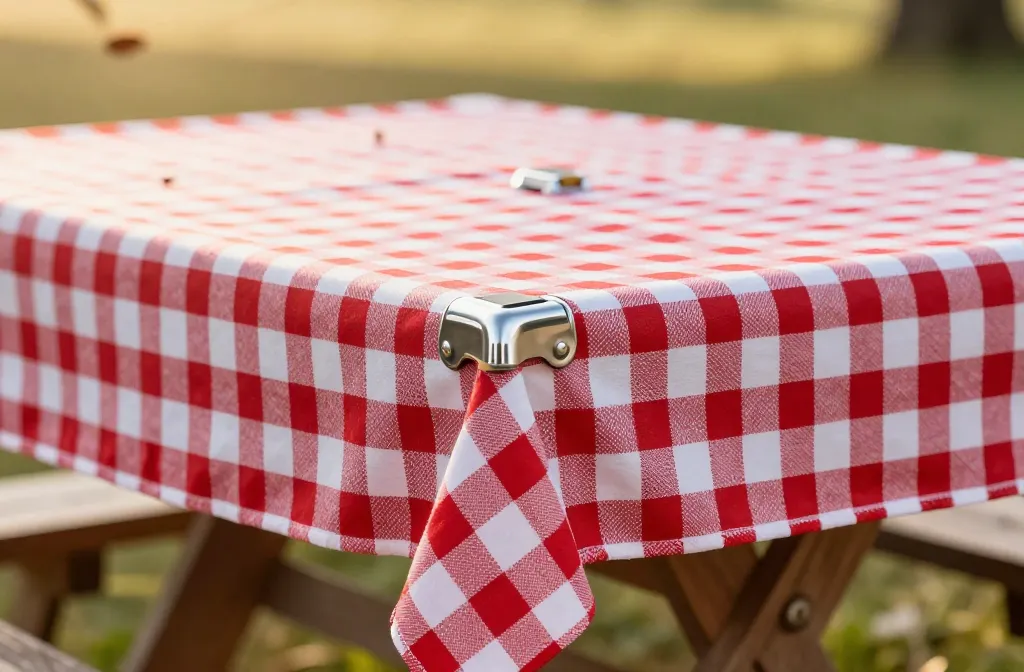
Your sandwich shouldn’t fly off like a kite just because the wind picked up. The right tablecloth weights keep your setup classy, safe, and unflappable—literally. We tested what bites down on gusts and what rips, slips, or embarrasses you. Ready to keep your picnic cute and grounded?
1. Clamp-Style Edge Weights That Grip Without Chewing Fabric
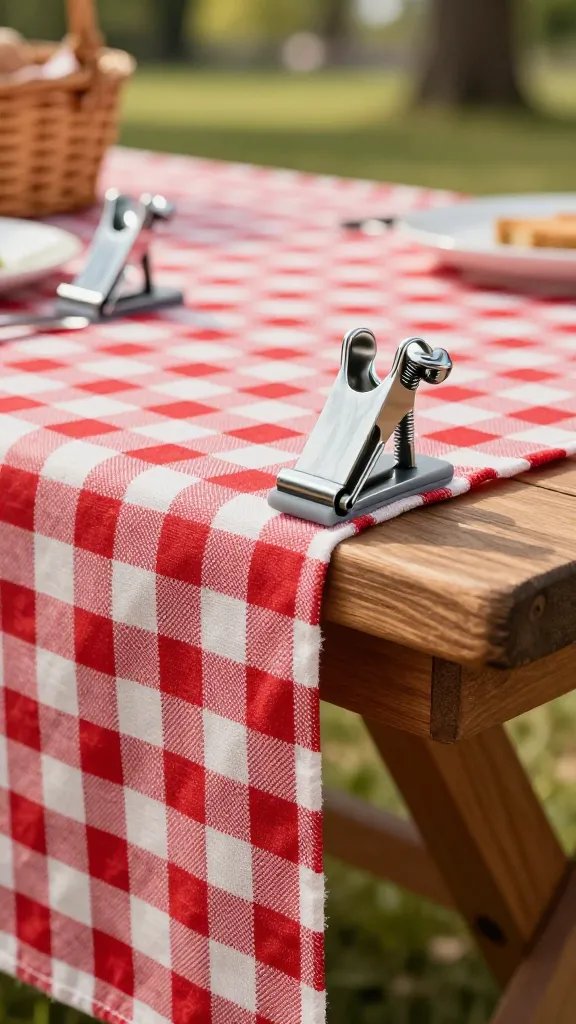
Clamps look intense, but the good ones hug the table, not your tablecloth. They deliver serious wind resistance because they anchor to the tabletop, not just the cloth’s edge. Choose smooth-grip clamps with a little weight, and you’ll laugh at 15–25 mph breezes.
What Works Best
- Spring steel or stainless clips with a rounded inner edge so they won’t nick fabric.
- Clips with silicone pads for extra grip and no snagging.
- Adjustable tension or size options to match thicker farm tables or thin park slabs.
Clamp-style weights shine because they anchor from two directions: downward weight and lateral pinch. That combo resists the classic gust that tries to billow the cloth like a sail.
Tips
- Test the clamp on a napkin first. If it leaves dents or pulls threads, skip it.
- Use four corners + midpoints on long tables. That stops the wavy-parachute effect.
- Pick stainless steel for park tables—rain won’t rust them, and they wipe clean fast.
Use these when wind forecasts make you nervous but you still want a clean, minimal look. Great for vinyl, polyester, and coated cotton.
2. Sewn-In Corner Pouches With Discreet Fill (The Tailor’s Trick)
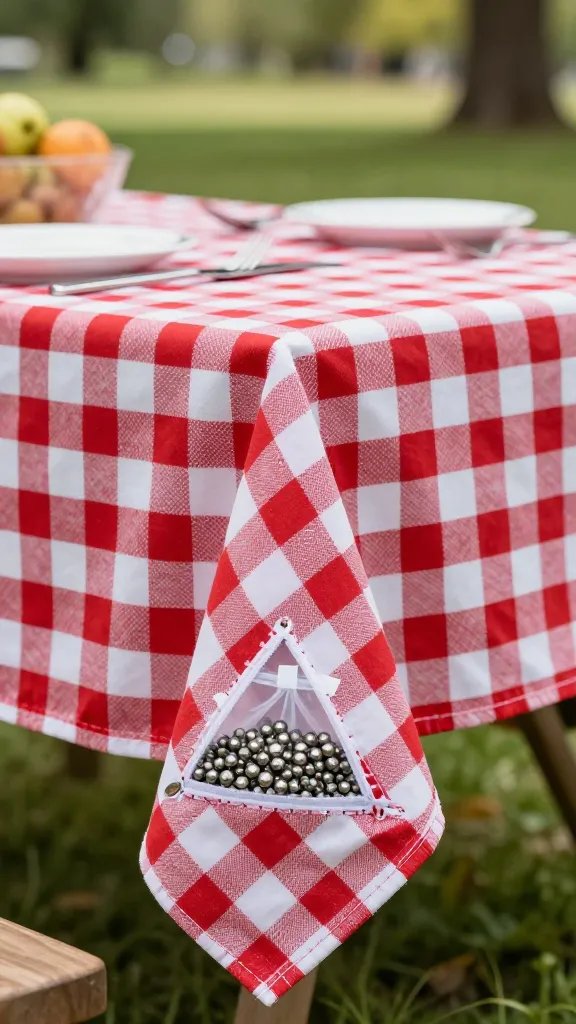
If you hate dangly things, go invisible. Small corner pouches sewn to the underside of your tablecloth let you add removable fill—think steel shot or washable aquarium gravel. The weight drops directly where lift begins: those pesky corners.
How To Set It Up
- Sew a triangular pocket (about 4–5 inches per side) onto the underside of each corner.
- Leave a small Velcro or snap closure so you can swap or wash the fill.
- Use nylon thread or reinforced stitching lines to spread stress and avoid tearing.
This method keeps the tablecloth drapey and elegant while stealthily fighting turbulence. It also avoids fabric compression or snags from external clips.
Best Fills (By Vibe)
- Steel shot (BBs): Highest density, smallest volume, great in real wind.
- Flat glass pebbles: Pretty and washable, but bulkier.
- Aquarium gravel: Budget-friendly, won’t rust; ok for moderate gusts.
Use this when aesthetics matter—weddings, styled picnics, or when you love a clean hemline. It handles moderate to strong gusts without making the fabric a chew toy.
3. Magnet Sets That Sandwich The Cloth (Zero Holes, Max Hold)
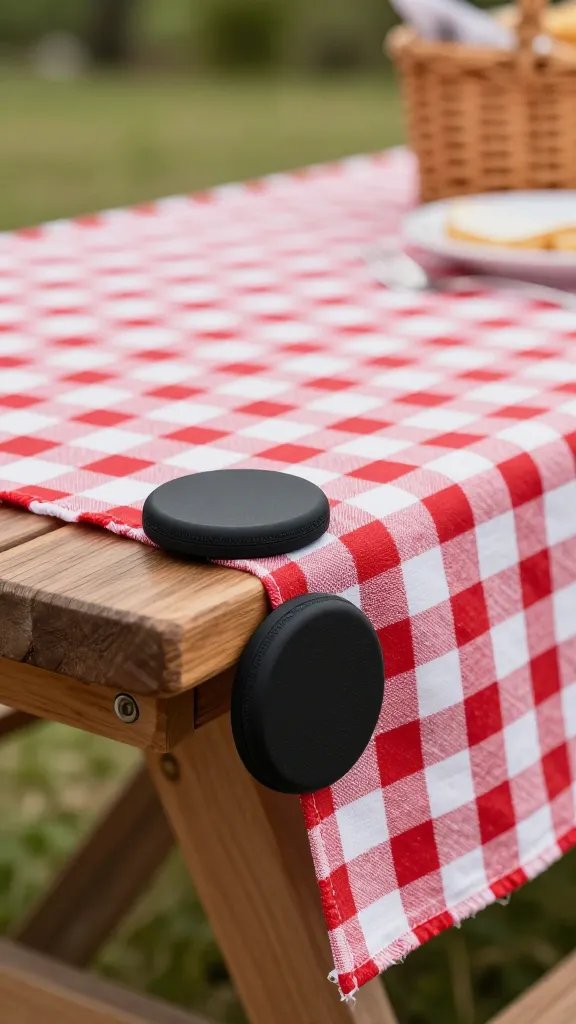
Magnets create a smooth, tool-free hold that won’t pierce fibers. Good sets include a top disc and a bottom disc that pinch fabric between them. They excel with metal picnic tables and even standard wooden ones—because the hold comes from magnet-to-magnet pressure, not the table.
What To Look For
- Neodymium magnets with rubberized or felt faces so they won’t abrade delicate linens.
- 1–1.5 inch discs for a sweet spot: big enough to resist shear, small enough to stay subtle.
- Multiple sets per long side—think 6–8 per 6–8 foot table for serious wind.
Magnets shine because they distribute force over a broad, flat area. That reduces point stress and prevents the “one-thread holds the apocalypse” problem.
Pro Moves
- Place pairs at corners, quarters, and center of each long edge.
- Layer a thin vinyl protector between the bottom magnet and rough tables to avoid grinding dirt into fabric.
- Color-code sets so you don’t lose track during cleanup. FYI, they love to hide under napkins.
Great for renters, stylists, and anyone who wants removable hardware with zero damage. Magnets handle steady breezes and surprise gusts without drama, IMO.
4. Weighted Hem Cords: The “Hotel Curtain” Strategy For Tablecloths
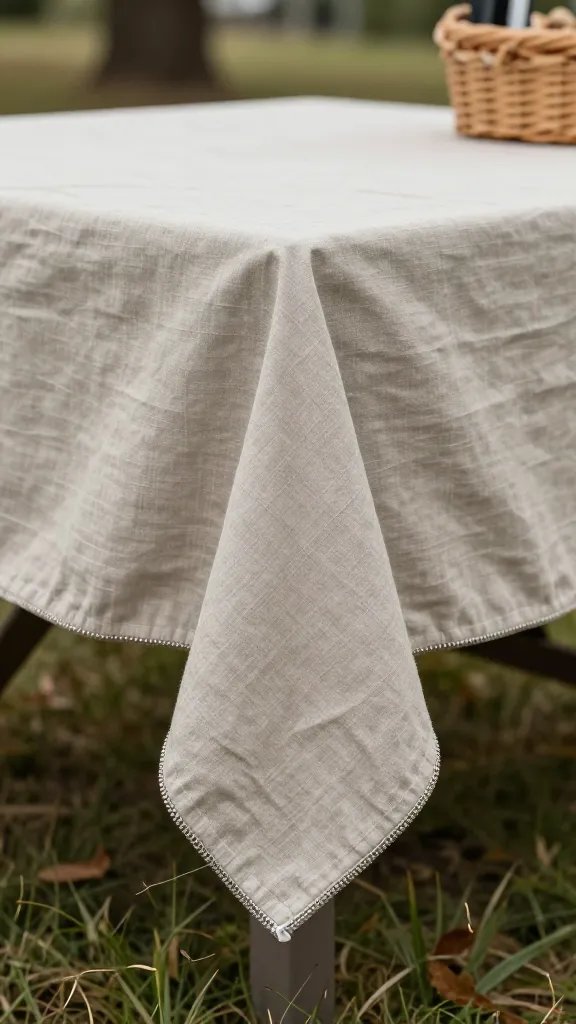
Think of blackout curtains that never flap wildly. A weighted hem does the same for tablecloths by putting mass exactly along the edges. The weight resists lift and flutters while keeping the drape graceful.
How To Build It
- Add a 1–1.5 inch doubled hem around the perimeter.
- Thread a lead-free drapery chain or stainless bead chain through the channel.
- Secure at corners with bar tacks so the chain doesn’t bunch up.
This method spreads weight continuously, so no single point tears or puckers. It also looks luxe because the cloth hangs straighter and resists those awkward tented corners.
Choosing Materials
- Fabric: Heavier cotton blends or outdoor polyester resist stretching better than fine linen.
- Chain: Stainless for wet conditions; avoid cheap steel that rusts.
- Finish: Use bias tape inside the hem for slippery, snag-free movement.
Pick a weighted hem when you want a long-term, washable solution that handles variable wind and still looks polished. It’s the set-it-and-forget-it option for frequent entertainers.
5. Corner Anchor Systems: Bungees, Grommets, And Under-Table Tie-Downs
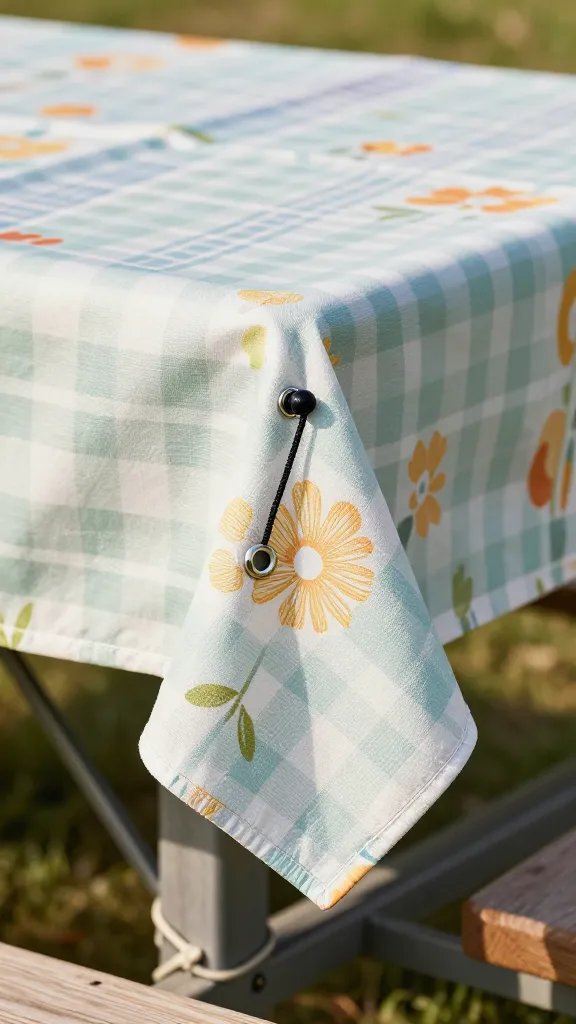
When the forecast screams “gusts,” you need anchors that lock corners to the table itself. Corner systems marry reinforced grommets or webbing loops with bungees or paracord that hook beneath the table. Think discreet camping tech, but make it cute.
Build A Bombproof Corner
- Install 2-layer corner patches of webbing or twill tape to spread force.
- Add stainless grommets (size #1 or #2) or sew D-rings into the corner seam.
- Use thin bungees with ball ends or shock cord to clip under the tabletop or around the bench supports.
This setup prevents both vertical lift and sideways creep. Elastic absorbs gust spikes so your fabric doesn’t tear at the attachment point—huge win.
Smart Setup
- Run cords in an X pattern beneath the table to balance pull.
- Add rubber washers between hardware and fabric to reduce wear.
- Combine with weighted hems or magnet sets for all-around stability on long tables.
Use corner anchors for beach winds, rooftop terraces, or wide-open parks. When everything else flaps, this system stays civilized, trust me.
Ready to eat without chasing plates? Mix and match these methods based on wind and vibe, and you’ll keep every picnic dialed and drama-free. Pack smarter once, enjoy breezy days forever—seriously, your future self will thank you.
Leave a Reply