Why Every Host Needs a Dedicated Rubbish Bag (and How to Style It)
· Yasmine Taljaard
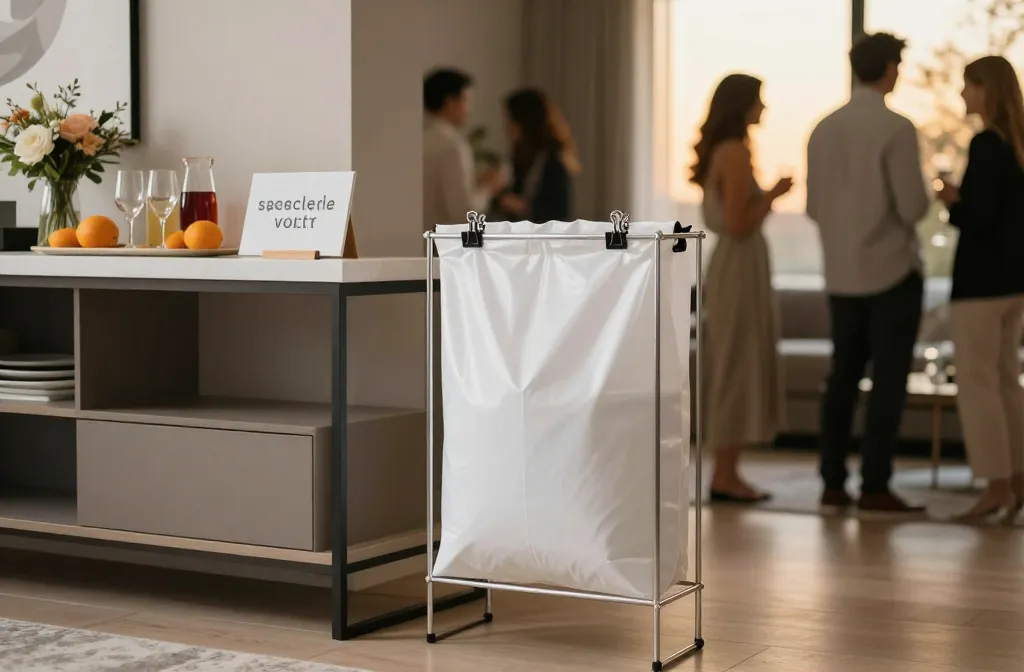
I learned fast that a full sink and an overflowing bin can derail even a well-planned dinner. Guests hover with crumpled napkins, asking where trash goes, and I end up emptying the kitchen bin mid-meal. A dedicated rubbish bag solves that friction and keeps your space tidy without constant trips to the bin. I’ll show you exactly why it works, where to put it, which bags to use, and how to make it look intentional — not like an afterthought.
The Real Reason Parties Get Messy: Decision Bottlenecks
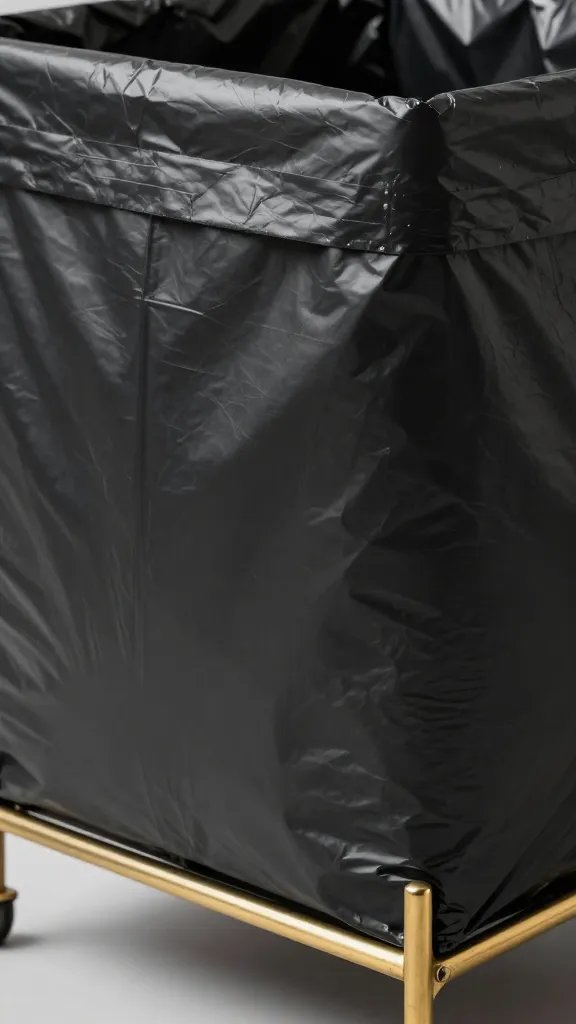
Guests stall when they don’t know where things go. They hold onto napkins, toothpicks, and lemon rinds, and the clutter spreads to side tables and plant stands.
A dedicated rubbish bag removes that decision. It creates a clear, near-at-hand target so trash leaves hands immediately. Less wandering, less guessing, less mess.
Action today: Pick one high-traffic spot and commit to placing a rubbish bag there before guests arrive — no exceptions.
Placement That Works: One Step From Where Mess Starts
Put the bag where waste happens, not where your main bin lives. I place mine within one step of the drinks station and another near the food pass — not in a walkway.
Use a sturdy hook, doorknob, or a slim bin frame to anchor the bag. Position it at knee-to-hip height so guests spot it without hunting.
Best Spots That Don’t Block Flow
- Behind the end of the buffet table, clipped to the table leg.
- Inside the patio door handle for outdoor gatherings.
- On the side of a kitchen island, opposite the cooking zone.
- Under the drinks console shelf, front edge exposed.
Takeaway: Place the bag no more than one step from the mess zone and out of foot traffic.
The Right Bag: Size, Strength, and No-Leak Insurance
I use 30–40L kitchen bags for up to 12 guests and 50–60L contractor or garden bags for larger groups. The slightly bigger size prevents mid-party swaps.
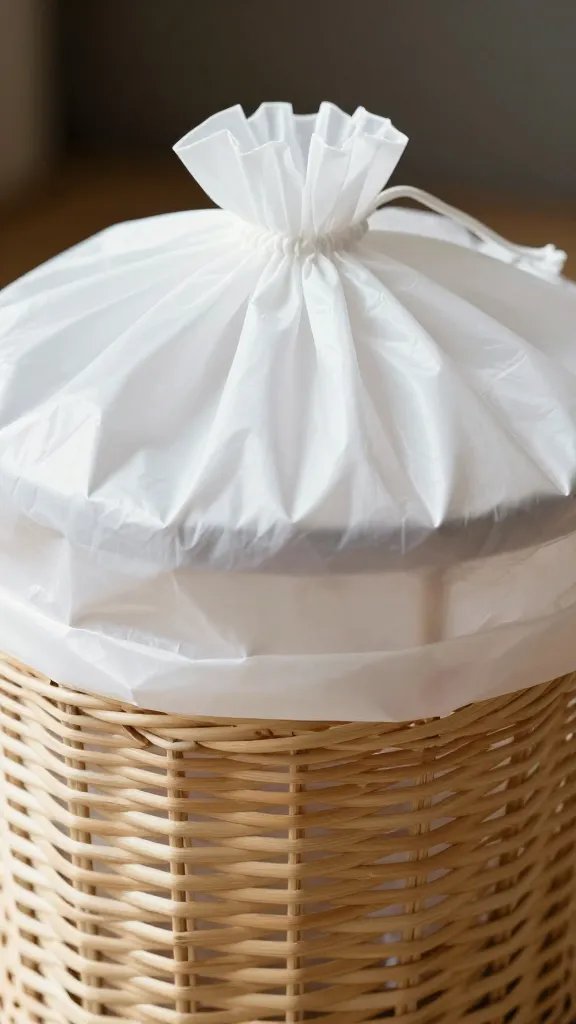
Choose bags with drawstrings and a minimum “heavy duty” label from your hardware store. If you expect wet waste (citrus, ice, sauces), line with a second bag or drop a few paper towels at the bottom to absorb drips.
Simple, Reliable Materials
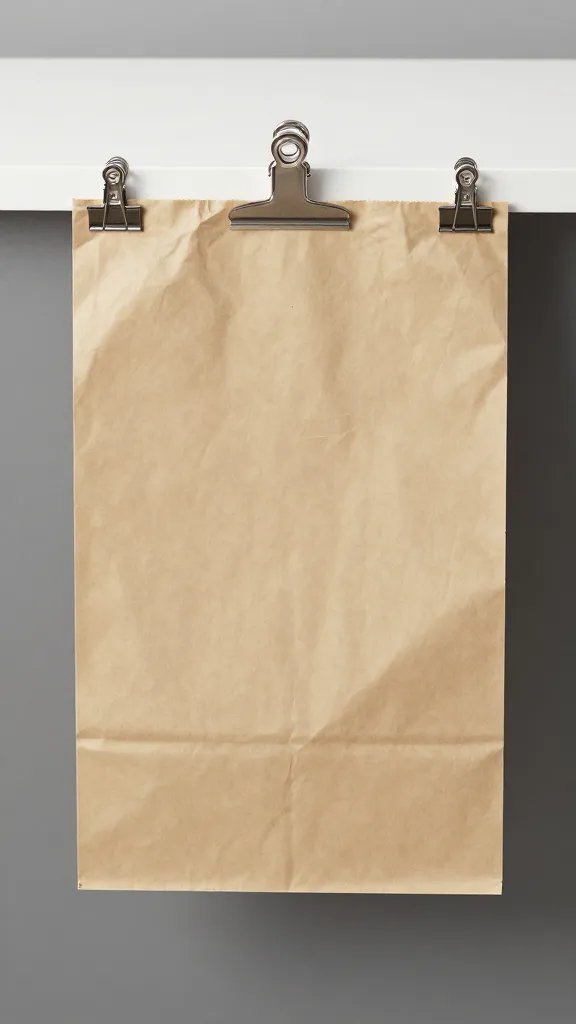
- Clips: Large binder clips or metal spring clamps to secure the bag to a table leg.
- Hooks: Over-the-door hook or adhesive utility hook rated for 2–5 kg.
- Frame: A basic folding bag stand from the garden centre (lawn bag stand works perfectly).
Action today: Add a roll of heavy-duty bags and two binder clips to your hosting kit so you never scramble.
Style It So Guests Actually Use It
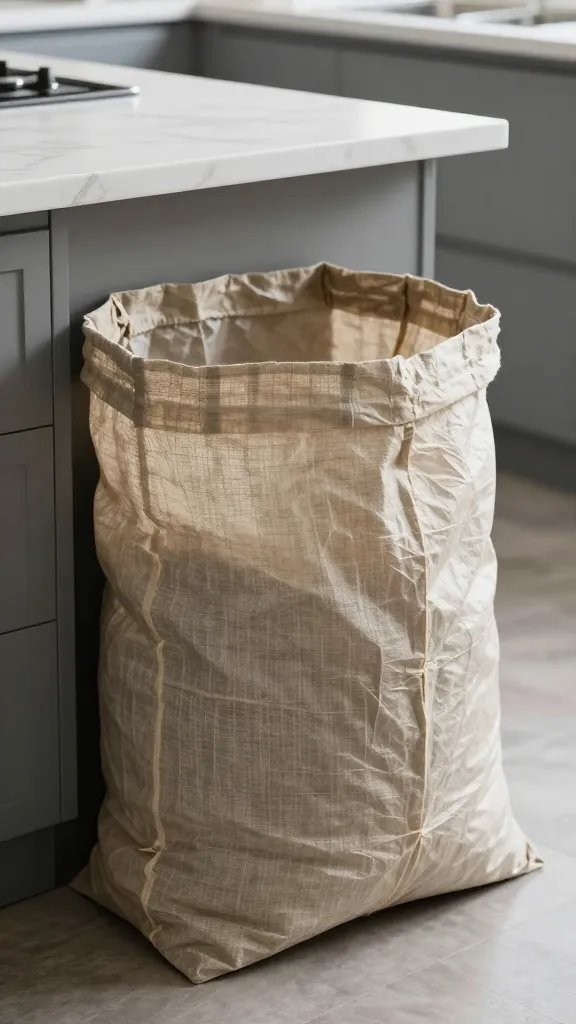
If it looks like trash, guests avoid it; if it looks intentional, they use it. I sleeve the bag inside a neutral fabric tote or a paper lawn bag so it reads like part of the setup.
Match the container to your vibe: a woven basket for a cozy dinner, a galvanized bucket for casual BBQs, or a plain kraft lawn bag for minimalist setups. Always leave the drawstring top visible so people recognise it as rubbish.
Fast Styling Options
- Slide a 30–40L bag into a sturdy paper lawn bag; fold the top edge over twice to show the liner neatly.
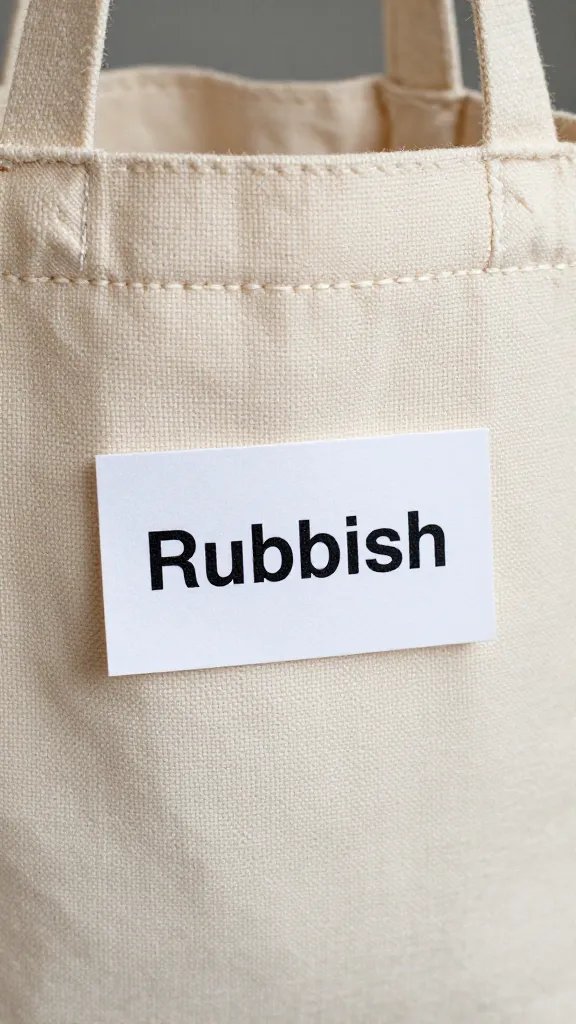
- Use a large canvas tote with a plastic bag liner; secure the liner with clothespins inside the rim.
- Drop a liner into a tall planter with no drainage hole; add a label.
Takeaway: Hide the bulk of the liner inside a neutral outer shell and keep the opening obvious.
Label Once, Answer Zero Questions
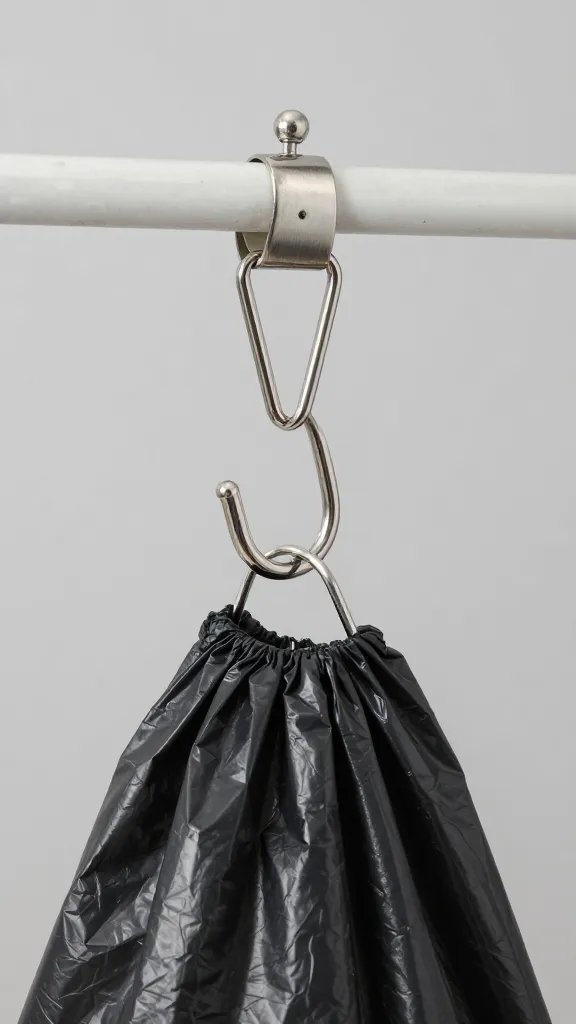
Clear labels stop “Where does this go?” every five minutes. I hang a small tag or tape a card that says “Rubbish Only” in bold, high-contrast letters.
For mixed setups, add a second container labeled “Cans & Bottles” next to it and keep both within arm’s reach of the drinks. Labels work best at eye level when seated and hip height when standing.
Action today: Make a simple “Rubbish Only” card and tuck it into a binder clip at the rim.
Keep It Odour-Free and Out of Sight Without Hiding It
Odour starts with wet waste. I keep a small bowl of baking soda nearby to sprinkle over food scraps and a handful of coffee grounds if I expect fish or strong cheese.
Use a bag with drawstrings so you can cinch it an inch during courses, then open it wide when clearing plates. If you host outdoors, wedge the base with a brick or a spare hardcover book to stop flapping.
Warning Signs You Need an Upgrade
- Guests set napkins on ledges — the bag is too far or not obvious.
- Leaky bottom — double-line or switch to contractor-weight bags.
- Fruit flies — add a tight second liner and empty at the halfway mark.
Takeaway: Control moisture first; a dry bag doesn’t smell and doesn’t leak.
Swap-Out Strategy: One Clean Motion, No Drips

I plan one swap halfway through any event over 10 people. Pre-stage a second lined container in a closet or beside the first, out of view.
To change, pull drawstrings, twist once, tie, and drop the knot into a spare bucket or laundry basket for transport. Replace immediately so the “trash target” never disappears and clutter doesn’t rebound.
- Sprinkle baking soda in the new liner.
- Clip or seat the liner so it won’t collapse.
- Reposition the label at the same eye line.
Action today: Pre-line two containers before guests arrive so you swap in under 30 seconds.
Frequently Asked Questions

What size bag should I use for a small apartment gathering?
Use a 30–40L kitchen bag for up to 10–12 guests. It holds cups, napkins, small plates, and food scraps without needing a change mid-event. If you’re serving messy foods or lots of citrus, double-line to prevent leaks.
How do I make a rubbish bag look good in a small space?
Slip the liner into a neutral paper lawn bag or a tall woven basket. Fold the top edge of the liner inward twice so it sits below the rim, and clip a small “Rubbish Only” label to the front. Place it at the side of a console or island, not in the center of the room.
Where should I put recycling during a party?
Place a second container right next to the rubbish bag labeled “Cans & Bottles.” Use a rigid bin or a crate so it stands open and obvious. Rinse is optional during the party — just keep it separate and do a quick sort when cleaning up.
How do I prevent smells if I’m serving seafood or strong cheese?
Start with a double-lined bag and a tablespoon of baking soda in the bottom. Sprinkle another teaspoon after clearing plates with wet scraps. Tie off and swap once the bag reaches half full to trap odours before they spread.
What if wind keeps blowing the bag around outside?
Use a folding lawn bag stand or wedge a brick in the bottom between the two liners. Clip the liner to the rim at three points so it won’t collapse. Position the setup against a wall or fence, out of the wind tunnel near doors.
Do I still need my regular kitchen bin accessible?
Keep it closed and out of the action. The dedicated bag handles party waste faster and with less mess. After guests leave, consolidate into the main bin or outdoor wheelie as part of your final sweep.
Conclusion

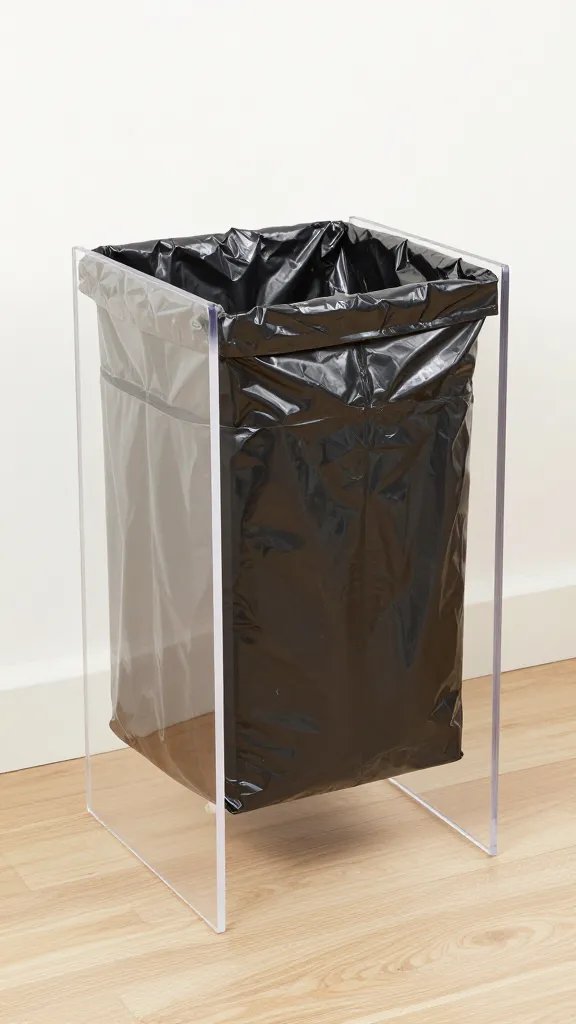
A dedicated rubbish bag turns cleanup from constant interruption into one smooth, end-of-night routine. Set one up where waste starts, style it so guests recognise it, and label it clearly. Do it once this week during a simple drinks hour and note how much less you touch the bin — then make it your standard for every gathering.
Leave a Reply