Master the Etiquette of Personal Space in a Crowded Scenic Park
· Yasmine Taljaard
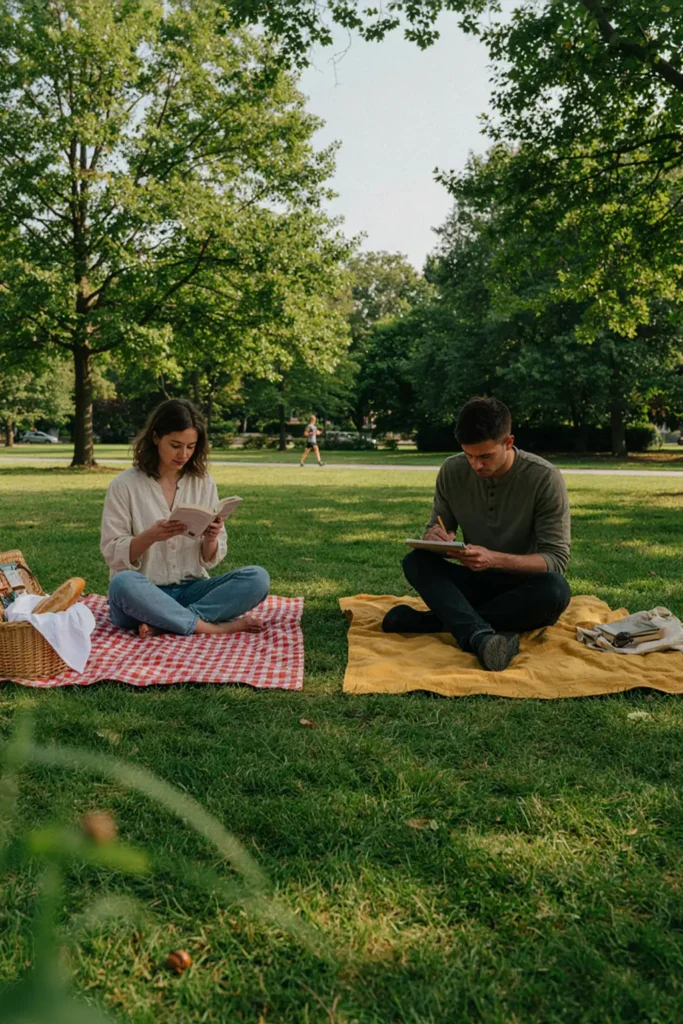
On busy spring weekends, I’ve watched tempers flare on narrow overlooks and picnic lawns because no one set simple boundaries. I’ve also salvaged plenty of afternoons with a few clear words and small shifts in where I stood or spread a blanket. In this guide, I lay out the specific cues, distances, and phrases that keep everyone comfortable when the park is packed. You’ll learn exactly how to move, speak, and set up so you can relax, protect your group’s space, and still be a good neighbor.
Reading Crowds: How to Spot Personal Space Before You Enter It
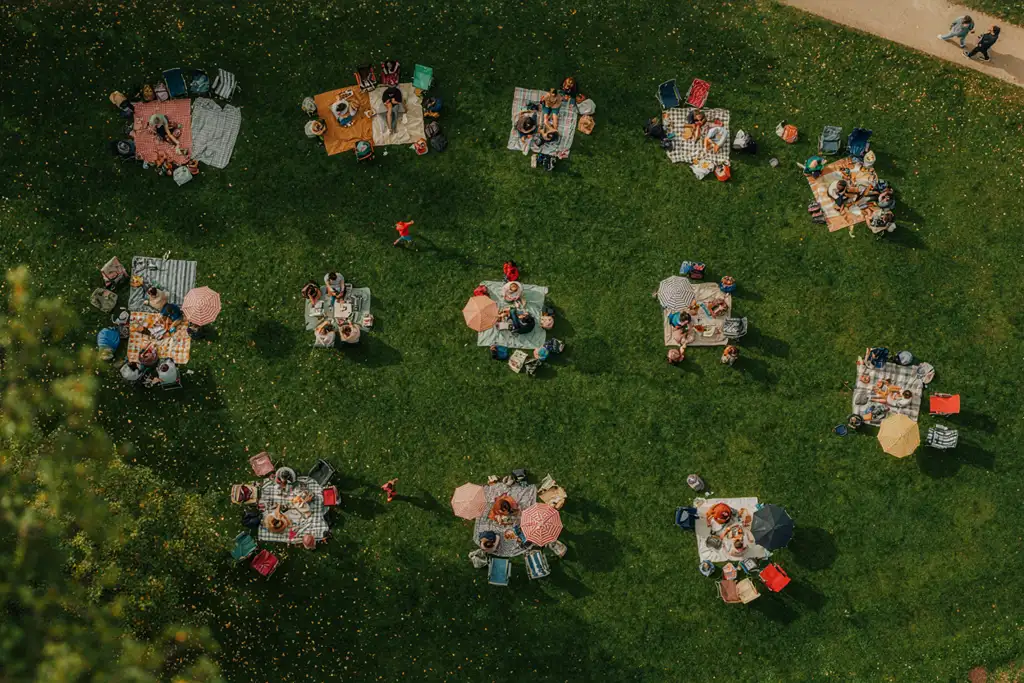
Scan for blanket corners, stroller handles, and camera sightlines before you stop. Position yourself just outside those invisible walls to avoid immediate conflict.
In a crowded park, people create invisible rooms with their bodies, bags, strollers, and blankets. I look for the edges: the line where shoes, backpacks, and corners of blankets form a rough rectangle, and I treat that as a wall.
I also check for sightlines. If a group is facing the same direction — toward a lake, mural, or skyline — their “front” needs a clear view. I avoid stepping or standing between them and the view, even for a quick photo.
Action today: Before you stop, scan a 10-foot circle for blanket corners, stroller handles, and camera lines — then position yourself just outside those edges.
Setting Up Without Sprawl: Blankets, Chairs, and Bags That Don’t Creep
Size your blanket to your group and fold under extra fabric. Keep chairs at the back and gear stacked vertically so your footprint stays contained.
I keep my footprint small. A blanket sized for your group avoids accidental annexing of the lawn. I fold under extra fabric instead of letting corners trail into walkways or someone else’s space.
Chairs sit at the back of my blanket, never on the edges where legs trip passersby. Bags tuck under a chair or along one blanket side. I keep a clear path through my setup so anyone can pass without stepping over personal items.
Quick Layout That Respects Others
- Blanket: Keep at or under 5×7 feet for two people; add one extra foot in width per additional person.
- Chairs: Back row only, front clear for low seating or kids.
- Gear: Stack vertically against one blanket edge; no rings of shoes around the perimeter.
Action today: After you set up, stand and look around your blanket — if anything crosses your edge line, pull it in by a full foot.
Distance That Feels Comfortable: Simple Measurements You Can Trust
Leave one blanket width (about 3 feet) between groups on open lawn. At viewpoints, stand 18 inches behind the person ahead and angle your body 30 degrees.
Space feels different when grass is scarce, so I use practical, repeatable distances. On open lawn, I leave at least one blanket width (about three feet) between groups. On a busy day, I reduce to one seated arm’s length (about two feet) if everyone else is that close.
On paths, I give moving people a full body width to pass. At viewpoints, I stand no closer than one forearm’s length (18 inches) behind the person ahead, and I angle my body 30 degrees so I’m not breathing straight onto their neck or shoulder.
Action today: Use your blanket as a ruler — keep at least one blanket-width gap from the nearest group unless the entire area is tighter than that standard.
For the broader etiquette picture, see our 10 park etiquette tips for planning outings and our guide to sharing shade.
Sharing the View: Rotating Fairly at Overlooks and Photo Spots
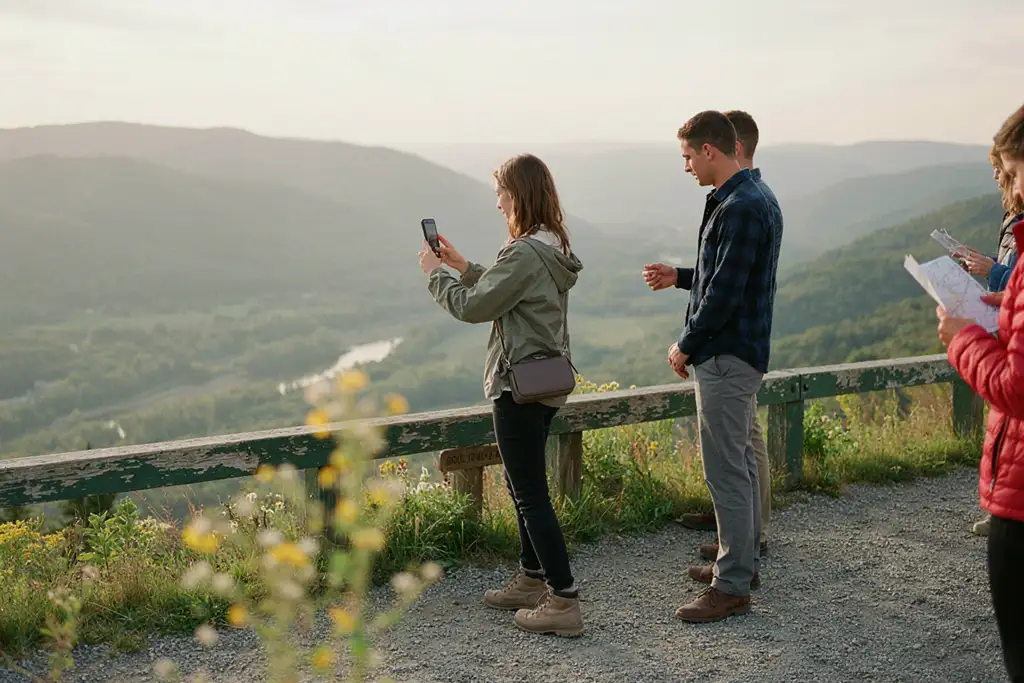
Treat overlooks like a queue: one minute for photos, 30 seconds for a look when others are waiting. State your time limit when you ask to step in.
When a spot is in demand, I treat it like a queue even if there isn’t a rope. I note who arrived before me, stand behind their shoulders, and keep my turn to one minute for photos or thirty seconds for a look if there’s a line.
If I need a photo, I ask with a complete sentence that includes my time limit: “Mind if I step in for one quick photo — thirty seconds?” I step aside immediately after, then check my shot from a few feet back rather than reoccupying the front.
Warning Signs You’re Blocking
- People shift from foot to foot or swivel to find a line around you.
- Phones rise behind you and drop again without a shot.
- Someone clears their throat or glances repeatedly at the same gap.
Action today: Time your front-rail stop with a phone timer — one minute for photos, then rotate back to make room.
Talking Volume, Music, and Smell: Keeping Sensory Impact Low
Keep conversation at the level where nobody asks “What?” and skip speakers entirely. Avoid strong scents and tie trash bags tight to prevent food odour.
Sound travels farther over open grass and water. I keep conversation to the level where the person beside me never asks “What?” If my group grows, I seat us closer rather than raising voices. I skip speakers. If we must have music, I use earbuds or a tiny speaker set so low it can’t be heard six feet away.
Strong smells borrow space you don’t own. I avoid smoky grills in crowded lawns, reapply perfume at home rather than on-site, and keep trash bags tied tight to avoid food odor and bees. If I light a candle or citronella, I set it upwind from others or not at all.
Action today: Walk six paces from your blanket and listen — if you can hear every word, lower your volume by one notch or sit closer together.
Polite Phrases That Prevent Friction (And How to Use Them)
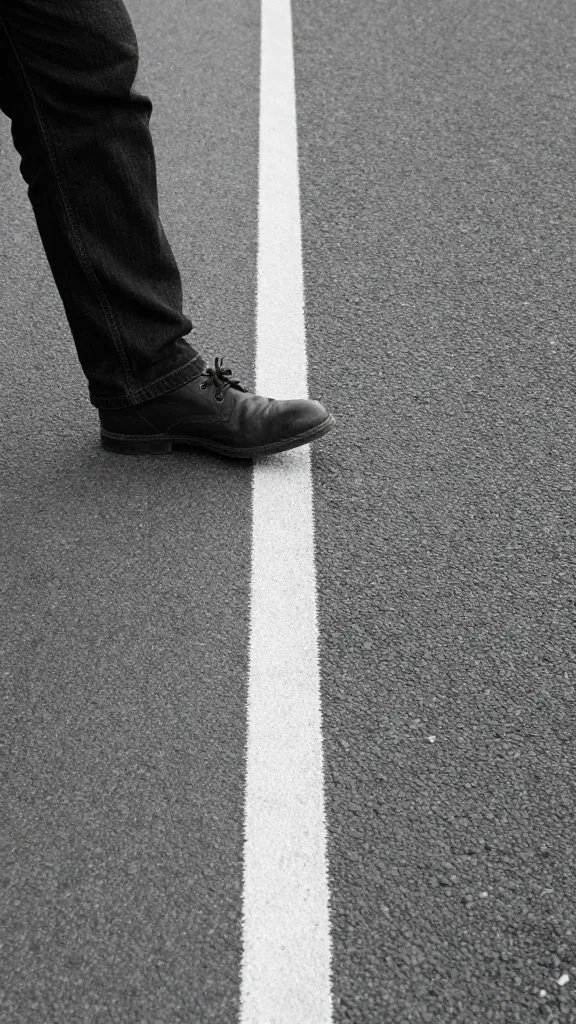
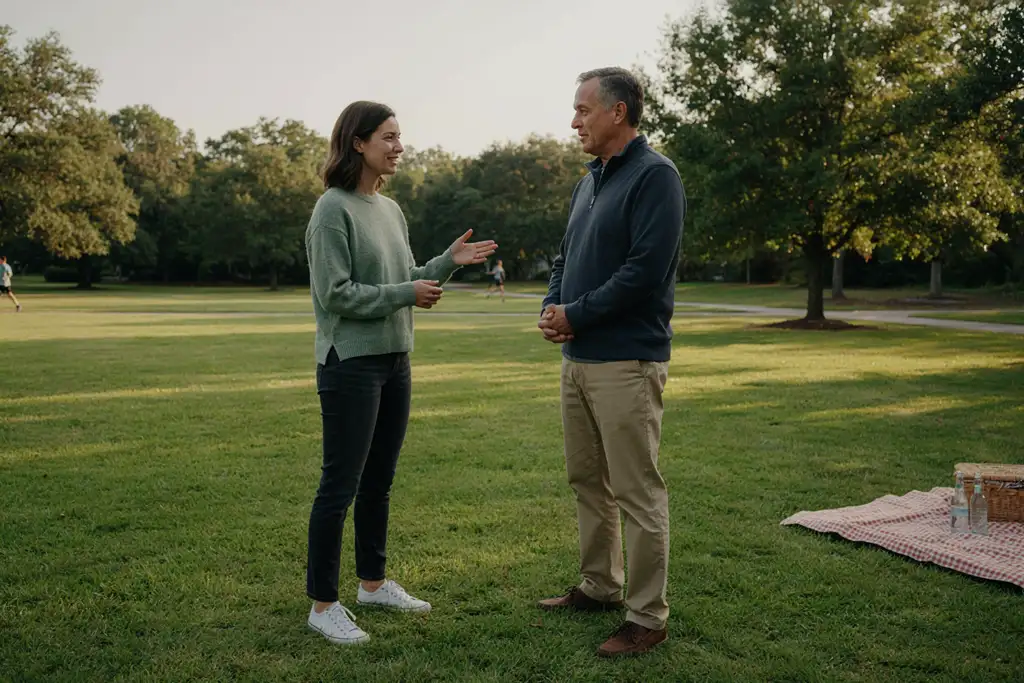
Use short, specific sentences with a reason attached. Pair every boundary with a practical alternative so compliance feels easy, not confrontational.
I rely on short, specific sentences with a reason attached. They sound respectful and get results fast. I keep my tone calm and my feet still so the words do the work.
When someone crowds in, I use a boundary-plus-alternative: “Hey there — we’ve got our group spread here. Could you slide over a bit to that open patch?” If kids or dogs wander onto my blanket, I reset the line cheerfully: “Blanket’s our zone — can you hop off, please? Thanks!”
Ready-to-Use Lines
- At an overlook: “I’ll be thirty seconds, then it’s yours.”
- When bumped repeatedly: “I’m staying put — please pass behind me.”
- Loud neighbor: “We’re catching up quietly here — would you mind taking the call a little farther out?”
- Speaker music: “Sound carries here. Could you turn that down so both groups can relax?”
Action today: Pick one boundary sentence from the list and say it out loud once — rehearsal makes it natural when you need it.
Kids, Dogs, Games, and Wheels: Movement Without Collisions
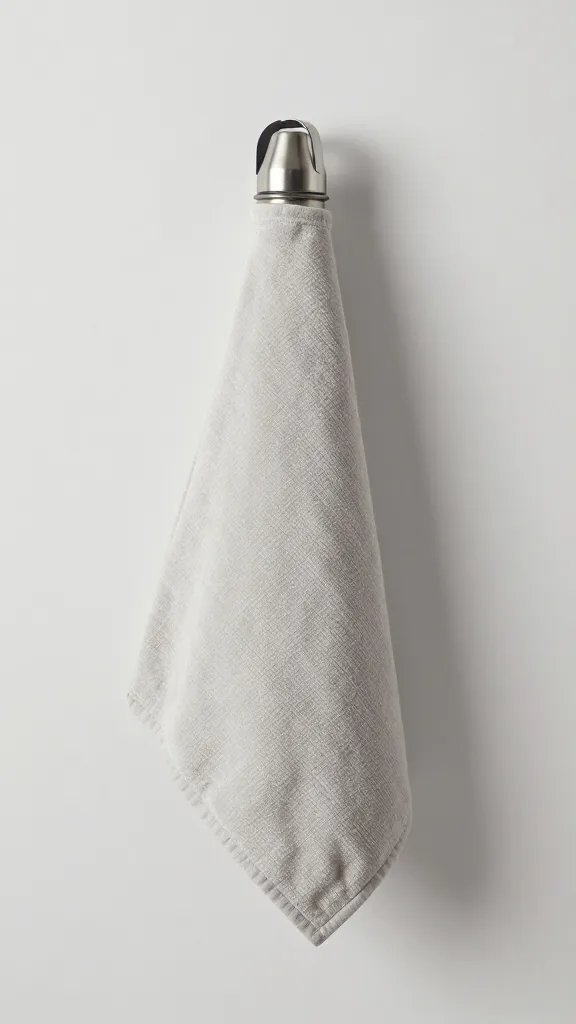
Set a visible play lane along your blanket edge, not across traffic. Use short leashes in crowds and switch to seated games when tosses land within 6 feet of others.
Fast movement expands your impact zone. I set a clear play lane for kids that runs along our blanket edge, not across traffic lines or other setups. I choose soft balls and stop throwing when the area fills; I shift to seated games or cards when tosses start landing within six feet of others.
With dogs, I use a short leash in crowds and stake it behind my blanket so the dog’s circle doesn’t overlap someone else’s space. Wheels belong on paths. I dismount scooters and bikes on lawns, then walk them with handlebars pointed away from others’ blankets.
Action today: Define a visible boundary for play — “from our blanket to that tree” — and keep all throws inside it.
Distance Guide by Setting and Group Type
| Setting | Minimum Gap | Key Adjustment | Best For |
|---|---|---|---|
| Open lawn, uncrowded | 3 feet (one blanket width) | Keep gear fully on your blanket | Couples, solo readers, small families |
| Open lawn, packed | 2 feet (one seated arm’s length) | Match prevailing spacing, lower voices | All groups on busy weekends |
| Scenic overlook / viewpoint | 18 inches behind the person ahead | Angle body 30°, limit to 1 minute | Photographers, couples, tour groups |
| Narrow pathway | One full body width for passing | Step aside, don’t block with bags | Walkers, joggers, wheelchair users |
| Family with active kids | 4+ feet if possible | Define play lane, switch to seated games | Families with children under 10 |
| Older guests / limited mobility | 3+ feet, chairs at back | Use chairs not floor, clear path through | Seniors, guests with mobility aids |
| Formal picnic / styled event | 3+ feet, tidy perimeter | No sprawl, fold blanket edges under | Engagement shoots, anniversary picnics |
| Dog owners in crowded park | Short leash, 4+ feet from others | Water bowl on your side, retrieve balls yourself | Any group with dogs on leash |
Frequently Asked Questions
How close is too close when laying a blanket near others?
Leave at least one full blanket width — about three feet — between your edge and theirs. If the lawn is packed tighter than that everywhere, match the prevailing spacing and keep voices low. Tuck bags and shoes fully onto your blanket so you don’t nibble their gap.
What do I do if someone stands in front of my view and won’t move?
Step close enough to speak without shouting and use a calm, specific line: “We’ve been here a bit and can’t see. Could you give us a window for thirty seconds?” If they ignore you, shift two steps to regain a partial angle rather than escalating. Most people respond to a clear time-bound request.
Is it okay to play music quietly if everyone else is doing it?
Only if it can’t be heard six feet away. Walk that distance and check. If multiple groups have sound, it stacks into noise — switch to earbuds or keep the speaker off to protect your neighbors’ space and your own relaxation.
How long is fair to occupy the front at a scenic overlook?
Keep it to one minute for photos or thirty seconds for a look when others are waiting. Take group shots efficiently by setting your camera before you step up. Afterward, move back two steps so the next person has a clear lane.
What’s the polite way to ask a group to scoot without sounding bossy?
Pair a boundary with a specific alternative. Try: “We’ve got our blanket spread here — could you slide over to that open spot by the tree?” The reason softens the request and pointing to a solution makes compliance easy.
What’s the polite way to ask someone to move their stuff off your blanket area?
Approach calmly and say: “Hey, I think your bag drifted onto our blanket — mind if I slide it back?” Most people don’t notice the creep and respond well to a light, specific request. If they resist, move your edge instead of escalating.
How do I handle someone who keeps walking through my setup?
Say it once with a smile: “We’re spread out here — could you pass behind the chairs?” If it continues, shift a bag or chair to create a visual barrier along the path side. Most people respond to a physical cue faster than a verbal one.
Is it rude to put towels or bags to “save” space at a viewpoint?
Reserving with personal items for more than 10–15 minutes reads as aggressive in a crowded park. If you’re stepping away briefly, one small item is acceptable. For longer holds, have someone stay or give up the spot gracefully.
What if my neighbour’s smoke or cooking smell is overpowering?
Relocate before frustration builds. Move upwind or behind a natural buffer like a hedge or slight hill. If the smell is from a grill in a restricted area, a calm note to a ranger is appropriate — but don’t confront the group directly about smoke.
How do I teach kids about personal space at the park?
Set a visible boundary before play starts: a towel laid six feet from your blanket as a “play line.” Practice one sentence: “Stay between our blanket and the towel.” Redirect gently the first time they cross it, and praise when they stay within bounds.
Conclusion


Crowded parks still feel spacious when you read the invisible rooms, measure simple gaps, and speak in clear, short sentences. Practice one action today — timing your overlook stop, folding in your blanket edges, or using a boundary-plus-alternative line — and the rest follows easily. Next time you head out, pack a smaller blanket and a practiced phrase; you’ll enjoy the view and keep the peace without effort.
Leave a Reply