The “Diamond” Fold: Sprinkling Glamour Onto a Minimalist Table Secrets
· Samantha Jones
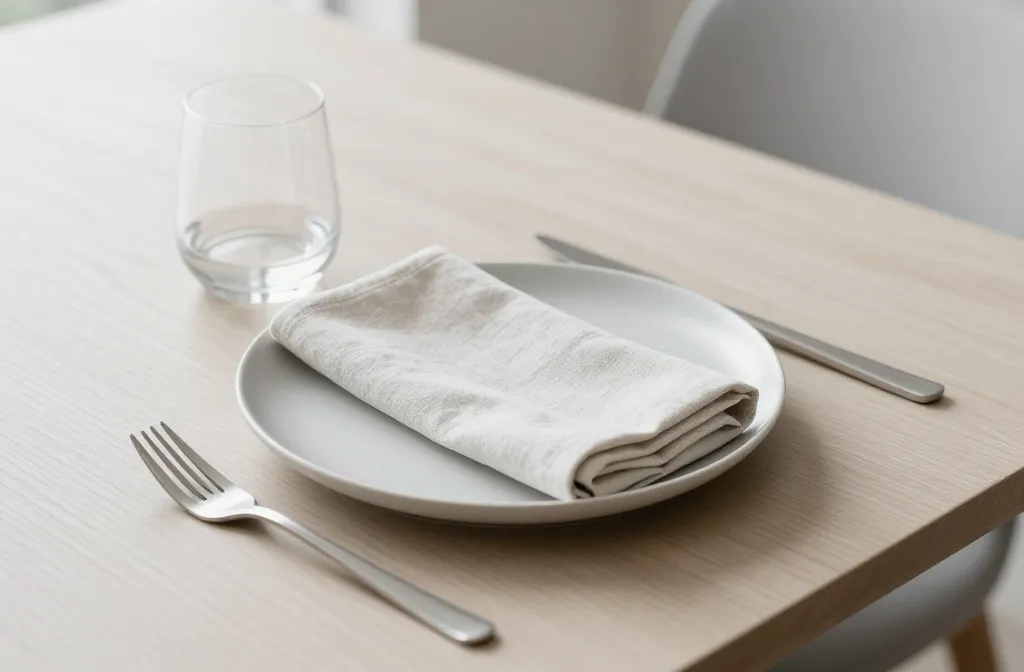
I host in a small apartment, so my table needs to look intentional without swallowing space. I learned the hard way that centerpieces and layers of plates only add visual noise on a narrow dining table. The Diamond Fold solved it — it adds a crisp focal point using the napkin you already set. In this guide, I’ll show you how to fold it in minutes, keep it sharp through a meal, and style it to fit a clean, modern table.
What Makes the Diamond Fold Work on a Minimalist Table
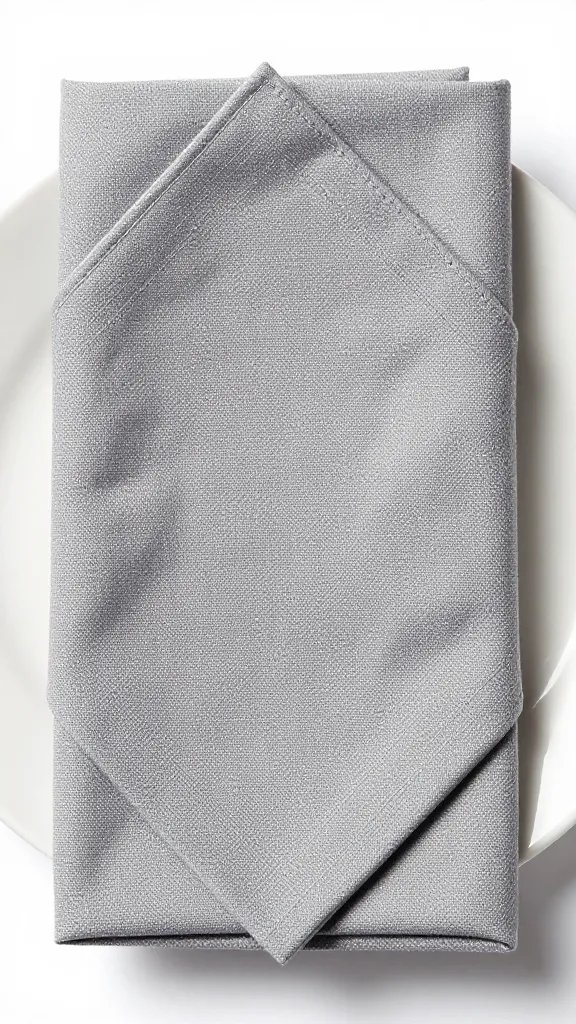
The Diamond draws the eye to a single, centered shape. That small geometric accent gives you polish without extra objects competing for attention.
Because it stands on its own, it replaces bulky rings, complicated layers, and tall flowers. You get order and texture, not clutter.
Action today: Clear your table to plates, cutlery, water glasses, and folded napkins only — remove everything else and see how the room instantly calms.
Tools and Materials You Already Have
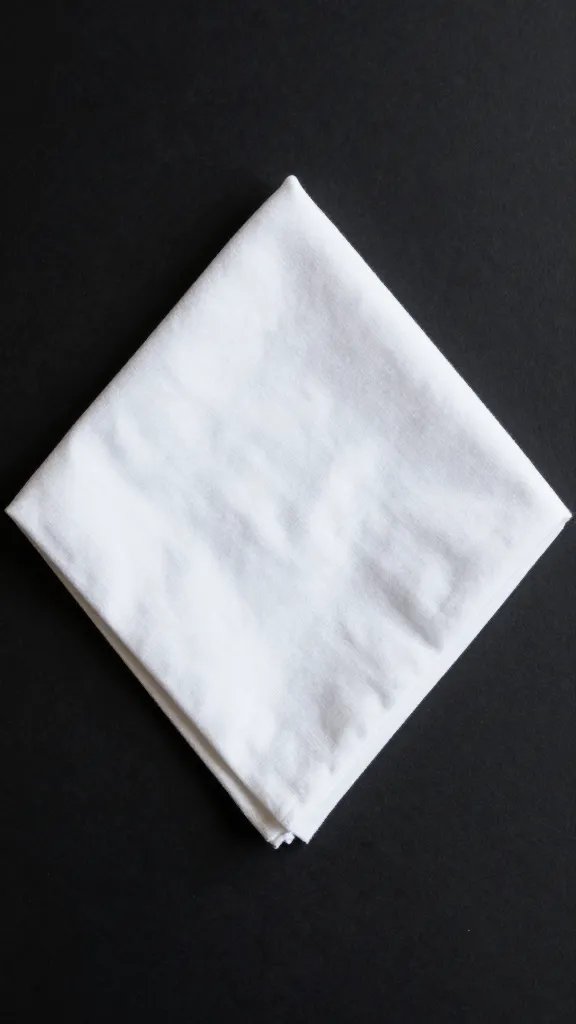
You need only dinner-sized napkins and a flat surface. Linen or cotton keeps a clean crease and looks intentional on a minimalist setting.
A warm iron helps, but you can press folds with the side of your thumb. If your fabric is floppy, a light mist of water tightens edges as you fold.
Material Recommendations
- Napkin size: 18–20 inches square for dinner; 16 inches for side plates.
- Fabric: Medium-weight cotton or linen. Avoid slippery polyester blends.
- Finish: Simple hem, no lace or ruffles — the geometry does the talking.
Action today: Pull two napkins you already own and test which fabric holds a crease better — use that set for your next meal.
How to Fold the Diamond: Clear, Repeatable Steps
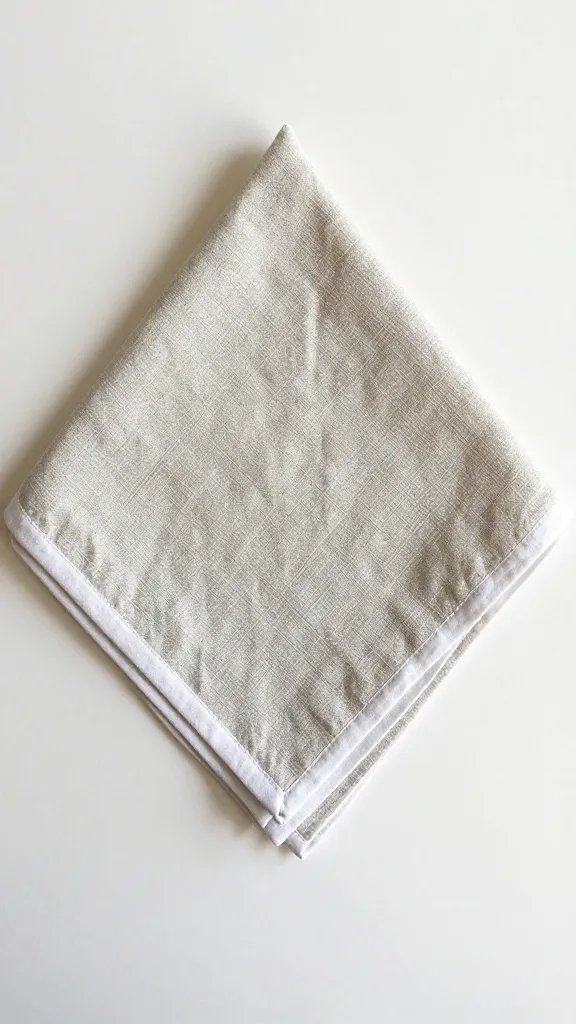
I use this exact sequence so I can fold eight napkins in under ten minutes and keep them identical.
- Lay the napkin flat, wrong side up, with a corner pointing toward you (a diamond shape on the table).
- Fold the bottom corner to meet the top corner to make a triangle. Press the long edge flat.
- Bring the right corner of the triangle up to meet the top point. Press. You now have a slimmer diamond on the left side.
- Bring the left corner up to meet the top point. You now have a tall diamond with a seam down the middle.
- Flip the napkin over carefully, keeping the point at the top.
- Fold the right edge toward the center by about 1.5–2 inches. Press the crease.
- Fold the left edge toward the center to match. The front shows a clean, elongated diamond.
- Flip it back to the front. Tuck the bottom tip under by 1 inch so the napkin stands neatly or sits centered on a plate.
Warning Signs and Fixes
- Bulky middle: Your initial triangle wasn’t flattened. Open, smooth with your palm, refold.
- Floppy sides: Fabric too soft. Lightly mist with clean water and repress edges with your hand or a warm iron.
- Uneven diamond: Your side folds weren’t equal. Refold steps 6–7 using your thumb as a consistent 2-inch guide.
Action today: Time yourself folding one napkin twice — aim for under 90 seconds on the second run to lock the sequence in muscle memory.
Placement That Adds Glamour Without Clutter
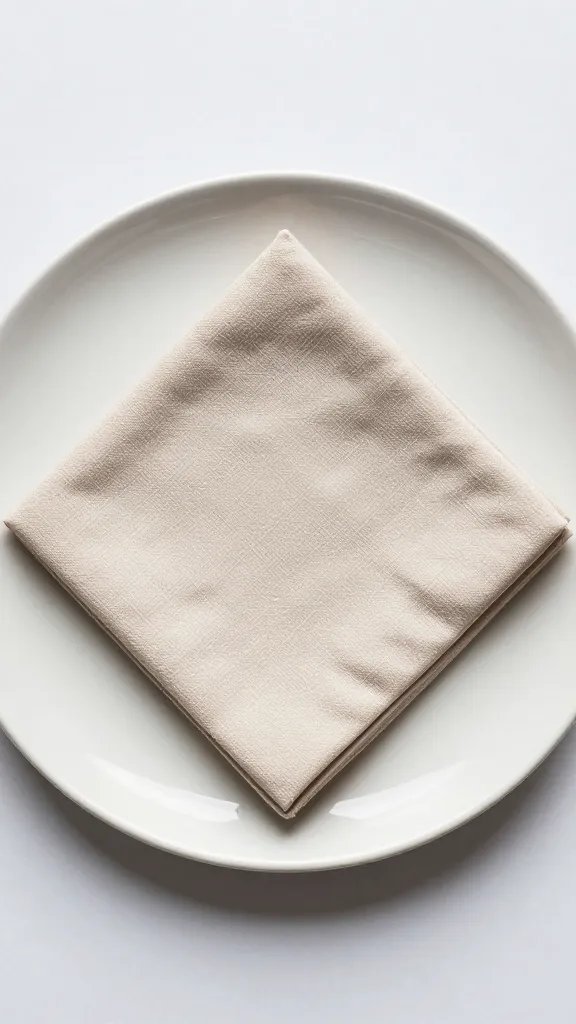
On minimalist tables, placement does the styling. I anchor the Diamond either centered on the dinner plate or perched at the top edge under the fork tines for a gallery-like look.
Keep the table quiet. Skip napkin rings, busy chargers, and large placeholders. The fold’s geometry is the feature.
Three Reliable Placements
- Centered on the plate: Easiest and cleanest. Point the tip toward the diner.
- Top of the plate, overlapping rim: Shows more plate; good for patterned ceramics.
- To the left under cutlery: Slide 1 inch under the fork handles; aligns everything into one visual column.
Action today: Try all three placements on one setting and step back 6–8 feet — choose the one where your eye rests, not scans.
Color, Texture, and Small Accents That Still Read Minimal
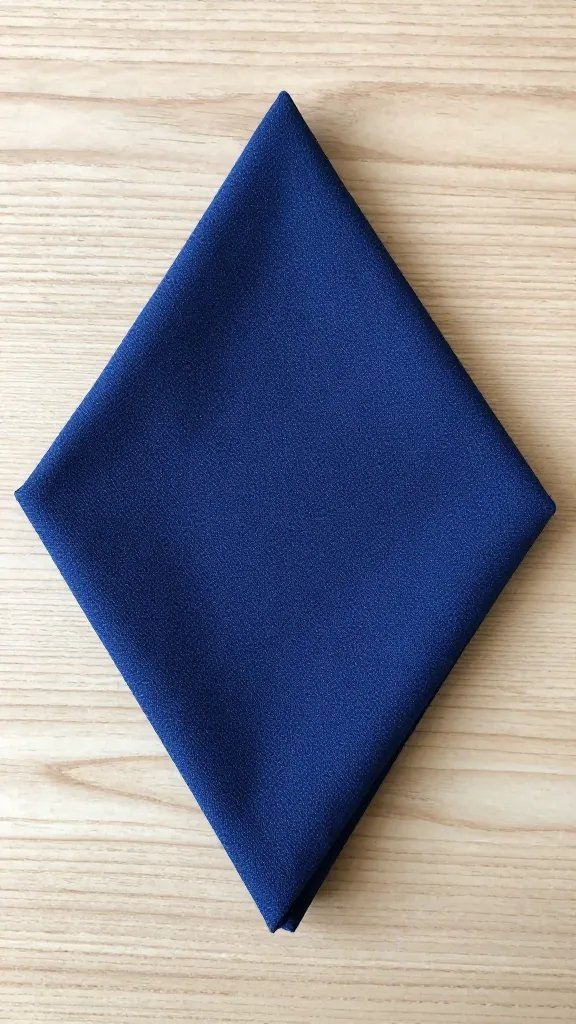
I limit to one accent per setting. If the napkin has color, the plate stays plain. If the plate has a rim pattern, the napkin stays solid.
For glamour, I add a single tiny detail that doesn’t add bulk: a sprig of rosemary, a short eucalyptus leaf, or a thin black ribbon tied once and trimmed short.
Palette Guide That Never Fails
- White plates + natural linen napkin: Calm and textured; add a green sprig.
- Stoneware plates + charcoal napkin: Moody and modern; no extra accent.
- Glossy white plates + black napkin: High contrast; add a 1-inch brass flatware line for warmth.
Action today: Choose one neutral napkin and one natural accent — cut ribbon to 6 inches max or trim foliage to stay within the napkin width.
Keeping the Diamond Crisp Through the Meal
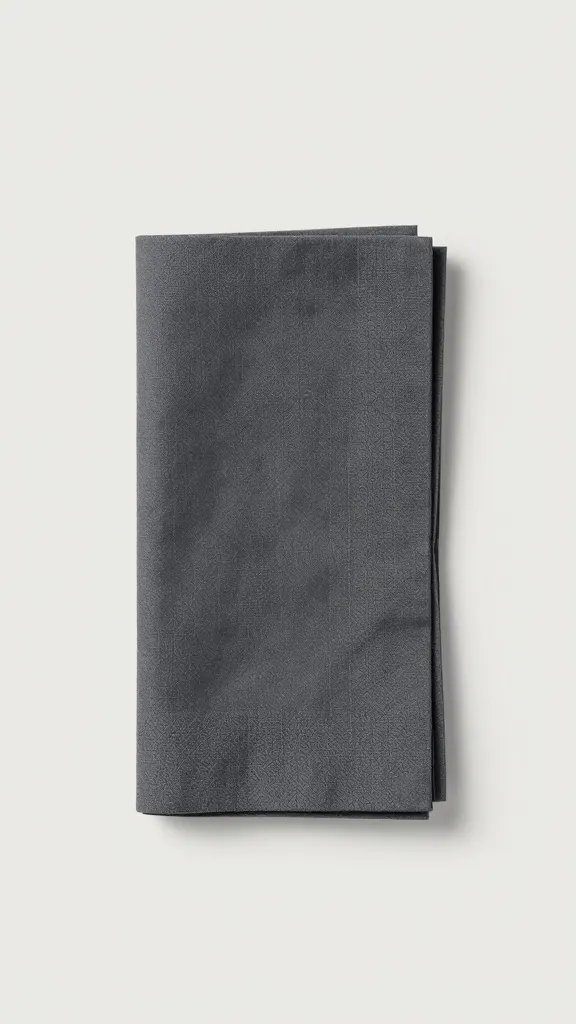
Folds relax with warmth and moisture. I set napkins last, right before guests sit, and I avoid resting hot bowls directly on the fold.
If you pre-fold, stack napkins in a single pile under a light book for 30 minutes to set the creases. That small press holds the shape for hours.
Step-by-Step Prep Timeline
- Iron or hand-press napkins the morning of.
- Fold all napkins 1–2 hours before guests arrive.
- Stack and weigh with a medium hardcover for 30 minutes.
- Place on plates 5–10 minutes before seating.
Action today: Test one napkin: fold, weigh for 30 minutes, then move it around — confirm the edges hold after handling.
Scaling for Two, Four, or Eight Place Settings
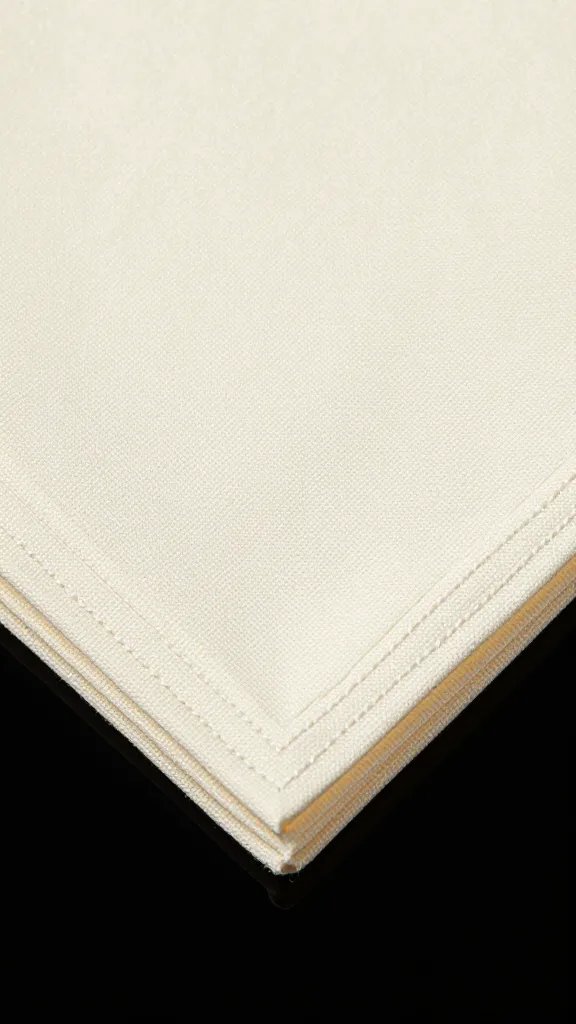
Minimalist tables can look sparse when you add more seats. I keep consistency strict: same fold, same orientation, same spacing from plate edges.
Measure with your fingers. Keep the diamond’s top point about one finger from the plate rim, identical on every setting.
Action today: Set two places and align the diamond points to match — adjust until they mirror each other exactly.
Frequently Asked Questions
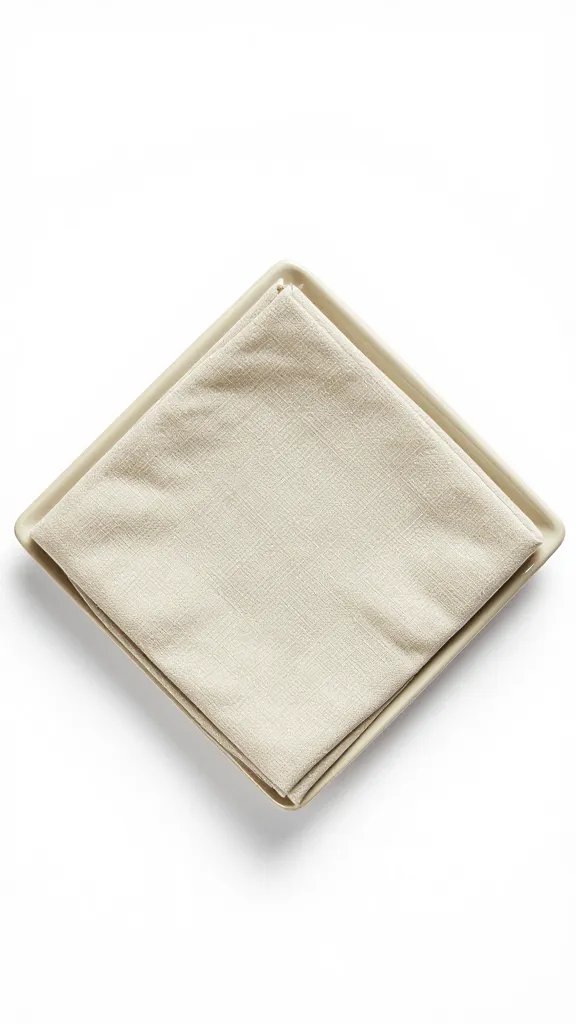
Will paper napkins hold a Diamond Fold for a casual dinner?
Thick, dinner-quality paper napkins can hold for the first impression, but they soften quickly. If you use paper, choose the heaviest option at your supermarket and fold right before serving. Avoid textured embossing — it creases unpredictably. For a steadier look, switch to cotton; you can wash and reuse for years.
How do I fold if my napkins aren’t perfect squares?
Trim is not necessary. Start by aligning the longest edge to create your initial triangle as square as possible, and accept a slightly offset base. Keep the side folds equal by eye, not by measurement. The final diamond will still read clean from a standing position.
What if my linen is wrinkled and I don’t want to iron?
Lightly mist the napkin with clean water, smooth it on a tabletop, and hand-press each fold with the side of your thumb. Stack the finished folds under a book for 20–30 minutes. The weight flattens wrinkles enough for a crisp look without hauling out an iron. Avoid over-wetting — damp, not soaked.
Can I combine the Diamond with a menu card without adding clutter?
Yes — use a narrow menu strip, about 2 inches wide, tucked under the diamond’s lower third. Keep the card plain: white or kraft with simple text. This adds vertical layering without bulk and keeps the geometry intact. Print at home on standard cardstock and cut with a ruler and craft knife.
How do I clean and store napkins so they’re ready to fold next time?
Wash on warm with a mild detergent, skip fabric softener so fibers keep their grip, and shake them flat before drying. Remove from the dryer slightly damp and smooth by hand, or iron once and store flat. Fold in thirds for storage to minimize deep creases. Keep them in a drawer away from kitchen steam.
Conclusion
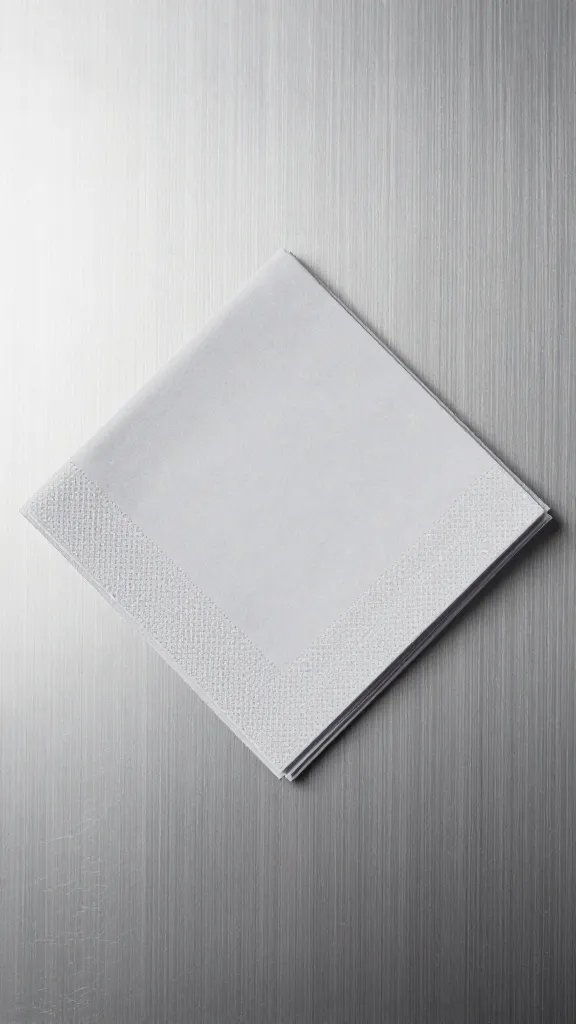
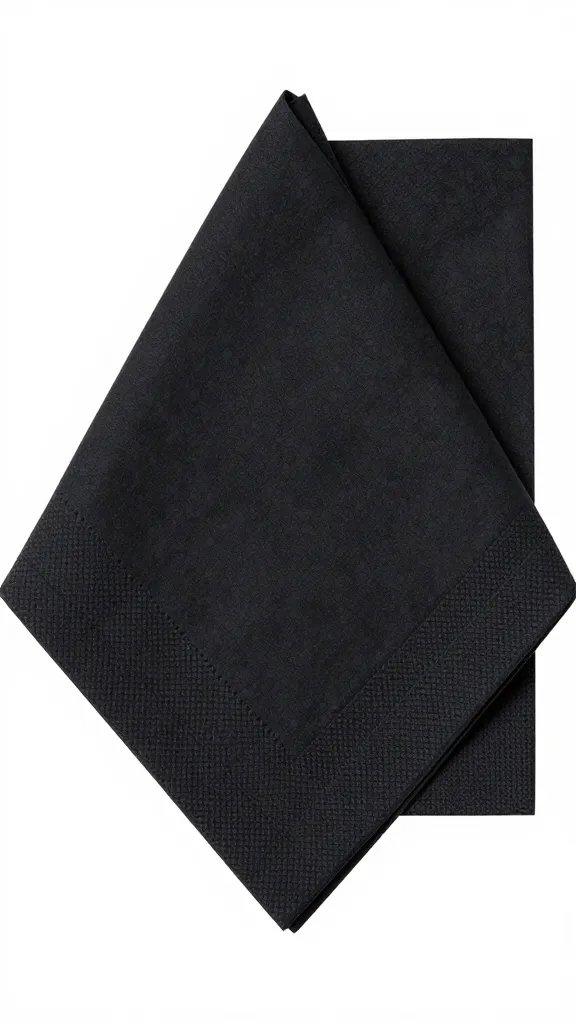
The Diamond Fold gives you a focal point that reads as intentional design, not decoration. Practice it once today, choose a single accent, and set two places to see how orderly the table feels. When you’re ready to expand, repeat the same fold and spacing across the whole table — the consistency is the glamour. Next step: pair this fold with a low, 2–3-inch greenery line down the table for visual depth that still stays minimalist.
Leave a Reply