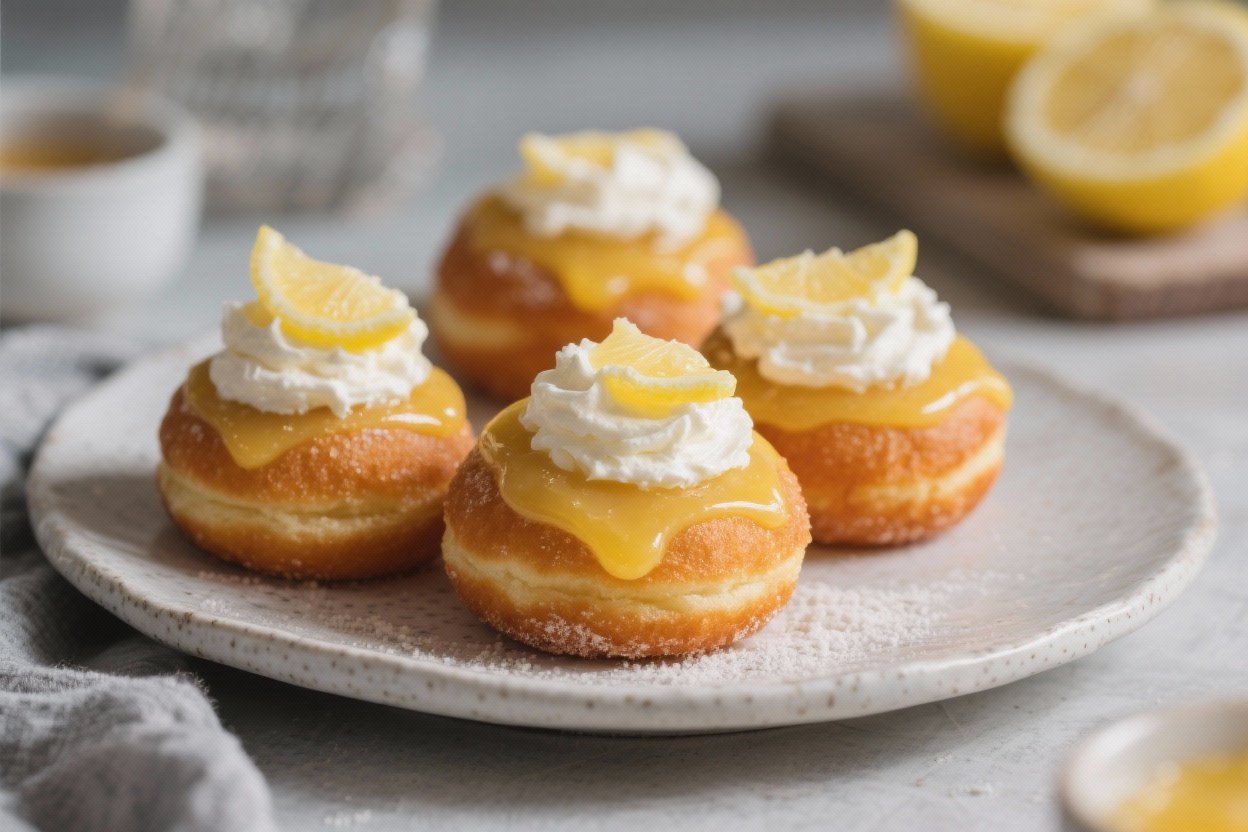
Doughnuts With Lemon Curd and Mascarpone – Soft, Bright, and Irresistible
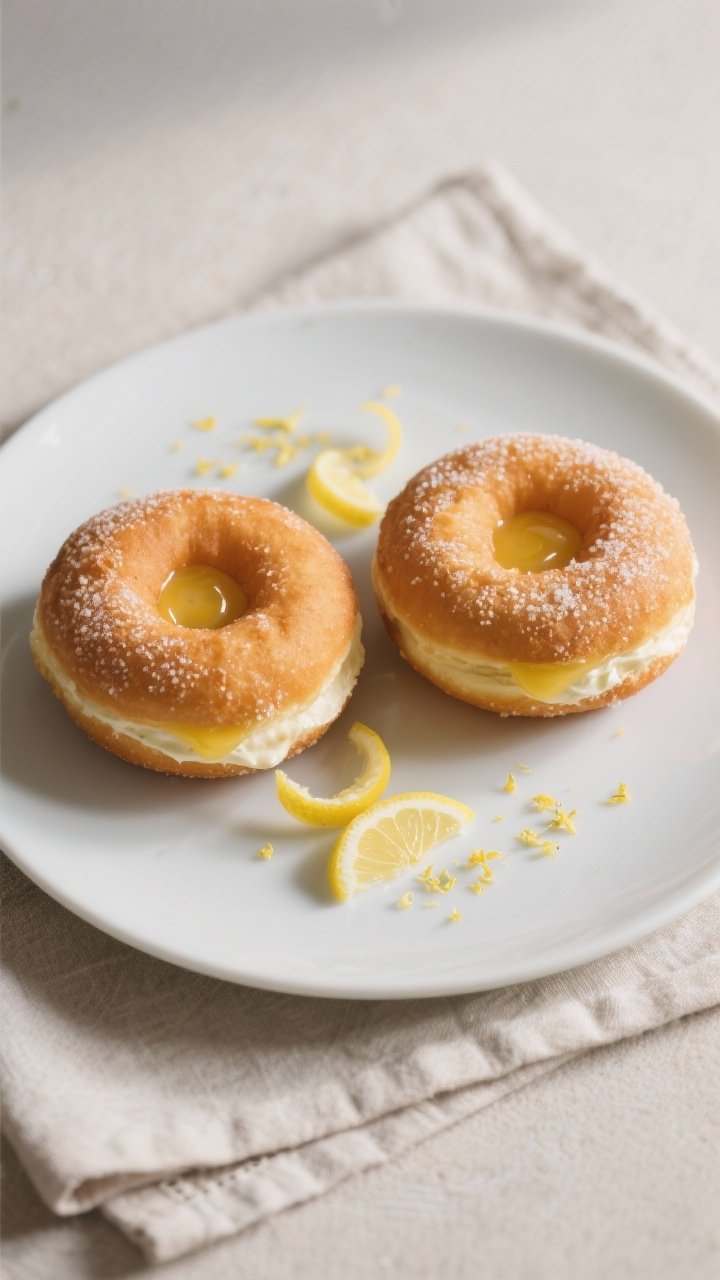
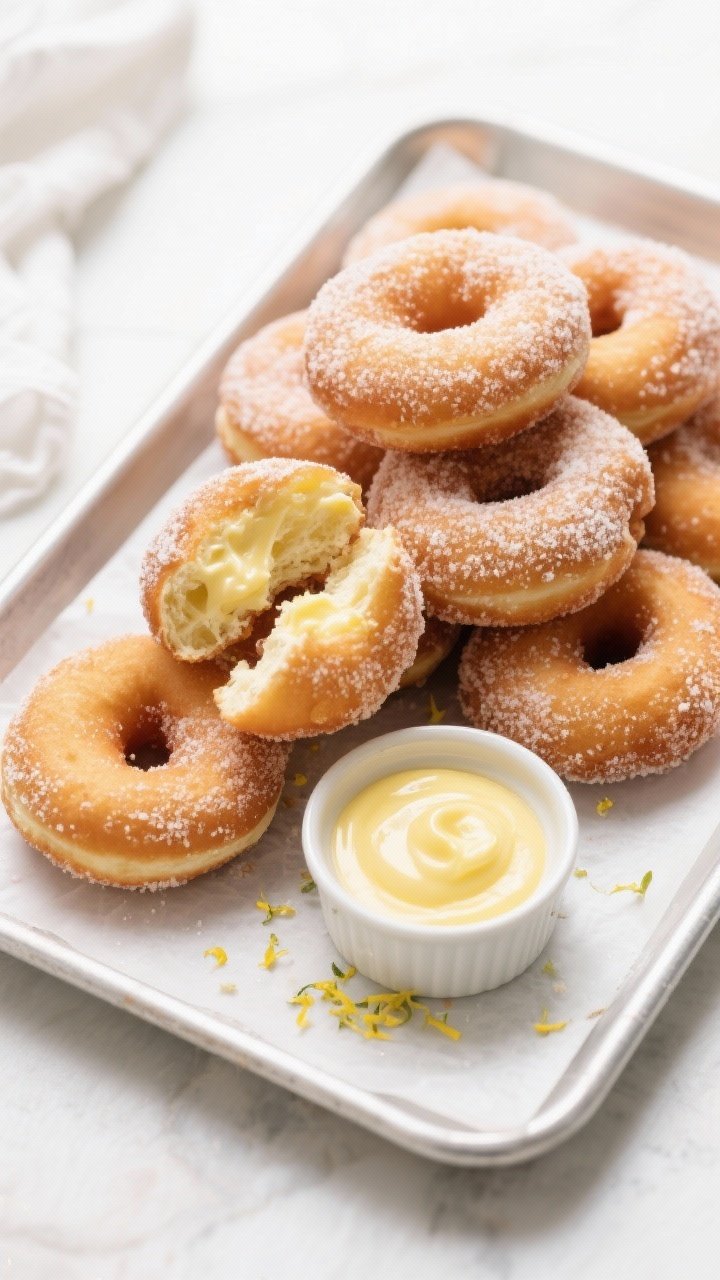
There’s something special about a warm, sugar-dusted doughnut you can tear into with your hands. Fill it with silky lemon curd and a cloud of mascarpone, and it becomes a bakery-level treat you can make at home. These doughnuts are soft inside, lightly crisp outside, and bursting with bright citrus.
The filling hits that perfect balance of tangy and creamy. If you’re craving a dessert that feels cheerful and indulgent without being heavy, this is it.
What Makes This Recipe So Good

Doughnuts With Lemon Curd and Mascarpone - Soft, Bright, and Irresistible
Ingredients
- For the doughnuts: 2 1/4 teaspoons active dry yeast (1 packet)
- 3/4 cup warm milk (about 105–110°F)
- 3 cups all-purpose flour, plus more for dusting
- 1/4 cup granulated sugar
- 1/2 teaspoon fine salt
- 2 large eggs, room temperature
- 4 tablespoons unsalted butter, softened
- Vegetable oil or neutral frying oil
- 1/2 cup granulated sugar (for coating)
- For the lemon curd: 1/2 cup fresh lemon juice (about 3–4 lemons)
- 2 teaspoons finely grated lemon zest
- 1/2 cup granulated sugar
- 3 large egg yolks
- 4 tablespoons unsalted butter, cut into pieces
- Pinch of salt
- For the mascarpone filling: 8 ounces mascarpone cheese, chilled
- 2–3 tablespoons powdered sugar, to taste
- 1 teaspoon vanilla extract
- Optional: Heavy cream (1–2 tablespoons) to loosen mascarpone, extra lemon zest for garnish
Instructions
- Make the lemon curd: In a small saucepan, whisk lemon juice, zest, sugar, egg yolks, and a pinch of salt. Cook over medium-low heat, stirring constantly, until thick enough to coat the back of a spoon, about 6–8 minutes. Remove from heat, whisk in butter until smooth, then strain into a bowl. Press plastic wrap onto the surface and chill until set.
- Mix the dough: In a bowl, sprinkle yeast over warm milk and let it sit until foamy, about 5–10 minutes. In a stand mixer with a dough hook (or by hand), combine flour, sugar, and salt. Add the yeast mixture and eggs. Mix until a shaggy dough forms.
- Knead and enrich: Add softened butter, one tablespoon at a time, mixing until fully incorporated. Knead until the dough is smooth and slightly tacky but not sticky, about 6–8 minutes in a mixer or 10–12 minutes by hand. If needed, dust with a little flour.
- First rise: Shape the dough into a ball and place it in a lightly oiled bowl. Cover and let rise in a warm spot until doubled, about 1–1.5 hours.
- Shape the doughnuts: Turn the dough onto a lightly floured surface and roll to about 3/4-inch thickness. Use a 2.5–3-inch round cutter to cut circles. Transfer to parchment-lined trays, leaving space between them. Gather scraps, rest for 5 minutes, reroll, and cut more.
- Second rise: Lightly cover the rounds with a towel and let them puff until pillowy, 30–45 minutes. They should look visibly lighter and spring back slowly when gently tapped.
- Make the mascarpone filling: In a bowl, whisk mascarpone with powdered sugar and vanilla until smooth. If too thick, loosen with 1–2 tablespoons of heavy cream. Keep chilled. Once the curd is cold and thick, gently fold a few spoonfuls into the mascarpone to create a marbled effect, or keep them separate for a layered fill.
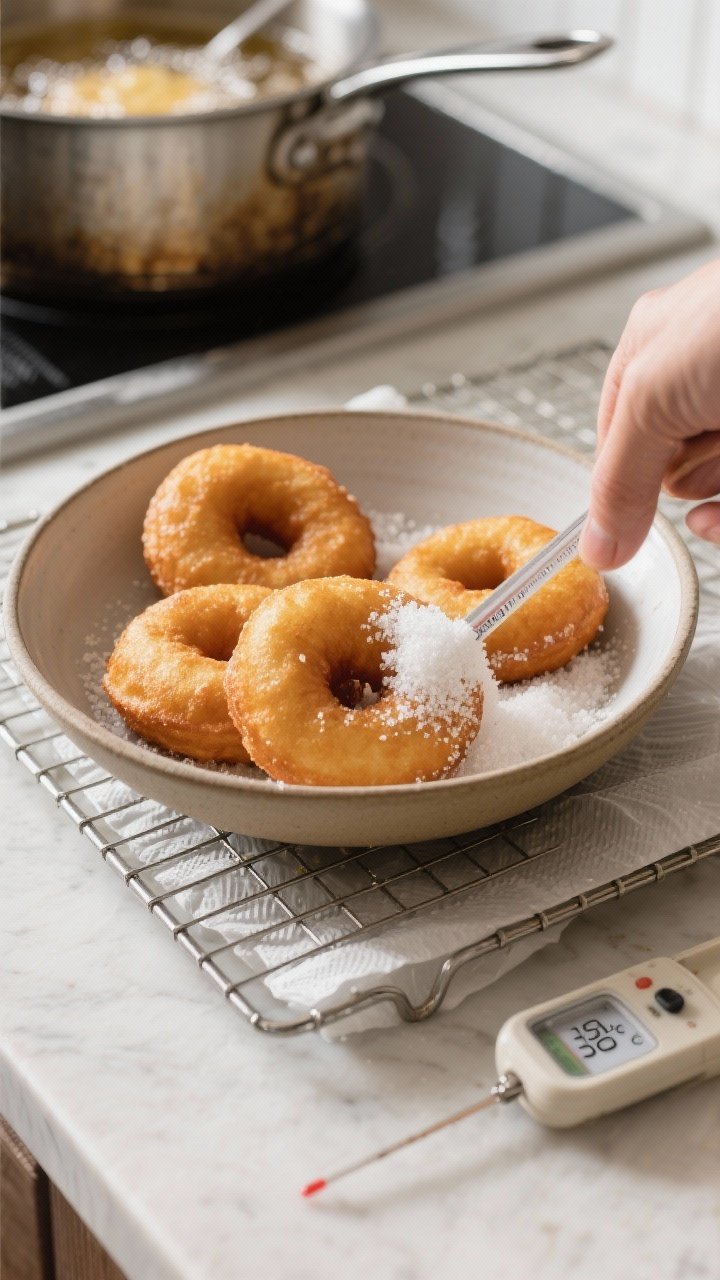
- Heat the oil: Pour 2–3 inches of oil into a heavy pot and heat to 350°F. Keep a thermometer in the pot to maintain temperature. Prepare a sheet pan lined with paper towels and a bowl of sugar for coating.
- Fry the doughnuts: Working in batches, carefully slide in the dough rounds. Fry 1–2 minutes per side, until golden brown and cooked through. Adjust heat to hold steady at 350°F. Transfer to the paper towels to drain briefly.
- Coat in sugar: While still warm, roll the doughnuts in granulated sugar until evenly coated. Let cool just enough to handle.
- Fill the doughnuts: Use a paring knife to make a small slit on the side of each doughnut. Fit a piping bag with a round tip and fill with lemon curd, mascarpone, or the marbled mixture. Pipe in gently until you feel the doughnut swell slightly—about 2–3 teaspoons total, depending on size.
- Finish and serve: Dust with a touch of zest if you like. Serve warm or at room temperature. The centers should be creamy with a bright citrus pop.
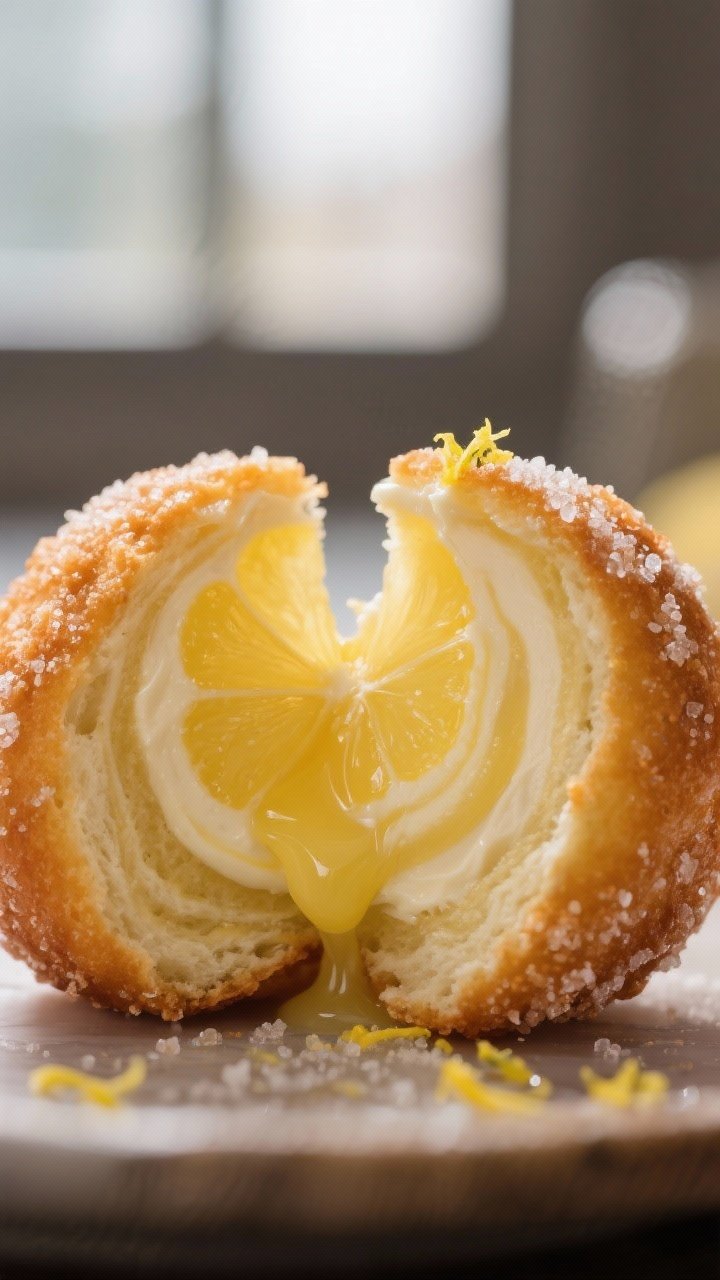
- Fluffy, not greasy: A well-proofed yeasted dough gives you a pillowy crumb with a light, golden shell.
- Balanced filling: Lemon curd brings zing, mascarpone adds creaminess, and together they never feel too sweet.
- Make-ahead friendly: The curd and mascarpone mixture can be prepared ahead, making frying day easier.
- Approachable technique: Simple steps and reliable cues help even first-time doughnut makers succeed.
- Customizable: Swap citrus, add jams, or turn them into filled doughnut holes for a party tray.
Shopping List
- For the doughnuts:
- 2 1/4 teaspoons active dry yeast (1 packet)
- 3/4 cup warm milk (about 105–110°F)
- 3 cups all-purpose flour, plus more for dusting
- 1/4 cup granulated sugar
- 1/2 teaspoon fine salt
- 2 large eggs, room temperature
- 4 tablespoons unsalted butter, softened
- Vegetable oil or neutral frying oil
- 1/2 cup granulated sugar (for coating)
- For the lemon curd:
- 1/2 cup fresh lemon juice (about 3–4 lemons)
- 2 teaspoons finely grated lemon zest
- 1/2 cup granulated sugar
- 3 large egg yolks
- 4 tablespoons unsalted butter, cut into pieces
- Pinch of salt
- For the mascarpone filling:
- 8 ounces mascarpone cheese, chilled
- 2–3 tablespoons powdered sugar, to taste
- 1 teaspoon vanilla extract
- Optional: Heavy cream (1–2 tablespoons) to loosen mascarpone, extra lemon zest for garnish
Step-by-Step Instructions
- Make the lemon curd: In a small saucepan, whisk lemon juice, zest, sugar, egg yolks, and a pinch of salt. Cook over medium-low heat, stirring constantly, until thick enough to coat the back of a spoon, about 6–8 minutes.
Remove from heat, whisk in butter until smooth, then strain into a bowl. Press plastic wrap onto the surface and chill until set.
- Mix the dough: In a bowl, sprinkle yeast over warm milk and let it sit until foamy, about 5–10 minutes. In a stand mixer with a dough hook (or by hand), combine flour, sugar, and salt.
Add the yeast mixture and eggs. Mix until a shaggy dough forms.
- Knead and enrich: Add softened butter, one tablespoon at a time, mixing until fully incorporated. Knead until the dough is smooth and slightly tacky but not sticky, about 6–8 minutes in a mixer or 10–12 minutes by hand.
If needed, dust with a little flour.
- First rise: Shape the dough into a ball and place it in a lightly oiled bowl. Cover and let rise in a warm spot until doubled, about 1–1.5 hours.
- Shape the doughnuts: Turn the dough onto a lightly floured surface and roll to about 3/4-inch thickness. Use a 2.5–3-inch round cutter to cut circles.
Transfer to parchment-lined trays, leaving space between them. Gather scraps, rest for 5 minutes, reroll, and cut more.
- Second rise: Lightly cover the rounds with a towel and let them puff until pillowy, 30–45 minutes. They should look visibly lighter and spring back slowly when gently tapped.
- Make the mascarpone filling: In a bowl, whisk mascarpone with powdered sugar and vanilla until smooth.
If too thick, loosen with 1–2 tablespoons of heavy cream. Keep chilled. Once the curd is cold and thick, gently fold a few spoonfuls into the mascarpone to create a marbled effect, or keep them separate for a layered fill.
- Heat the oil: Pour 2–3 inches of oil into a heavy pot and heat to 350°F.
Keep a thermometer in the pot to maintain temperature. Prepare a sheet pan lined with paper towels and a bowl of sugar for coating.
- Fry the doughnuts: Working in batches, carefully slide in the dough rounds. Fry 1–2 minutes per side, until golden brown and cooked through.
Adjust heat to hold steady at 350°F. Transfer to the paper towels to drain briefly.
- Coat in sugar: While still warm, roll the doughnuts in granulated sugar until evenly coated. Let cool just enough to handle.
- Fill the doughnuts: Use a paring knife to make a small slit on the side of each doughnut.
Fit a piping bag with a round tip and fill with lemon curd, mascarpone, or the marbled mixture. Pipe in gently until you feel the doughnut swell slightly—about 2–3 teaspoons total, depending on size.
- Finish and serve: Dust with a touch of zest if you like. Serve warm or at room temperature.
The centers should be creamy with a bright citrus pop.
Keeping It Fresh
These doughnuts are best the day they’re made. If you need to plan ahead, fry and sugar them, then fill right before serving. Store unfilled doughnuts in an airtight container at room temperature for up to 24 hours.
For longer storage: Freeze unfried dough rounds on a tray, then transfer to a bag for up to 1 month.
Thaw in the fridge overnight, proof until puffy, then fry. You can also freeze finished doughnuts without filling; rewarm briefly at 300°F, then fill.
The lemon curd keeps in the fridge for up to a week and can be frozen for a month. The mascarpone mixture is best within 2–3 days.
Health Benefits
This is a treat, but it still offers some bright spots. Lemon juice and zest bring vitamin C and antioxidants.
Fresh eggs add protein and fat-soluble vitamins.
Compared to heavy cream-based fillings, mascarpone is rich but can be used sparingly because of its fullness and texture, helping you feel satisfied with a smaller portion. If you want to lighten it up, use a mix of mascarpone and Greek yogurt for added protein and tang.
Balance matters. Pair a doughnut with fresh berries or a small citrus salad to round out the experience and add fiber.
Common Mistakes to Avoid
- Overheating the milk: Milk that’s too hot can kill the yeast.
Aim for warm, not hot.
- Underproofing: Dough that hasn’t risen enough will be dense and may soak up oil. Wait for that puff and slow spring-back.
- Oil too cool or too hot: Below 340°F leads to greasy doughnuts; above 365°F browns the outside before the inside cooks.
- Overcrowding the pot: This drops the oil temperature and causes uneven frying. Fry in small batches.
- Filling while too hot: If you pipe curd into very hot doughnuts, the filling can thin and leak.
Let them cool slightly first.
Variations You Can Try
- Meyer lemon curd: Swap regular lemons for Meyer lemons for a floral, less tart finish.
- Lemon-berry swirl: Fold raspberry jam into the mascarpone for a ribbon effect.
- Citrus trio: Use a mix of lemon, lime, and orange zest in the curd for layered flavor.
- Baked version: Bake shaped doughnuts at 350°F until lightly golden, 12–15 minutes. They won’t be the same as fried, but still tasty.
- Mini doughnut holes: Cut smaller rounds and fry for less time. Serve with lemon curd for dipping.
FAQ
Can I use store-bought lemon curd?
Yes.
Choose a high-quality brand with real butter and eggs. If it’s very thick, whisk briefly to loosen before piping.
What if I don’t have a stand mixer?
Mix with a sturdy spoon until the dough comes together, then knead by hand. It will feel sticky at first.
Lightly flour your hands and surface, and keep going until smooth and elastic.
How do I know when the doughnuts are fully cooked?
They should be deep golden and feel light when lifted. A thermometer inserted into one should read around 195–200°F. If they brown too fast, lower the heat and extend the fry time slightly.
Can I make the dough overnight?
Yes.
After the first rise, punch down, cover, and refrigerate up to 12 hours. The next day, roll, cut, proof until puffy, and fry.
Is there a good substitute for mascarpone?
Blend cream cheese with a splash of heavy cream to soften the texture. Greek yogurt can also work for a lighter, tangier finish.
How much filling should I use per doughnut?
Usually 2–3 teaspoons, depending on size.
You’ll feel the doughnut inflate slightly and see a bit of filling peek out of the slit.
Can I coat with powdered sugar instead of granulated?
Yes, but let the doughnuts cool a bit first so the sugar doesn’t melt. You can also use superfine sugar for a delicate coating.
Final Thoughts
Doughnuts with lemon curd and mascarpone feel special but don’t ask for professional gear. With steady oil, a good rise, and a bright, creamy filling, you’ll get bakery-worthy results at home.
Make the curd ahead, keep the dough relaxed, and enjoy them warm while the sugar still sparkles. It’s a simple pleasure with a sunny twist—one you’ll come back to again and again.
Printable Recipe Card
Want just the essential recipe details without scrolling through the article? Get our printable recipe card with just the ingredients and instructions.