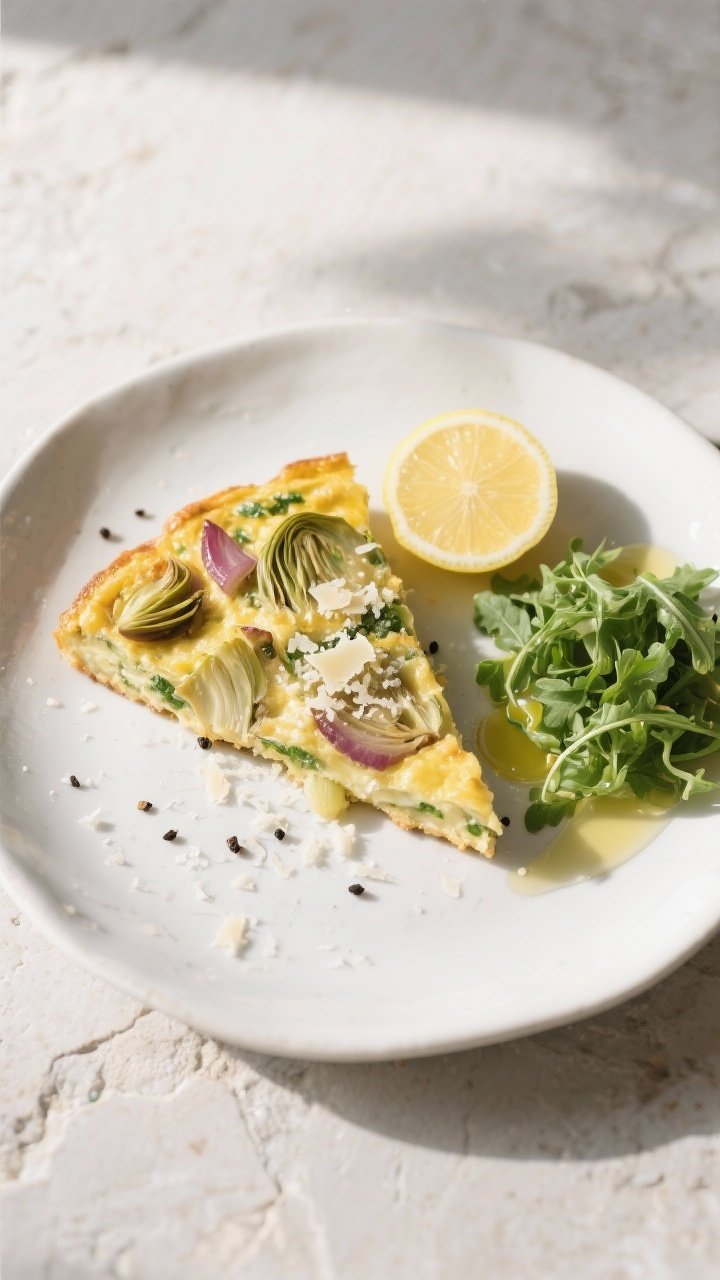
Artichoke Frittata – A Simple, Flavorful Egg Dish
· Samantha Jones
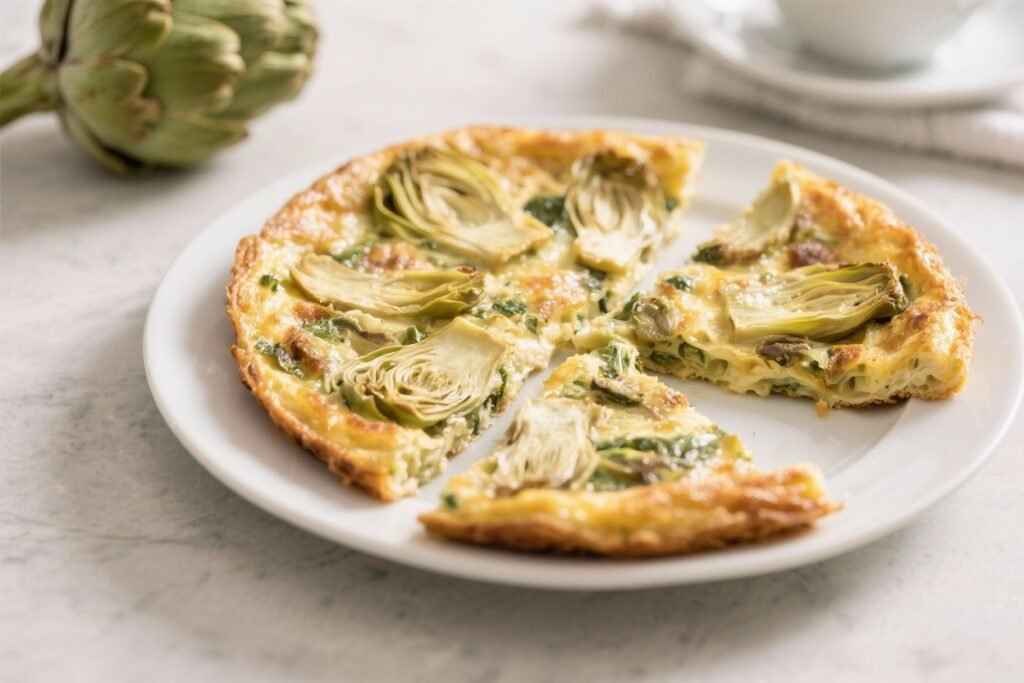
This artichoke frittata is the kind of recipe you keep coming back to. It’s simple, satisfying, and full of bright, savory flavor without a lot of fuss. Tender artichokes, soft onions, and creamy eggs come together in one skillet for a dish that works for breakfast, lunch, or a light dinner.
You can serve it warm or at room temperature, and it still tastes great. If you love easy, reliable recipes with a touch of elegance, this one is a keeper.
What Makes This Recipe So Good

Artichoke Frittata - A Simple, Flavorful Egg Dish
Ingredients
- Eggs (8 large): The base of the frittata. Room temperature is best for even cooking.
- Artichokes (12–14 oz): Use canned or jarred artichoke hearts (drained and patted dry) or thawed frozen hearts.
- Onion (1 small): Yellow or white, thinly sliced for sweetness.
- Garlic (2 cloves): Minced for extra flavor.
- Parmesan (1/2 cup, grated): Adds salty depth. Pecorino also works.
- Cream or milk (1/4 cup): Optional but recommended for a softer, custardy texture.
- Fresh herbs (2–3 tbsp): Parsley, chives, basil, or dill. Use what you like.
- Olive oil (2 tbsp): For sautéing and flavor.
- Salt and pepper: Season generously to taste.
- Red pepper flakes (optional): A pinch for gentle heat.
- Lemon zest (optional, 1 tsp): Brightens the artichokes.
Instructions
- Prep the artichokes: If using canned or jarred hearts, drain well and pat dry. If they’re large, cut them into quarters or bite-sized pieces. If frozen, thaw and pat dry. Removing excess moisture helps the frittata set properly.
- Beat the eggs: In a large bowl, whisk the eggs with the cream or milk, Parmesan, salt, and pepper until smooth and slightly frothy. Stir in chopped herbs, lemon zest if using, and a pinch of red pepper flakes.
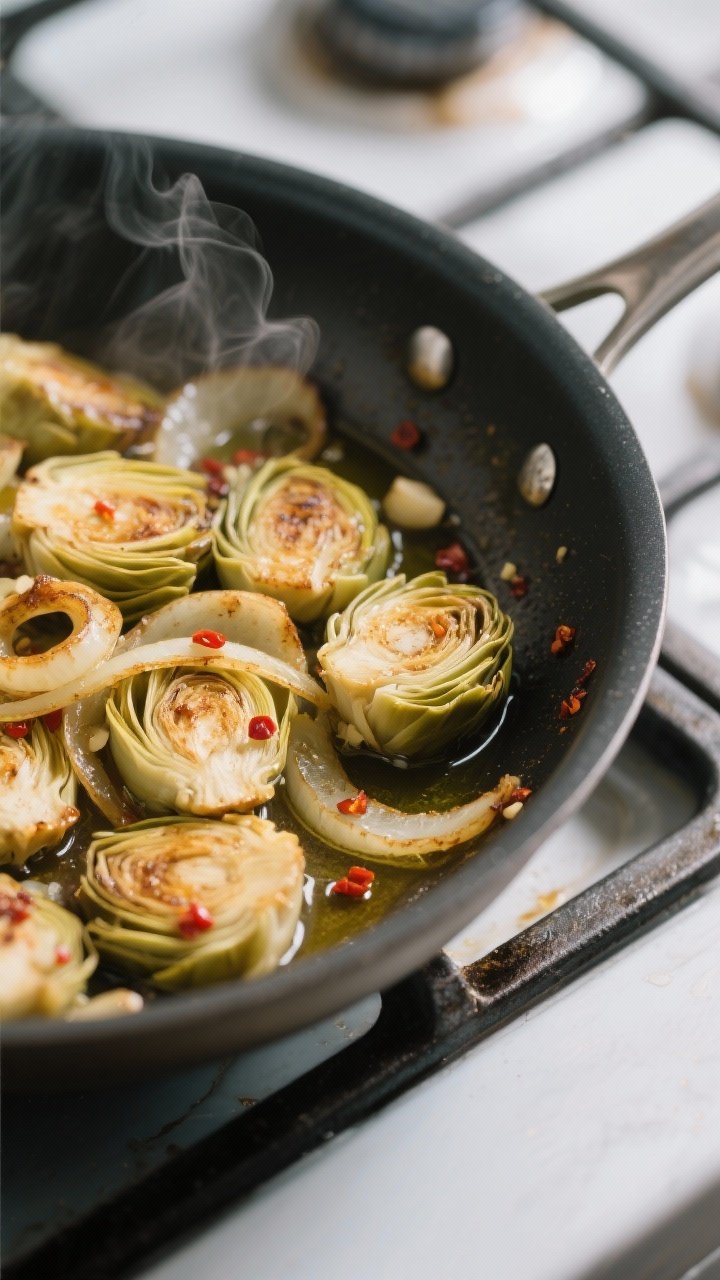
- Sauté the aromatics: Heat the olive oil in a 10-inch oven-safe skillet over medium heat. Add sliced onion and a pinch of salt. Cook, stirring occasionally, until soft and lightly golden, about 6–8 minutes. Add the garlic and cook 30 seconds more.
- Add the artichokes: Stir in the artichoke hearts and cook 2–3 minutes to warm through and lightly sear the edges. Taste and season with a bit more salt and pepper if needed.
- Pour and stir: Reduce the heat to low. Pour the egg mixture evenly over the vegetables. Use a spatula to gently nudge the mixture so eggs flow into all the gaps. Cook undisturbed for 2–3 minutes until the edges just begin to set.
- Finish in the oven: Transfer the skillet to a 375°F (190°C) oven and bake 8–12 minutes, or until the center is barely set and no longer runny. The surface should look slightly puffed and lightly golden.
- Rest and slice: Remove the frittata and let it rest 5–10 minutes. This helps it set and makes cleaner slices. Serve warm or at room temperature.
- Easy to make: Everything cooks in one pan. No complicated steps or fancy tools.
- Flexible: Works with canned, jarred, or frozen artichokes.
Add cheese, herbs, or greens if you like.
- Great texture: Soft eggs and tender artichokes with lightly caramelized onions give a nice contrast.
- Good any time of day: Serve with toast for breakfast, a salad for lunch, or roasted potatoes for dinner.
- Make-ahead friendly: Tastes great warm or chilled, and reheats well.
What You’ll Need
- Eggs (8 large): The base of the frittata. Room temperature is best for even cooking.
- Artichokes (12–14 oz): Use canned or jarred artichoke hearts (drained and patted dry) or thawed frozen hearts.
- Onion (1 small): Yellow or white, thinly sliced for sweetness.
- Garlic (2 cloves): Minced for extra flavor.
- Parmesan (1/2 cup, grated): Adds salty depth. Pecorino also works.
- Cream or milk (1/4 cup): Optional but recommended for a softer, custardy texture.
- Fresh herbs (2–3 tbsp): Parsley, chives, basil, or dill.
Use what you like.
- Olive oil (2 tbsp): For sautéing and flavor.
- Salt and pepper: Season generously to taste.
- Red pepper flakes (optional): A pinch for gentle heat.
- Lemon zest (optional, 1 tsp): Brightens the artichokes.
How to Make It
- Prep the artichokes: If using canned or jarred hearts, drain well and pat dry. If they’re large, cut them into quarters or bite-sized pieces. If frozen, thaw and pat dry.
Removing excess moisture helps the frittata set properly.
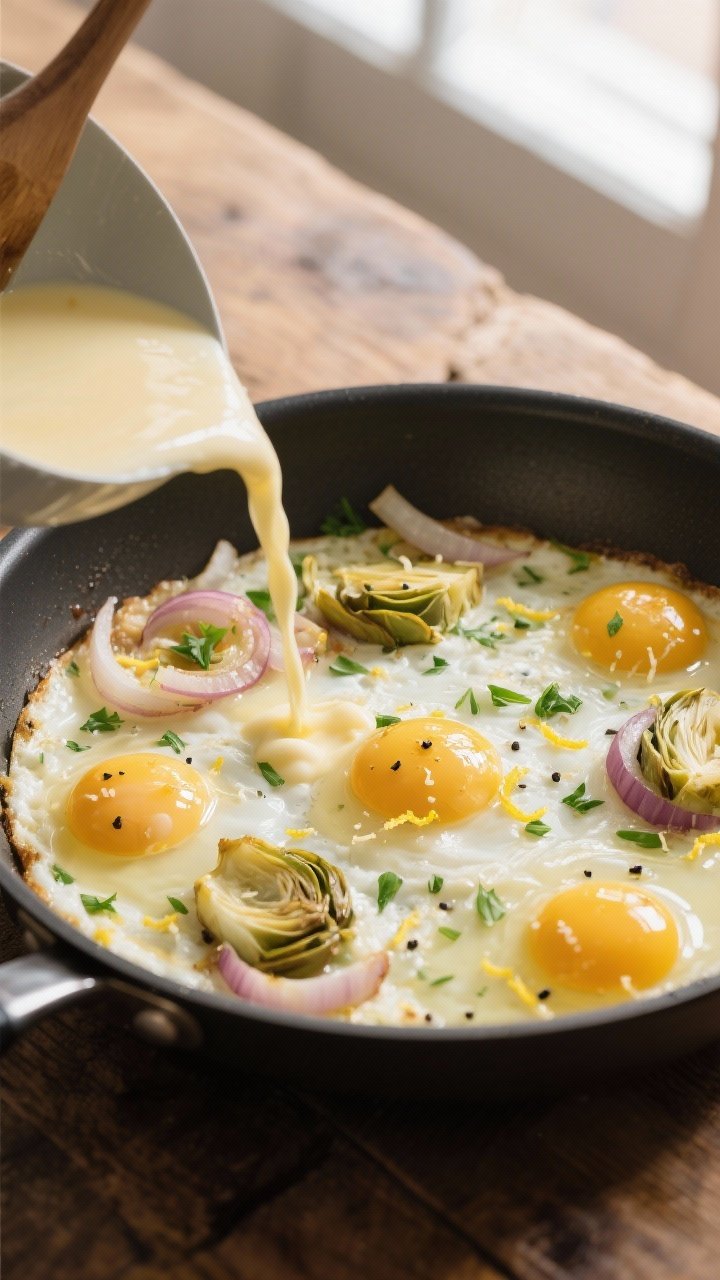
- Beat the eggs: In a large bowl, whisk the eggs with the cream or milk, Parmesan, salt, and pepper until smooth and slightly frothy. Stir in chopped herbs, lemon zest if using, and a pinch of red pepper flakes.
- Sauté the aromatics: Heat the olive oil in a 10-inch oven-safe skillet over medium heat. Add sliced onion and a pinch of salt.
Cook, stirring occasionally, until soft and lightly golden, about 6–8 minutes. Add the garlic and cook 30 seconds more.
- Add the artichokes: Stir in the artichoke hearts and cook 2–3 minutes to warm through and lightly sear the edges. Taste and season with a bit more salt and pepper if needed.
- Pour and stir: Reduce the heat to low.
Pour the egg mixture evenly over the vegetables. Use a spatula to gently nudge the mixture so eggs flow into all the gaps. Cook undisturbed for 2–3 minutes until the edges just begin to set.
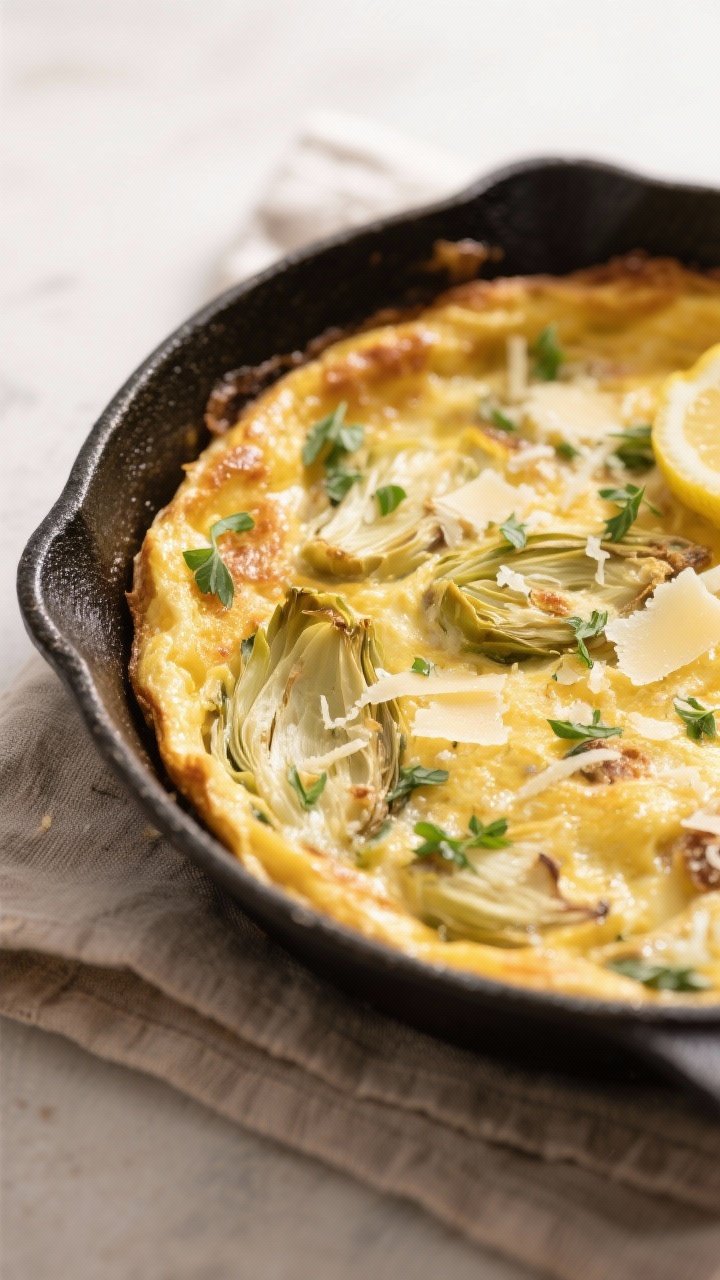
- Finish in the oven: Transfer the skillet to a 375°F (190°C) oven and bake 8–12 minutes, or until the center is barely set and no longer runny.
The surface should look slightly puffed and lightly golden.
- Rest and slice: Remove the frittata and let it rest 5–10 minutes. This helps it set and makes cleaner slices. Serve warm or at room temperature.
Storage Instructions
- Refrigerator: Cool completely, then wrap or store in an airtight container for up to 4 days.
- Reheating: Warm slices in a 300°F (150°C) oven for 8–10 minutes or microwave gently in 20–30 second bursts.
Avoid overheating or it can turn rubbery.
- Freezing: Not ideal for best texture, but possible. Wrap slices tightly and freeze up to 2 months. Thaw overnight in the fridge and reheat gently.
Health Benefits
- Protein-rich: Eggs provide high-quality protein to keep you full and energized.
- Fiber from artichokes: Artichokes are a good source of fiber, which supports digestion and steady energy.
- Vitamins and minerals: You’ll get B vitamins from eggs and vitamin C, potassium, and antioxidants from artichokes.
- Healthy fats: Olive oil and eggs offer fats that support brain and heart health when enjoyed in moderation.
- Naturally gluten-free: Great option for those avoiding gluten without sacrificing flavor or satisfaction.
Common Mistakes to Avoid
- Skipping the pat-dry step: Wet artichokes can water down the eggs and prevent a good set.
Dry them well.
- Overbaking: A frittata should be just set in the center. If it bakes too long, it dries out and gets spongy.
- High heat on the stovetop: Keep the heat low after you pour in the eggs. This prevents scorching the bottom.
- Too many add-ins: Extra veggies or cheese are great, but overloading the pan can make the frittata dense and undercooked in the middle.
- Not resting before slicing: Give it a few minutes to settle.
You’ll get cleaner slices and better texture.
Variations You Can Try
- Cheesy artichoke: Add 1/2 cup crumbled goat cheese or feta for tang, or shredded mozzarella for a melty finish.
- Green and herby: Fold in a handful of baby spinach or chopped kale with the artichokes, plus extra parsley and dill.
- Lemon and caper: Stir in 1 tablespoon capers and more lemon zest for a briny, bright twist.
- Mushroom artichoke: Sauté sliced mushrooms with the onions until browned, then proceed as directed.
- Hearty protein: Add cooked pancetta, bacon, or diced ham for a savory boost.
- Dairy-free: Skip the cream and cheese. Add an extra egg and a splash of unsweetened almond milk for moisture.
FAQ
Can I use marinated artichokes from a jar?
Yes. Drain them well and pat them dry to remove excess oil.
They add great flavor, but you may want to reduce added salt since they’re already seasoned.
Do I have to finish the frittata in the oven?
No, but it’s easier and more even. If you don’t have an oven-safe skillet, cook on very low heat with a lid for 8–10 minutes, then briefly broil the top on a baking sheet if possible.
What size pan should I use?
A 10-inch oven-safe skillet is ideal. A 12-inch pan makes a thinner frittata and may cook faster.
A 9-inch pan will be thicker and might need a few more minutes in the oven.
How do I know when it’s done?
The edges should be set and the center should jiggle slightly but not look wet. A knife inserted near the center should come out mostly clean.
Can I make it ahead?
Absolutely. Bake, cool, and refrigerate.
Reheat gently or serve at room temperature. It’s great for brunch spreads and meal prep.
What can I serve with it?
Serve with a crisp green salad, roasted potatoes, buttered toast, or a simple tomato salad. A squeeze of lemon over each slice is a nice finishing touch.
Can I make this without dairy?
Yes.
Omit the cream and cheese. Use a splash of non-dairy milk if you like, and season well with herbs and lemon to keep it flavorful.
Final Thoughts
An artichoke frittata is one of those smart, unfussy dishes that feels a little special without taking much effort. With a handful of pantry staples and one skillet, you’ve got a versatile meal that works any time.
Keep the base recipe in your back pocket, then riff with herbs, greens, or cheese based on what you have. Simple, fresh, and reliably delicious—this is the kind of cooking that makes everyday meals feel easy.
Printable Recipe Card
Want just the essential recipe details without scrolling through the article? Get our printable recipe card with just the ingredients and instructions.
Leave a Reply