10 Picnic Etiquette Rules That Make Al Fresco Meals Effortless
· Yogi
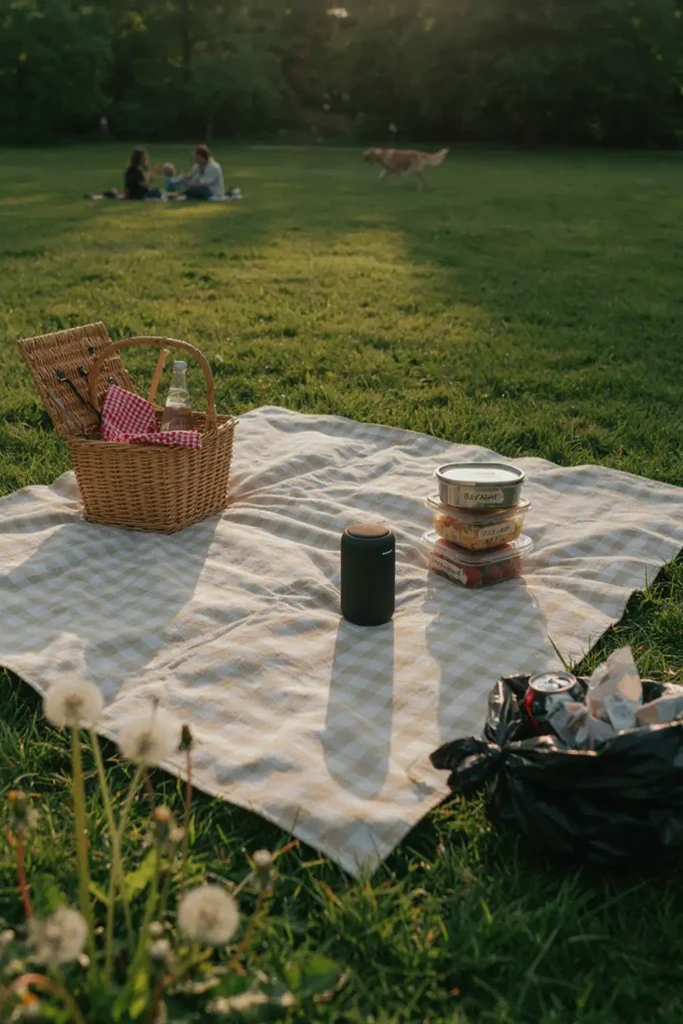
You’ve got the blanket, the basket, and the sunshine—now let’s make sure your picnic vibes are impeccable. These 10 picnic etiquette “recipes” are the secret sauce to being everyone’s favorite picnic pal. Think of them like flavor-packed rules: each one has ingredients, steps, and pro tips, so you can pull off an outdoor feast that feels easy, welcoming, and wildly delicious.
1. The RSVP Basket: Plan Like a Pro, Pack Like a Chef
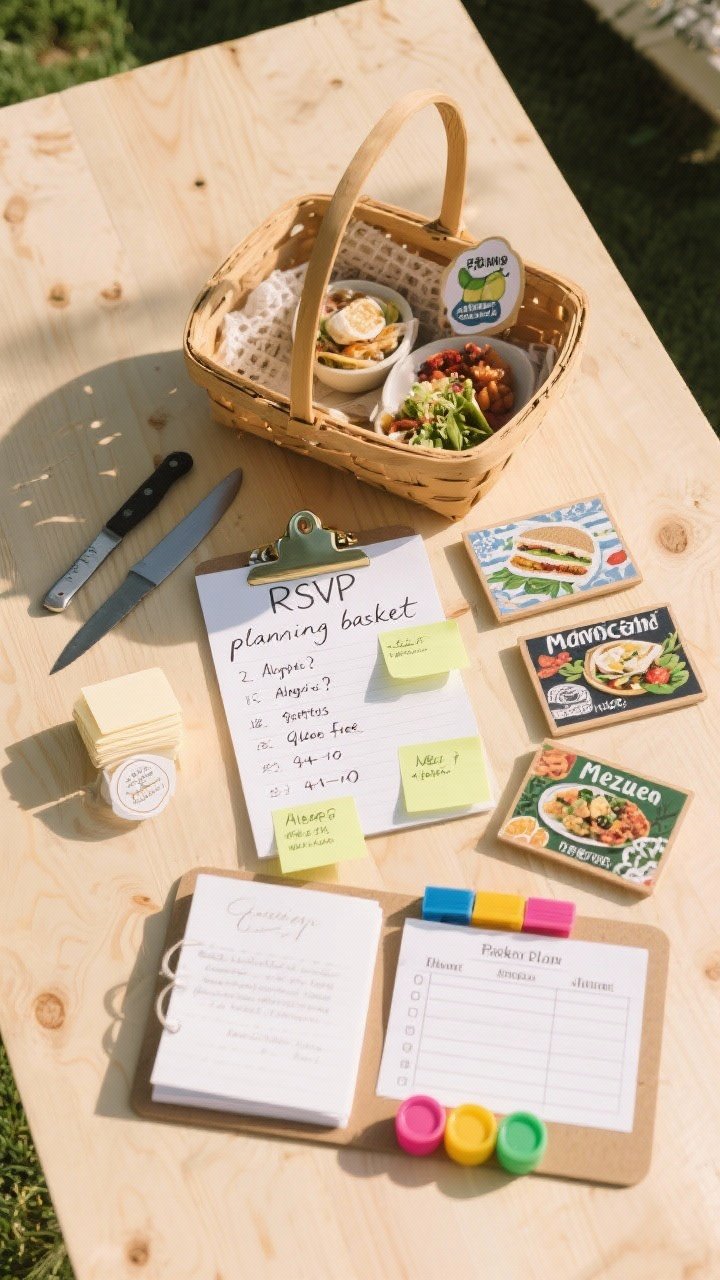
Plan with intention: gather dietary needs, set portions, and pack with care. A prepared picnic feels smooth and generous, not chaotic.
This is the picnic equivalent of mise en place. When you plan with intention—dietary needs, portions, and packability—everything feels smooth and generous. It’s the difference between chaos and a charming spread that looks like it hopped off your favorite food blog.
Components:
- 1 guest list (4–10 people is ideal)
- 2–3 questions about dietary needs (allergies, vegetarian, gluten-free)
- 1 loose menu theme (Mediterranean, sandwich board, mezze)
- 1 packing plan (cooler + tote + small zip bags)
- 2–3 make-ahead dishes
- Plenty of disposable or reusable serving tools (tongs, spoons, spreaders)
- Labels or painter’s tape + a marker
Instructions:
- Send invites with a simple RSVP deadline and a note on theme and sharing. Mention dietary needs early.
- Calculate portions: Aim for 1.5–2 servings per person of mains, and small-bites that rotate easily.
- Choose dishes that travel well: grain salads, pressed sandwiches, chilled skewers, firm cheeses, hardy fruit.
- Prep labels: Note dish names and allergens (nuts, dairy, gluten). Tape them right onto containers.
- Pack thoughtfully: Heaviest on the bottom, cold items together, utensils in a pouch, napkins at the top.
- Bring a mini “just in case” kit: bandages, hand wipes, a couple of trash bags, and sunscreen.
Pro tip: Label everything—guests feel instantly cared for. And if you’re splitting the menu, assign categories (drinks, sweets, salty snacks) so you don’t end up with five hummuses and no bread.
2. Blanket Diplomacy: Claim Space Without Being That Person
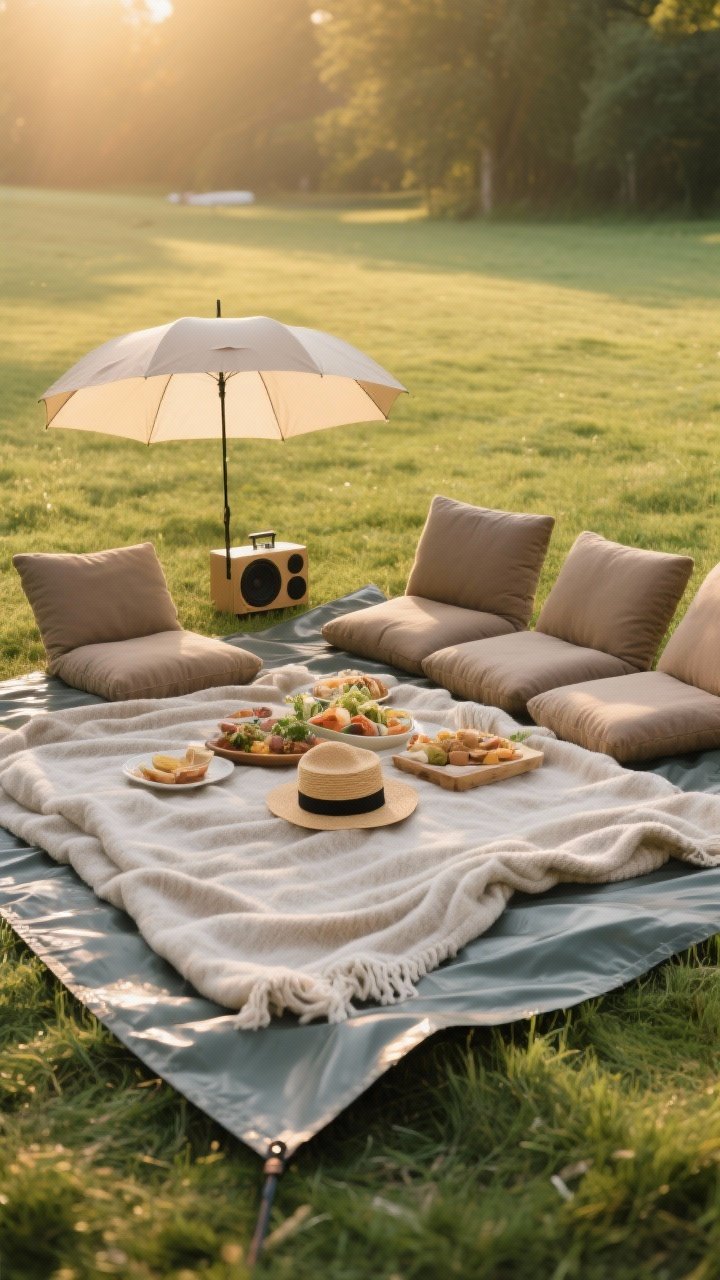
Keep 15 feet from other groups and don’t let gear creep into shared pathways. Respect invisible boundaries formed by blanket corners and sightlines.
Picnic etiquette starts the moment you hit the grass. Setting up with spatial awareness makes your group comfy without crowding others. It’s like the perfect table setting—only greener.
Components:
- 1–2 large picnic blankets (machine-washable)
- 1 waterproof tarp or mat (for damp ground)
- 4–6 low-profile seat cushions
- 1 sun hat or lightweight umbrella for shade
- 1 small speaker (volume-conscious)
- 1 discreet boundary: a wicker basket or cooler at each corner
Instructions:
- Scout a spot with some natural shade but avoid bottlenecks (paths, playground entrances, or crowded edges).
- Lay the tarp first, blanket second. Keep the blanket edges flat to prevent tripping.
- Place coolers and baskets at corners to gently “mark” your area without sprawling.
- Keep volume down; if you bring music, keep it background-level and non-intrusive.
- Leave a clear corridor from your setup to the nearest bin or bathroom. Nobody likes weaving.
Pro tip: Offer a corner of shade to neighboring groups with kids or elders—it’s small, kind, and sets a generous tone.
Sound Rules: Keep the Volume Neighbor-Friendly
Use a small speaker at conversation-level volume, pointed inward, and turn it off by sunset. Choose games that don’t require shouting across the lawn.
Sound travels farther outdoors than you think. A speaker that sounds reasonable to your group can carry 100 feet across an open lawn [SERP]. Keep the volume at a level where someone sitting next to you can talk without raising their voice. Point the speaker toward your blanket, not toward other groups.
- Build a 90-minute playlist so you are not fiddling with autoplay or skipping tracks all afternoon.
- Turn the music off by sunset. Evening parks shift to a quieter vibe, and late music draws complaints.
- Choose low-volume games. Frisbee, bocce, and card games work better than competitive sports that involve yelling.
- If a neighbor asks you to turn it down, do it immediately with a smile. No debate needed.
Grill Etiquette: Cook Without Annoying the Park
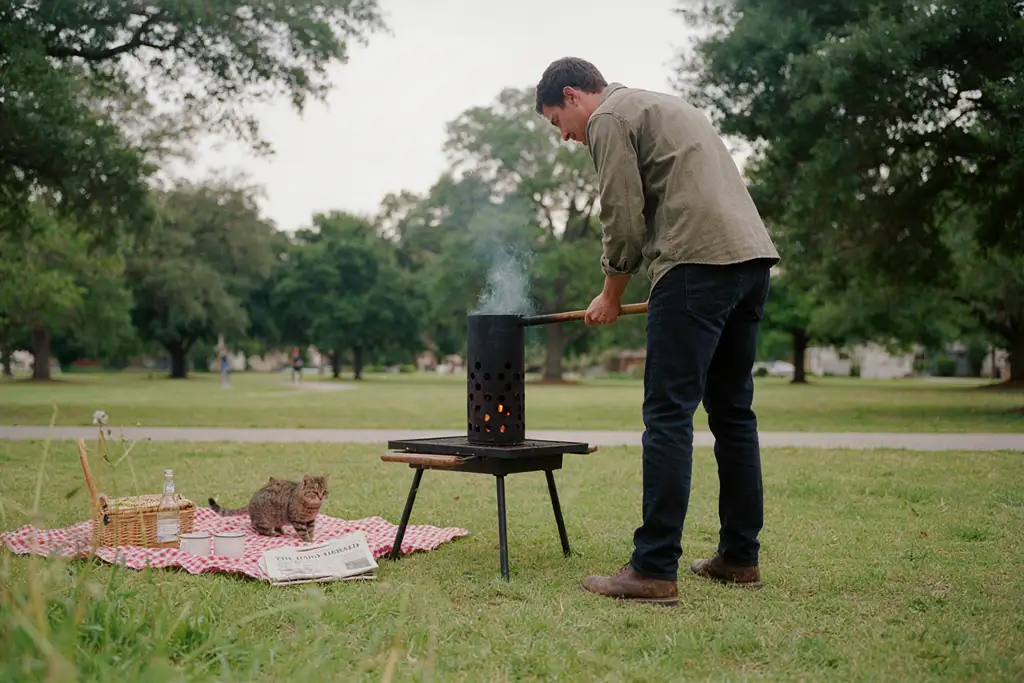
Only grill in designated areas, use a chimney starter, and let ashes cool fully. Never dump coals on soil — pack them out in a heavy-duty bag.
Grilling in a shared park requires awareness of wind, smoke direction, and fire rules. Check posted signs before you light anything. Some parks ban charcoal entirely; others restrict grilling to fixed stone pits or designated pads [SERP].
- Use a chimney starter instead of lighter fluid. Fluid creates chemical smoke that drifts onto neighboring setups.
- Check wind direction with a handful of grass blades before lighting. Position the grill so smoke blows away from other groups, not toward them.
- Let coals cool completely before disposal. Never dump hot or warm coals on soil, grass, or in regular trash bins.
- Pack cooled ashes in a heavy-duty bag and dispose of them in a designated ash bin or take them home.
Food Sharing: Label Allergens and Keep It Safe
Label shared dishes with allergens, keep mayo-based items on ice, and offer to share with nearby groups if you have extras.
When food is communal, labeling is basic courtesy. A simple sticky note with the dish name and key allergens (nuts, dairy, gluten, eggs) prevents reactions and makes guests feel safe. Keep perishable items on ice and return them to the cooler between servings.
- Use sticky notes or painter’s tape with a marker to label every shared dish. Include the dish name and top allergens.
- Keep mayo-based salads, dairy dips, and meat dishes on ice and follow the two-hour rule (one hour above 90°F).
- Provide separate serving utensils for each dish to avoid cross-contamination.
- If you have more food than your group can eat, offer a plate to a nearby group. It is a small gesture that spreads goodwill.
3. The Sharing Platter Code: Serve Smart, Share Safely
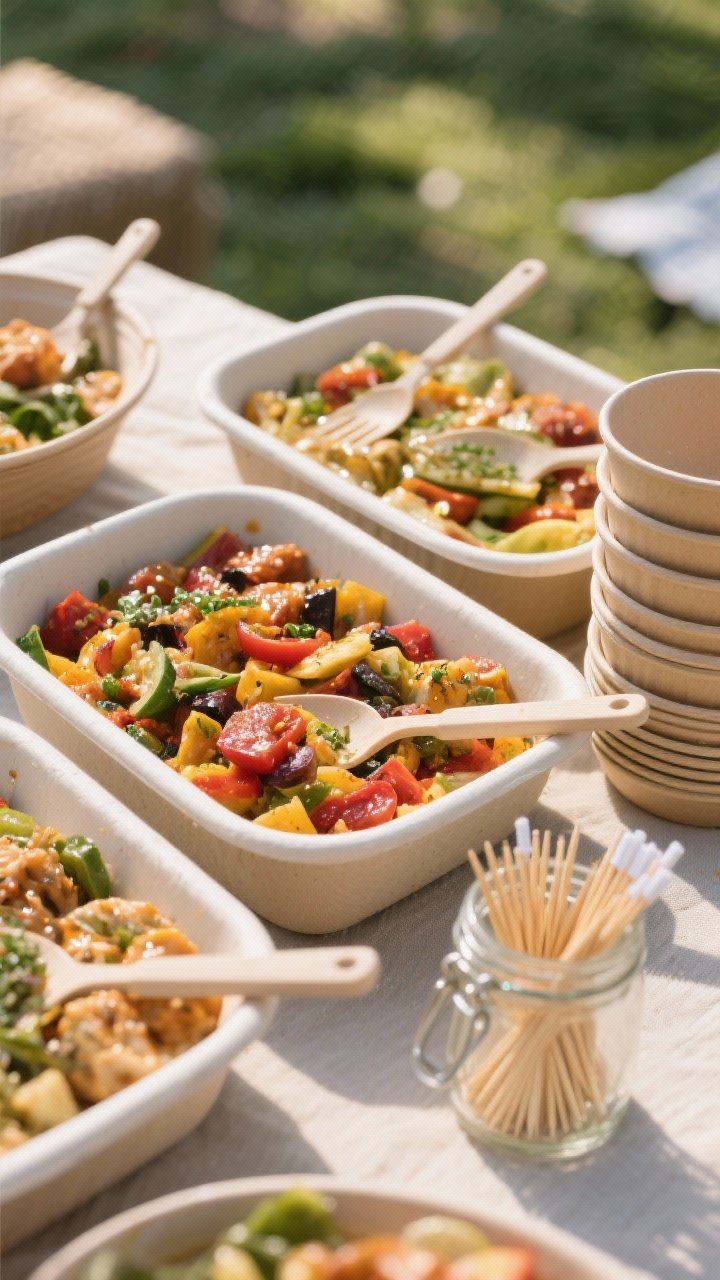
Picnics are communal by nature, but nobody wants a mystery hand reaching into the salad. With the right tools, you’ll maximize the share factor while keeping everything hygienic and organized.
Components:
- 2–3 large shallow containers for family-style sharing
- 3–4 serving utensils (dedicated to each dish)
- 1 stack of small plates or compostable bowls
- 1 jar of toothpicks or cocktail picks
- 1 roll of paper towels or cloth napkins
- Hand sanitizer or a portable hand-wash bottle
Instructions:
- Plate communal dishes in shallow containers so guests can serve quickly and return lids between rounds.
- Assign utensils: a spoon for grains, tongs for greens, a spreader for dips. Label them if needed.
- Set out small plates/bowls so guests build their own mini-plate rather than hovering over the main dish.
- Use picks for finger food (cheese cubes, olives, melon) to reduce contact.
- Encourage hand sanitizer before serving—casual reminder, zero judgment.
Pro tip: Create a “traffic flow” by placing the starter items at one end and desserts at the other. Less clustering, more grazing.
4. Dress Your Dishes Right: Packables That Don’t Melt or Mourn
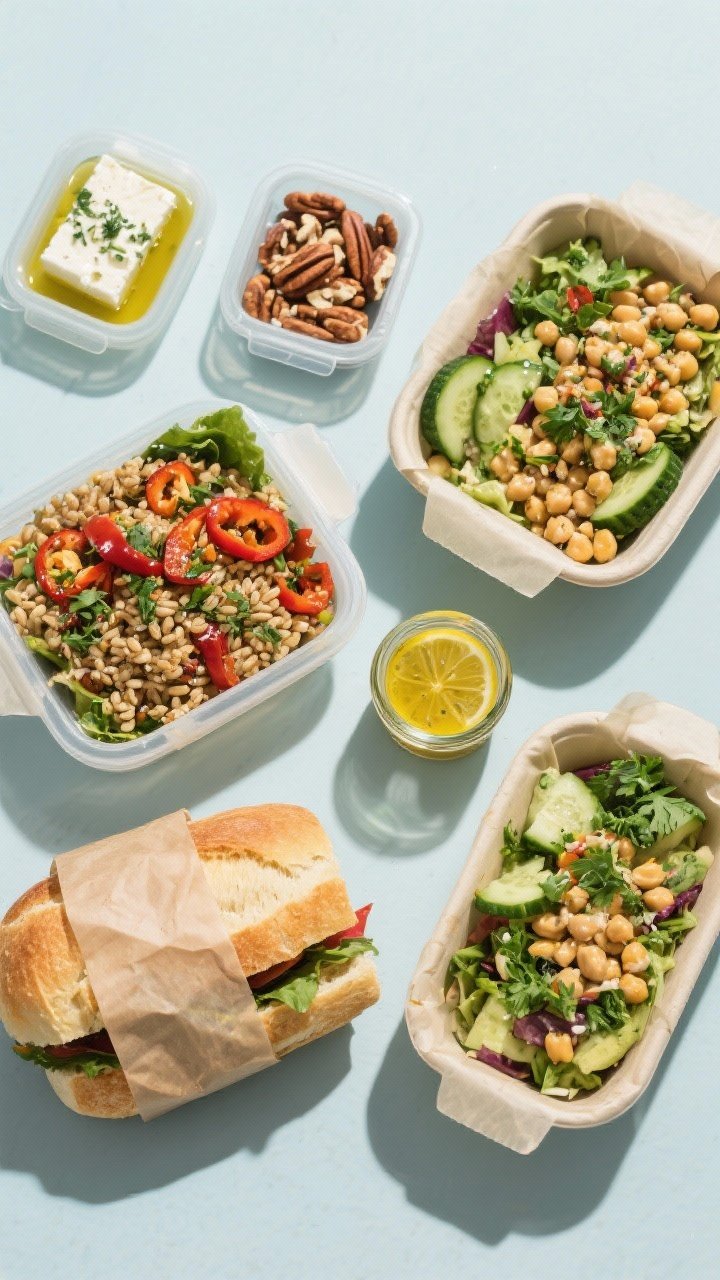
A sad, wilted salad is the heartbreak of summer. Choosing picnic-proof dishes keeps everything vibrant and stress-free. Think sturdy textures, bold flavors, and dressings that pull double duty.
Components:
- 2 hearty salads (grain or bean-based: farro, couscous, chickpeas)
- 1 pressed sandwich loaf (ciabatta or focaccia)
- 2 durable snacks (marinated feta, roasted nuts)
- 1 acid-forward dressing (lemon, vinegar) with olive oil
- Fresh herbs that hold: parsley, dill, mint
- Firm fruits: grapes, apples, melon wedges
Instructions:
- Build salads with hearty bases: grains, beans, chopped crunchy veg (cucumber, peppers), and brined elements (olives, capers).
- Toss with a zippy vinaigrette just before packing; bring extra dressing sealed separately for touch-ups.
- Make a pressed sandwich: layer meats/cheese/veg with a moisture barrier (butter, pesto, tapenade), wrap tightly, and weigh down in the fridge for 2–4 hours.
- Skip mayo-heavy dishes unless chilled solid; opt for yogurt or oil-based dressings.
- Pack fruits whole or in large chunks to avoid mush. Bring a small knife for on-site slicing if needed.
Pro tip: Salt and acid are your best friends outdoors. They wake up flavors as they chill—and the dishes taste even better an hour later.
Pet Rules: Leash Laws and Blanket Boundaries
Follow leash rules every minute, pack extra waste bags, and never let pets approach other groups’ blankets or food without permission.
Not everyone at the park is comfortable around dogs, even friendly ones. Follow posted leash rules at all times, keep your pet close to your setup, and always ask before letting your dog approach another group. Carry more waste bags than you think you need.
- Keep dogs on a short leash (6 feet or less) in crowded park areas, even if off-leash is technically allowed.
- Pack dedicated pet treats and a separate water bowl. Do not let pets eat from communal human dishes.
- Clean up waste immediately. Clip a waste bag dispenser to the leash for quick access.
- Respect that some people are afraid of or allergic to dogs. A friendly “Is it okay if my dog says hi?” goes a long way.
5. BYOB (Be Your Own Butler): Cutlery, Cups, and Clean Hands
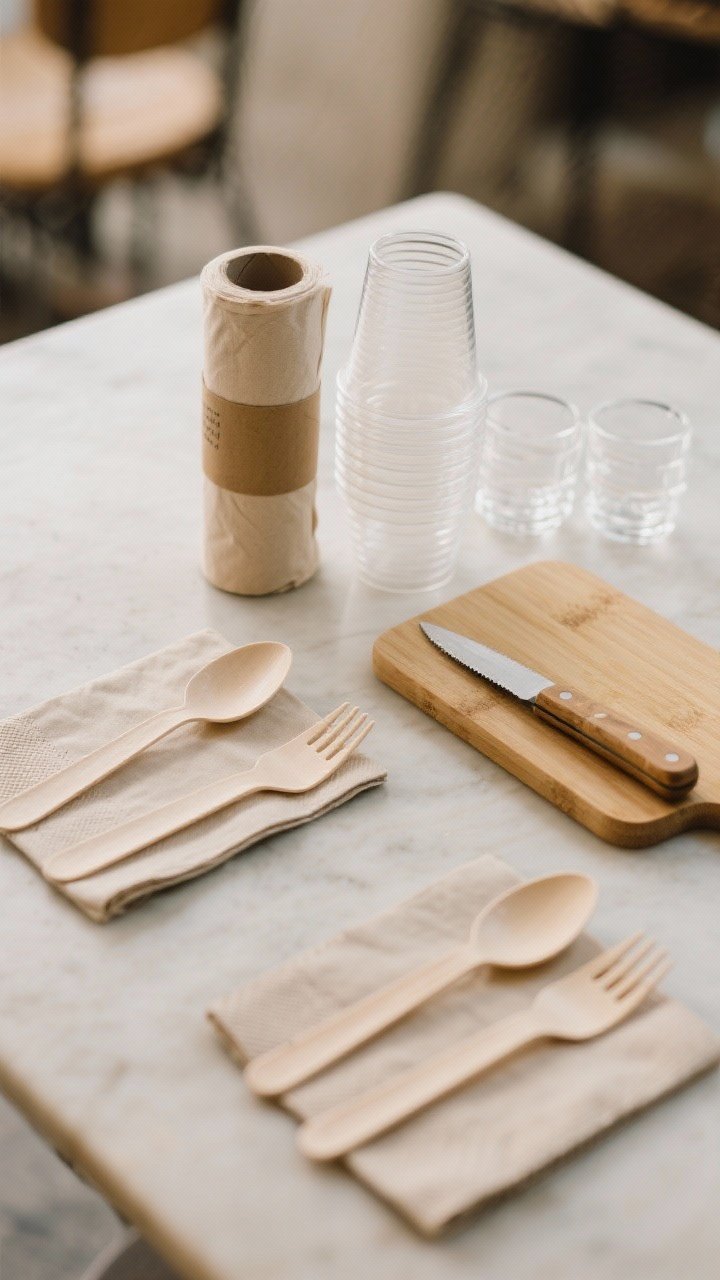
The smoothest picnics run on tiny conveniences. Bring the right toolkit and you’ll feel like you’ve got a butler hiding in the bushes. This is where etiquette meets logistics—and where you quietly become a hero.
Components:
- 1 roll of compostable or cloth napkins
- 1 set per person of reusable cutlery (fork, spoon, knife)
- 2 extra sets for surprise guests
- Stackable cups (number of guests + 3)
- 1 compact cutting board + 1 sharp picnic knife with cover
- 1 bottle opener + corkscrew or multi-tool
- 1 small spray bottle of water + biodegradable soap
- Wet wipes or hand sanitizer
Instructions:
- Pack cutlery and cups in a zip pouch or roll; label with washi tape so they’re easy to return.
- Set up a mini “service station” at one corner of the blanket: utensils, napkins, sanitizer, and board.
- Keep a dedicated knife for on-site slicing (cheese, fruit, bread). Clean it right after use with a dab of soap and rinse spray.
- Offer cups for everyone—even if they bring drinks. No one wants to swig a shared bottle.
Pro tip: Keep a clean tea towel as a “catch-all” for serving mishaps or surprise spills. It’s the unsung MVP.
6. Chill Factor: Keep Foods Safe, Cold, and Delicious
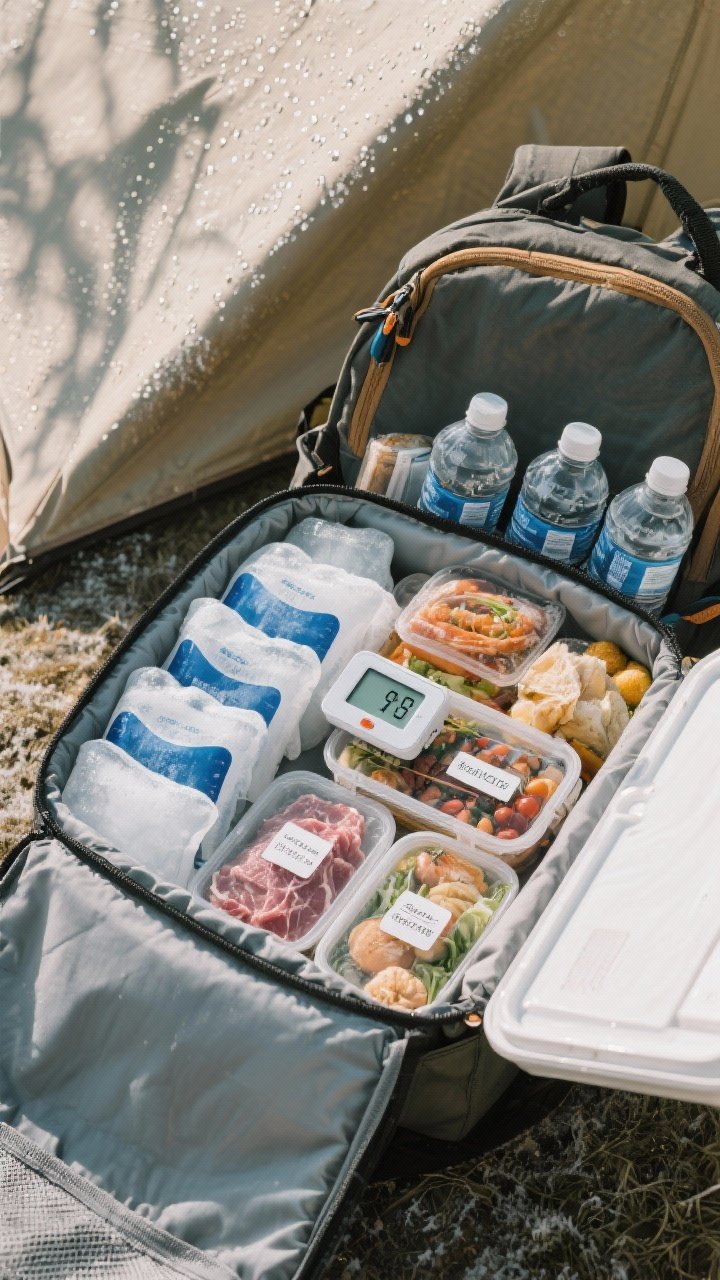
Warm drinks? Fine. Warm chicken salad? Hard pass. Etiquette includes food safety, and a little chilling strategy keeps everything fresh and friendly.
Components:
- 1 cooler or insulated backpack
- 4–6 ice packs (or frozen water bottles)
- 1 fridge thermometer (optional but smart)
- Separate containers for raw/ready-to-eat (if grilling)
- 1 shaded spot or reflective cover for the cooler
- 1 timer reminder (phone) for serving windows
Instructions:
- Chill foods and drinks thoroughly before packing; don’t rely on the cooler to do all the work.
- Layer ice packs on the bottom and between items. Keep dairy, meats, and mayo-based dishes deepest in the cold zone.
- Use frozen water bottles as ice—they keep things cold and become drinkable later.
- Keep the cooler closed as much as possible; assign one person the “cooler key” for drink runs.
- Follow the two-hour rule for perishable foods (one hour if above 90°F/32°C). When in doubt, toss.
Pro tip: Pack a small secondary cooler for drinks. It reduces opening the main cooler constantly and keeps food safer, longer.
Clean As You Go: Two Sweeps Before You Leave
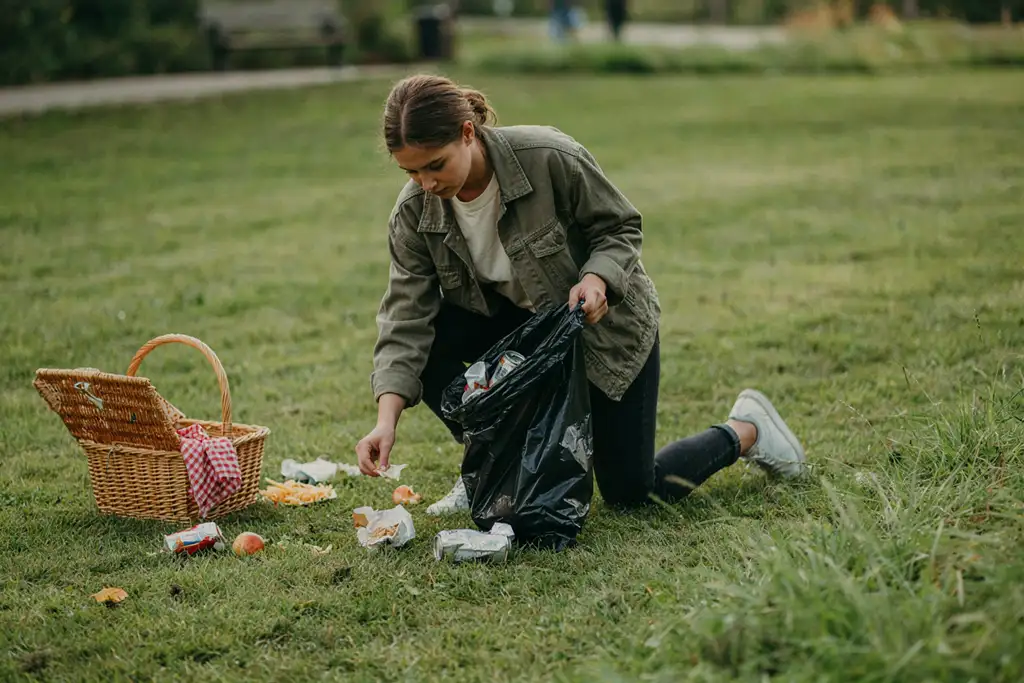
Do two trash sweeps during the outing and one final scan for micro-litter before leaving. Leave the spot cleaner than you found it.
Waiting until the end to clean up means more mess to manage when everyone is tired and ready to go. Instead, build cleanup into the outing. A quick sweep after the main course and another after dessert keeps the area tidy and makes departure fast.
- First sweep: after the main course, collect plates, wrappers, and food scraps. Wipe down surfaces.
- Second sweep: after dessert and drinks, gather remaining items and consolidate trash.
- Final scan: walk a 10-foot radius beyond your blanket looking for micro-litter like bottle caps, plastic tabs, and toothpicks.
- Leave the spot cleaner than you found it. Pick up any litter that was already there when you arrived.
7. Leave No Crumb: Clean Up Like You Own the Park
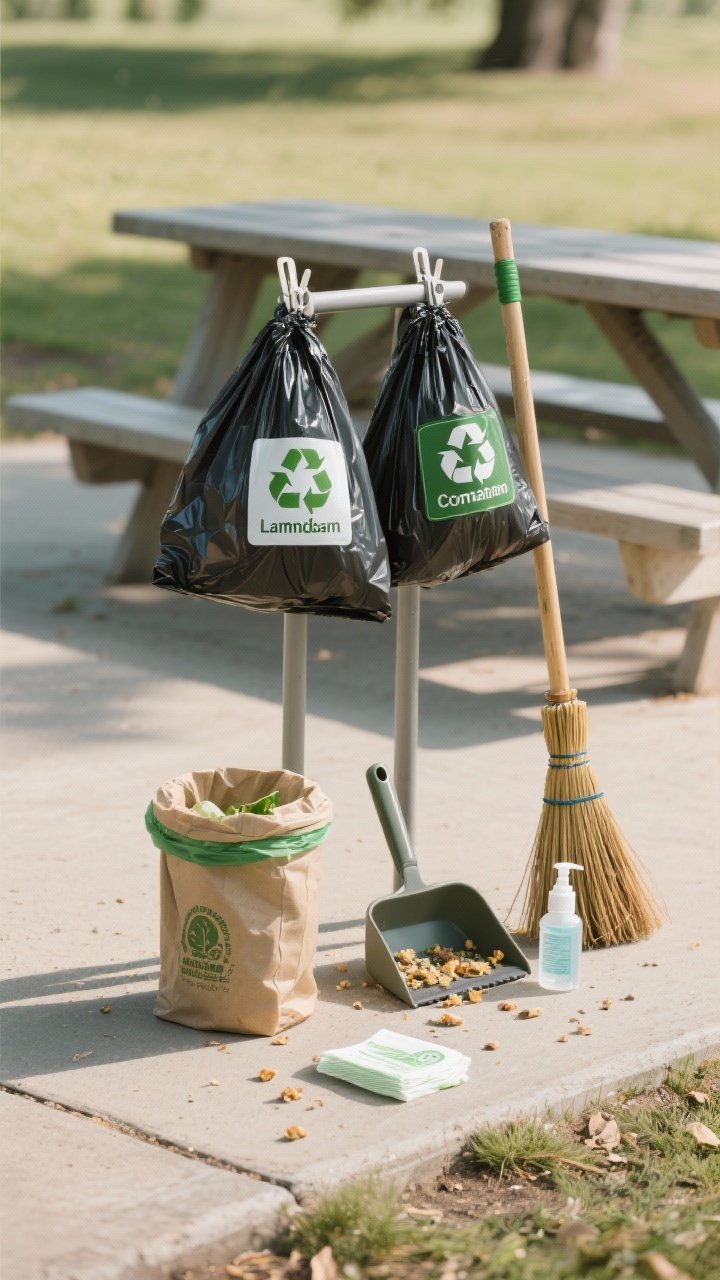
Nothing says classy like leaving your spot cleaner than you found it. It’s polite, it’s eco-friendly, and it’s how you get picnic karma points for life.
Components:
- 2 heavy-duty trash bags (one for landfill, one for recycling if available)
- 1 compostable bag or container (if you’ll compost later)
- 1 compact broom/brush and dustpan
- Biodegradable wipes or cloths
- Spare containers for leftovers
- 1 lint roller (picks up crumbs from blankets)
Instructions:
- Set up a visible waste station from the start so guests know where to toss things.
- Scrape plates into trash/compost, then wipe with a damp cloth to avoid sticky bags.
- Use the lint roller on blankets. Quick, oddly satisfying, and crumb-clearing.
- Check for micro-trash: bottle caps, plastic tabs, toothpicks.
- Pack leftovers in small containers; label if they’re going home with someone else.
Pro tip: Bring a spare reusable bag just for dirty dishes or linens. Keeps the car and your other gear clean.
Arrival Etiquette: Scout First, Settle Second
Arrive 30 minutes early to scout and set up without blocking others. Don’t claim public grills or tables you won’t actually use.
The first impression your group makes starts when you arrive. Getting there early gives you time to find the best spot, set up calmly, and avoid the stress of competing for space. It also means you are not walking through other groups’ setups to reach your spot.
- Arrive at least 30 minutes before your planned start time to scout for shade, proximity to bins, and ground conditions.
- Do not claim a public grill or picnic table unless you are ready to use it immediately. Others may need it first.
- Check for posted rules about reserved areas, group size limits, and alcohol policies before settling in.
- If the best spot is near another group, ask if the spacing works for them before laying out your blanket.
8. Kid-and-Dog Grace: Courteous Fun for Little Feet and Wagging Tails
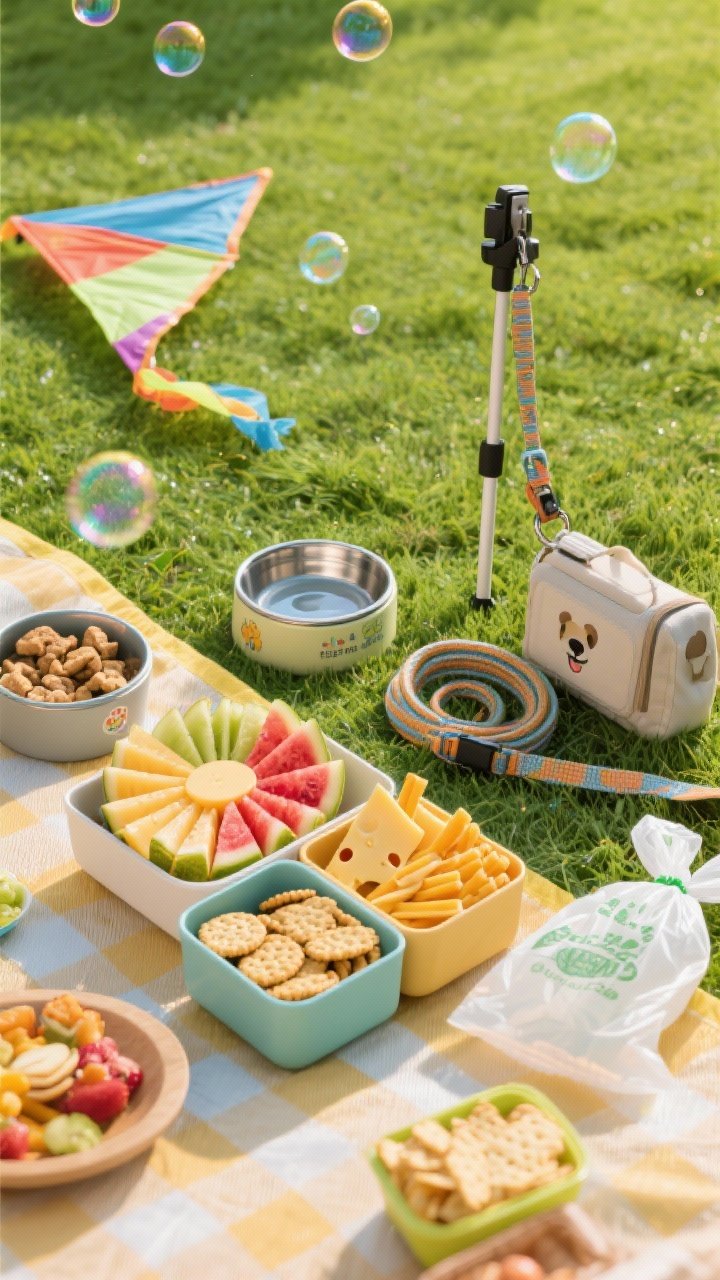
Set a visible play lane parallel to your blanket, away from other groups and pathways. Switch to seated games when tosses land within 6 feet of others.
Families and furry friends can absolutely be part of a beautiful picnic—if you plan for them. The key is clear boundaries, safety-first snacks, and a little structure.
Components:
- Kid-safe snacks: sliced fruit, cheese sticks, crackers
- Dog-safe treats and a dedicated water bowl
- Leash, waste bags, and a lightweight stake (if allowed)
- Bubble solution or small kites for kid energy
- Picnic games with soft pieces (no hard projectiles)
- Allergy notes: no shared bowls for dogs and people; careful with nut-heavy snacks
Instructions:
- Set a kid zone and a dog zone slightly apart from the main food area to minimize accidental tumbles and snaffling.
- Offer pre-portioned kid snacks to avoid little hands in communal bowls.
- Keep dogs leashed unless you’re in a designated off-leash area—and always check local rules.
- Bring a game plan: bubbles, coloring, or a frisbee at a distance from blankets.
- Clean up dog waste immediately; keep a small bag clipped to the leash for speed.
Pro tip: If there are babies or toddlers, avoid toothpick-heavy spreads or whole grapes. Slice, pre-pit, and keep sharp sticks off the blanket.
9. The Toast With the Most: Drinks Done Right (Without Overdoing It)
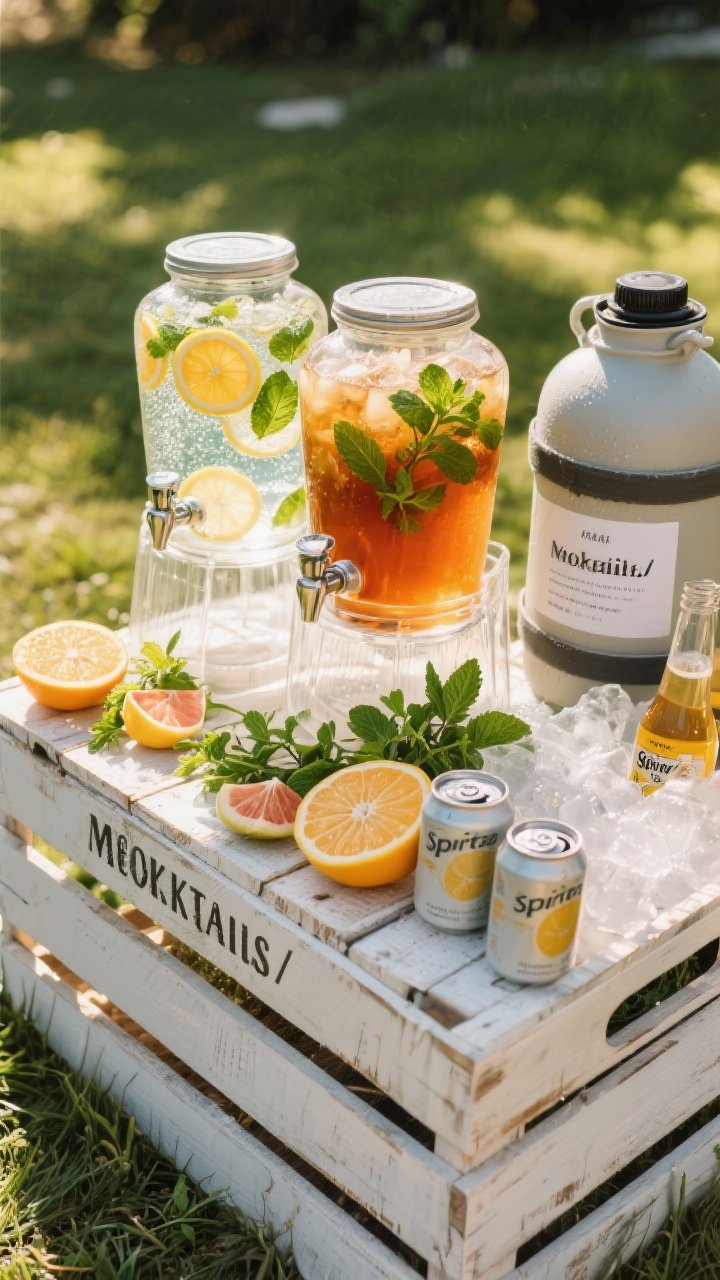
Refreshing drinks make the picnic feel festive, but etiquette means balancing fun with hydration and legality. Keep it crisp, light, and considerate of everyone’s glass.
Components:
- 2 big-batch nonalcoholic options (sparkling water with citrus, iced tea with mint)
- Optional: chilled wine, canned spritzes, or beer (where permitted)
- 1 insulated growler for mocktails/cocktails
- Plenty of ice or frozen fruit cubes
- Lemons/limes, sliced
- Reusable cups with markers for names
- Water, more than you think you need
Instructions:
- Check local rules on alcohol first. If allowed, keep pours modest and food-forward.
- Offer nonalcoholic drinks front-and-center; make them festive so everyone feels included.
- Pre-chill drinks at home. Keep the cold chain going with ice packs and frozen citrus wheels.
- Label cups with names to prevent mix-ups. Replace cracked cups instead of overfilling them.
- Encourage water breaks. Hot day? Make a fun “cheers to water” moment every hour.
Pro tip: A light spritz (half sparkling water, half wine or juice) keeps things bright without knocking anyone out. And seriously, bring more water.
Departure Grace: Leave Before the Energy Fades
Set a hard end time 30 minutes before sunset. Pack efficiently and give a friendly sign-off to neighbours — “We’re heading out, this spot is free if you want it.”
The best picnics end while everyone is still having fun, not after people start checking their phones. Set an end time in advance and stick to it. Packing up before sunset avoids the rush and the mess that comes with fading daylight.
- Set a hard end time 30 minutes before sunset or park closing, whichever comes first.
- Coordinate packing: assign roles so cleanup takes 10 minutes, not 30. One person folds blankets, another handles trash, another packs food.
- Do a final sweep of the area, checking 10 feet beyond your blanket for anything left behind.
- Say goodbye to neighboring groups with a friendly wave or a “This spot is free now if you want it.” It costs nothing and leaves a good impression.
10. Good Guest, Great Host: Gratitude, Timing, and Goodbye Rituals
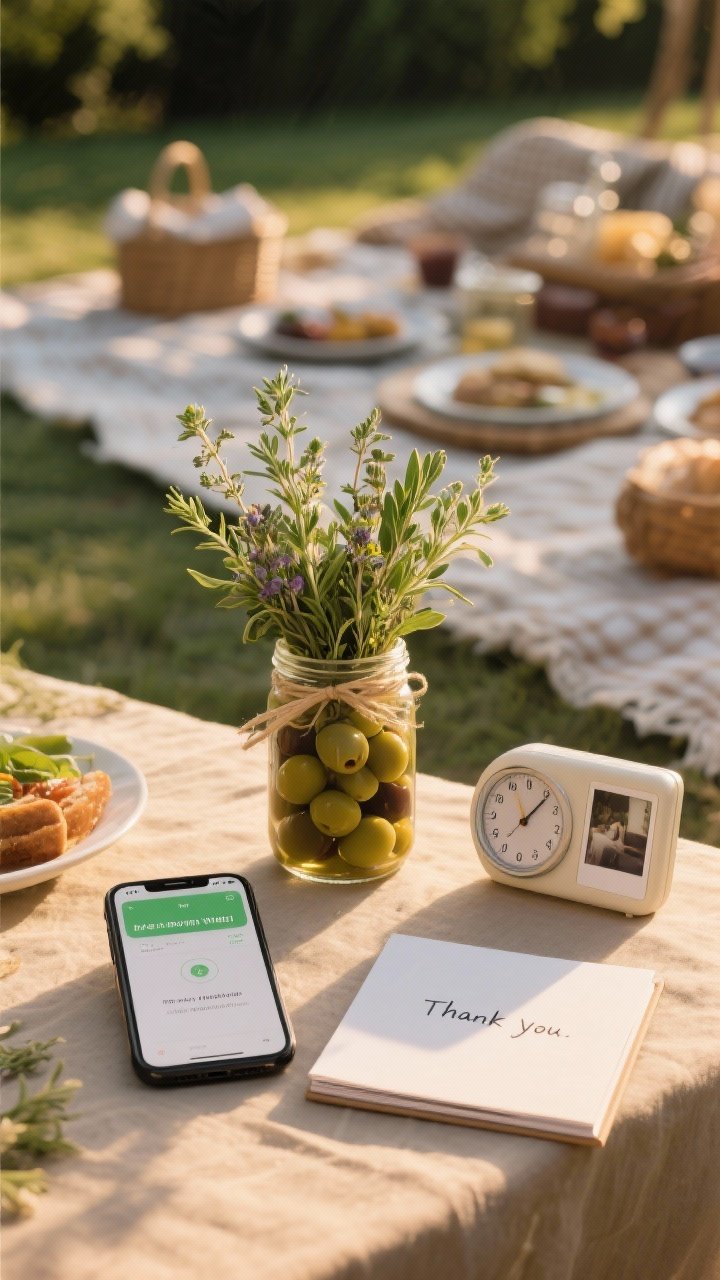
Etiquette isn’t just rules—it’s vibes. The way you arrive, nosh, and wrap up sets the mood. A little gratitude and timing make the whole day feel luxurious and easy.
Components:
- 1 punctual arrival window (don’t keep cold food waiting)
- 1 host gift (jarred olives, a chutney, or a bouquet of herbs)
- 1 thank-you text or photo album afterward
- 1 shared timer for packing up before sunset or park closing
- 2 extra pairs of hands for cleanup
Instructions:
- Arrive on time with your contribution ready to serve. If you’re late, bring ice or an extra drink as a peace offering.
- Offer to help set up immediately: lay blankets, set utensils, plate a dish.
- Check in with a simple, “Anything off-limits for photos?” before snapping and posting.
- Start clean-up 20–30 minutes before you have to leave. Everyone helps, nobody disappears.
- Send a quick thank-you later with a shared album or your favorite candid. Polite and genuinely sweet.
Pro tip: Hosts, set an end time in your invite—it keeps the energy lively and wraps things up before people fade. Guests, read the room and don’t linger while the host packs the last bag.
Picnic Etiquette by Situation
| Situation | Key Rule | Biggest Risk | Quick Fix |
|---|---|---|---|
| Men hosting a BBQ | Grill only in marked areas, chimney starter | Smoke drifting onto neighbours | Check wind with grass blades before lighting |
| Women hosting garden party | Speaker at conversation level, off at sunset | Music complaints | 90-minute playlist, no autoplay |
| Older guests / relaxed | Arrive early, one table, no sprawl | Losing spot to larger group | Reserve if allowed, or arrive 45 min early |
| Younger crowd / high-energy | Low-volume games, no shouting | Noise complaints, ranger visits | Frisbee, bubbles, chalk over competitive sports |
| Family with kids and dogs | Leash dogs, define play lane | Dog incidents, kids in others’ setups | Short leash, play towel 6 ft from blanket |
| Formal picnic / engagement | Permit if 15+, arrive early | Permit violations | Book a week ahead, share plan in invite |
| Casual park (small group) | 15 feet from others, leave no trace | Micro-litter | Two-minute sweep: 10 feet beyond blanket |
| Large gathering (20+) | Label allergens, separate utensils | Allergic reaction | Sticky-note labels, own tongs per dish |
For deeper dives on specific situations, see our 10 park etiquette tips, our guide to delegating food for group picnics, and our shade-sharing etiquette guide.
Frequently Asked Questions
Do I need a permit to have a picnic in a public park?
For groups under 15, most parks don’t require a permit. For 15–50 people, many municipalities require a “group use” permit that costs $25–$75 and must be booked 1–2 weeks ahead [SERP]. Check your local parks department website under “Permits” or “Reservations.”
Are glass containers allowed in parks?
Most public parks ban glass containers for safety reasons — broken glass on grass or sand is a serious hazard [SERP]. Use BPA-free plastic, stainless steel, or enamelware instead. Some parks allow glass in designated picnic pavilions with hard floors.
What’s the proper etiquette for sharing a public picnic table?
If a table is partially occupied, ask: “Mind if we share the other end?” before sitting. Keep your items on your half, don’t spread across the divider, and offer to share condiments or napkins as a friendly gesture. If the other group seems to want privacy, find another table.
How do I handle it if my neighbour’s music is too loud?
Approach calmly and say: “Hey, would you mind turning it down a notch? We’re trying to have a quiet lunch.” Most people respond immediately and positively. If they don’t, relocate rather than escalating — and report persistent violations to a ranger.
What should I do if a ranger asks us to change something?
Comply on the spot without debate. A friendly response keeps everyone happy and protects future outings. If the request seems unclear, ask politely for clarification, but don’t argue in front of the group. Note the rule for next time.
Final Bite
Picnics should feel like a breeze—sun on your face, something delicious in your hand, and friends who feel taken care of. Use these 10 picnic etiquette rules like recipes, and you’ll nail the balance of thoughtful, tasty, and easy. Grab your basket, label your goodies, and go make that patch of grass feel like the best dining room in town.
Printable Recipe Card
Want just the essential recipe details without scrolling through the article? Get our printable recipe card with just the ingredients and instructions.
Leave a Reply