10 Napkin Folding Techniques That Impress so Much They Steal the Spotlight
· Yogi
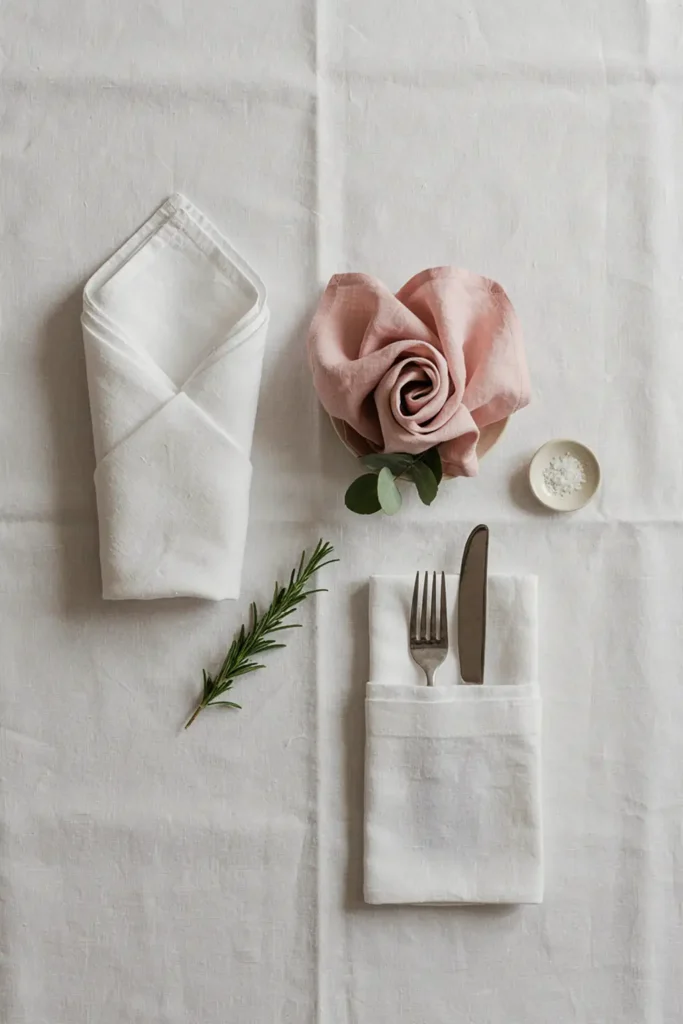
The first time I folded a Bishop’s Hat for a dinner party, my friend picked it up, turned it over, and said, “Okay, but who taught you this?” That’s the thing about napkin folding — a two-minute trick makes a Tuesday dinner feel like a reservation somewhere. The problem is most guides either show you one complicated origami swan or dump 30 folds on you with no sense of which one fits tonight’s dinner.
This one’s different. Every fold below comes with a difficulty rating, the fabric that works best, how long it actually takes, and the kind of meal it suits. Start with the cheat sheet, pick your fold, and follow along.
Quick-Reference Cheat Sheet: All 10 Folds at a Glance
| Fold | Difficulty (1-5) | Time | Best Fabric | Best Occasion | Paper OK? |
|---|---|---|---|---|---|
| 1. Bishop’s Hat | 3/5 | 2 min | Linen, starched cotton | Formal dinner, wedding | No |
| 2. Rose Bloom | 4/5 | 3 min | Soft cotton, light linen | Date night, bridal shower | No |
| 3. Pocket Envelope | 1/5 | 30 sec | Any (cotton, poly blend) | Weeknight dinner, casual buffet | Yes |
| 4. Lotus Fan | 2/5 | 1.5 min | Patterned cotton, linen | Brunch, garden party | No |
| 5. French Tuxedo | 3/5 | 2 min | Starched linen, solid colour | Steak night, black-tie at home | No |
| 6. Leaf Fold | 3/5 | 2 min | Cotton (earth tones) | Farm-to-table, rustic roast | No |
| 7. Crown Fold | 4/5 | 3 min | Starched linen, poly blend | Birthday, graduation | No |
| 8. Bread Basket | 3/5 | 2 min | Large cotton or linen (20″+) | Brunch, soup night | No |
| 9. Silverware Roll | 1/5 | 30 sec | Any rectangular napkin | Picnic, buffet, large gathering | Yes |
| 10. Waterfall Drape | 1/5 | 20 sec | Heavy linen, stonewashed cotton | Modern minimalist, editorial | No |
1. The Bishop’s Hat — The Fold That Looks Like You Have a Butler
Capsule: The Bishop’s Hat stands tall on any plate and holds its shape through dinner. It takes about two minutes with a starched linen napkin and works for any meal where you want to quietly impress.
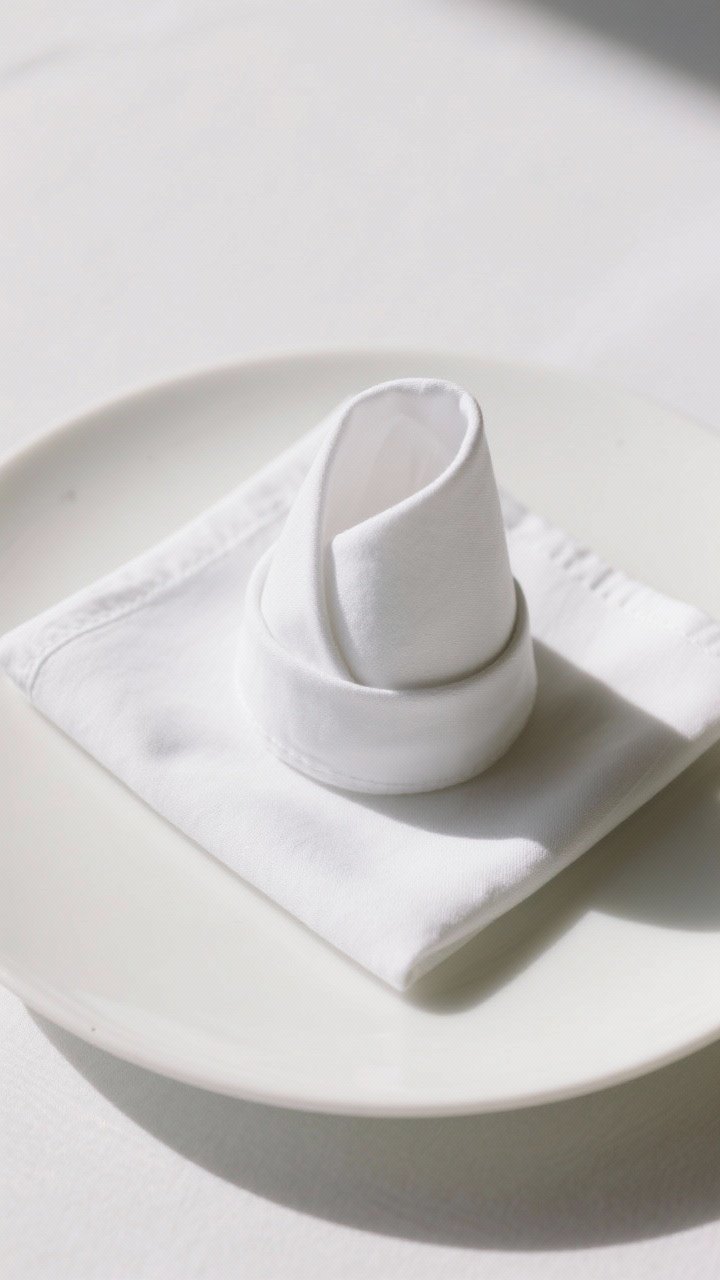
Elegant and surprisingly simple. The Bishop’s Hat makes your table look formal even if you’re serving pizza. It stands tall, holds its shape, and works with most napkin fabrics, though heavier cotton or linen holds the crown best.
What you need
- 1 square cloth napkin (18–20 inches)
- Flat surface and clean hands
- Optional: light starch spray for crisp edges
How to fold it
- Lay the napkin flat, wrong side up if it has one. Fold it in half to form a rectangle, then in half again to create a square.
- Rotate the square so the open corners face you. Lift the top layer’s corner and fold it to the opposite corner, forming a triangle. Repeat for the next two layers, leaving the bottom layer untouched.
- Flip the napkin over while keeping the triangle orientation. Fold the left and right corners toward the centre so they overlap slightly.
- Flip it back over. Tuck the bottom point up behind the front flaps to lock the shape.
- Gently open the base and stand the hat upright. Adjust the “crown” folds to look crisp.
Serve this with roast chicken or pasta al limone on a crisp white tablecloth. For variation, slide a contrasting napkin ring around the base as a “band,” or iron the napkins for a razor-sharp look.
Paper napkin? Skip it. Paper can’t hold the standing shape. This one needs fabric with body.
2. The Rose Bloom — Makes Dessert Look Extra Sweet
Capsule: The Rose Bloom turns a soft cotton napkin into a sculptural flower that sits in a wine glass or on a plate. It’s the most romantic fold in this list and takes about three minutes once you’ve done it twice.
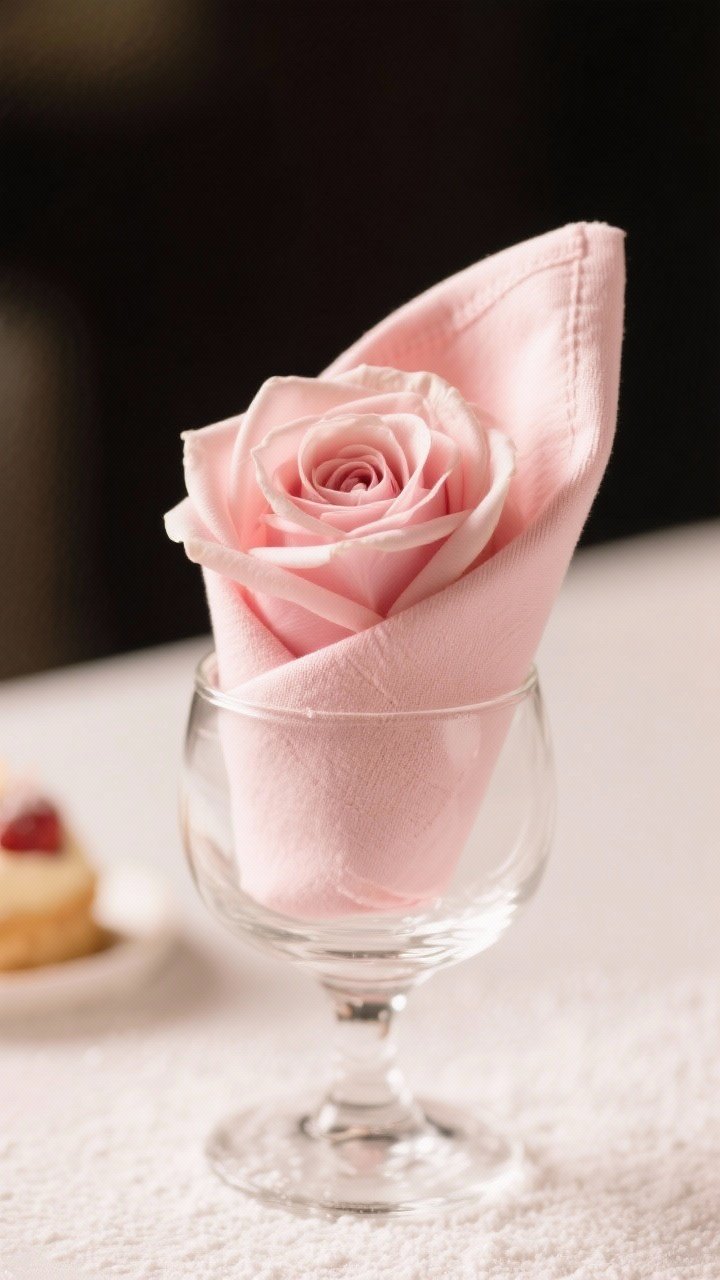
If you want romance without the florist bill, the Rose Bloom is your move. It’s soft, sculptural, and perfect for brunches, showers, and date nights. Pop it into a wine glass for instant elegance.
What you need
- 1 large square napkin (soft cotton or linen — crisper fabrics make geometric blooms, softer ones make fuller ones)
- 1 low bowl or wine glass (optional, for display)
How to fold it
- Lay the napkin flat. Fold each corner toward the centre so you have a smaller square.
- Repeat: fold the new corners into the centre again.
- Place one hand flat on top to hold it. With the other hand, carefully flip the napkin over.
- Once flipped, fold the corners into the centre one more time.
- Gently pull out the flaps from underneath each corner to form petals — four big petals first.
- Continue pulling out smaller layers beneath the petals to give the “rose” volume. Fluff as needed.
Set each rose in a coupe glass or on a salad plate. Tuck a sprig of rosemary in the centre for fragrance. Softer napkins make fuller blooms; crisper ones look more geometric.
Paper napkin? No. The petal-pulling step needs real fabric with give.
3. The Pocket Envelope — Hides Your Cutlery Like a Secret Menu
Capsule: The Pocket Envelope is the fastest fold here — 30 seconds from flat napkin to tidy silverware pouch. It works with any fabric, including paper, and suits everything from weeknight dinners to wedding buffets.
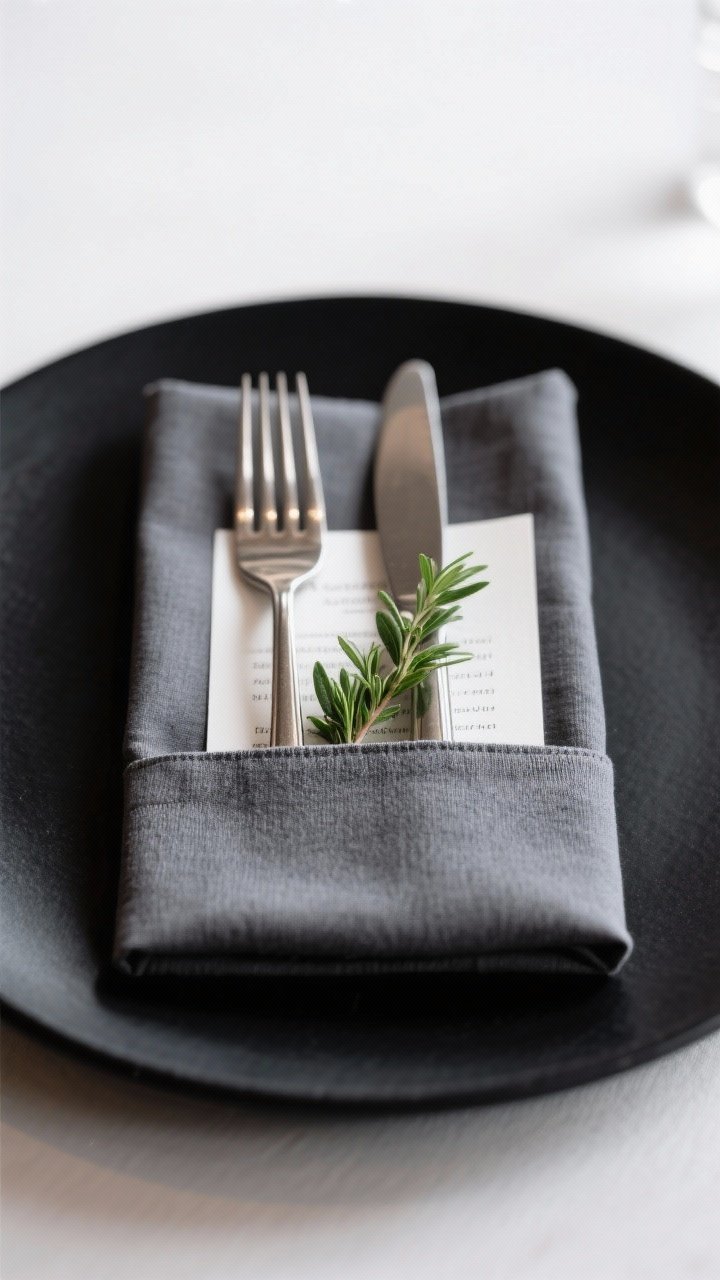
Minimalist and tidy, the Pocket Envelope corrals your fork, knife, and menu card like it was designed for the job. Clean lines, no frills, plenty of style.
What you need
- 1 rectangular or square napkin (cotton or polyester blend works great)
- Cutlery to slip inside
- Optional: menu card or greenery sprig
How to fold it
- Lay the napkin flat. If square, fold it in half to make a rectangle with the open edge facing away from you.
- Fold the top layer down about one-third of the way to create a flap.
- Flip the napkin over carefully, keeping the flap in place.
- Fold the left side toward the centre, then fold the right side over it. You now have a long, neat pocket.
- Flip it back over so the pocket faces up. Slide in cutlery, a place card, or a sprig of thyme.
Pair this with casual-chic meals: grilled fish, crisp salads, sparkling water. Angle the pocket flap for a diagonal look if you want variety. Lightly iron the folds for a tailored pocket that doesn’t sag.
Paper napkin? Yes. This is one of two folds that work beautifully with paper. Use a sturdy, high-GSM paper napkin and fold gently to avoid tearing.
4. The Lotus Fan — “I Set This Table With Intention”
Capsule: The Lotus Fan spreads across the plate like a statement piece. It’s an accordion fold at heart, easy to learn, dramatic once fanned out, and it’s the best fold for patterned napkins.
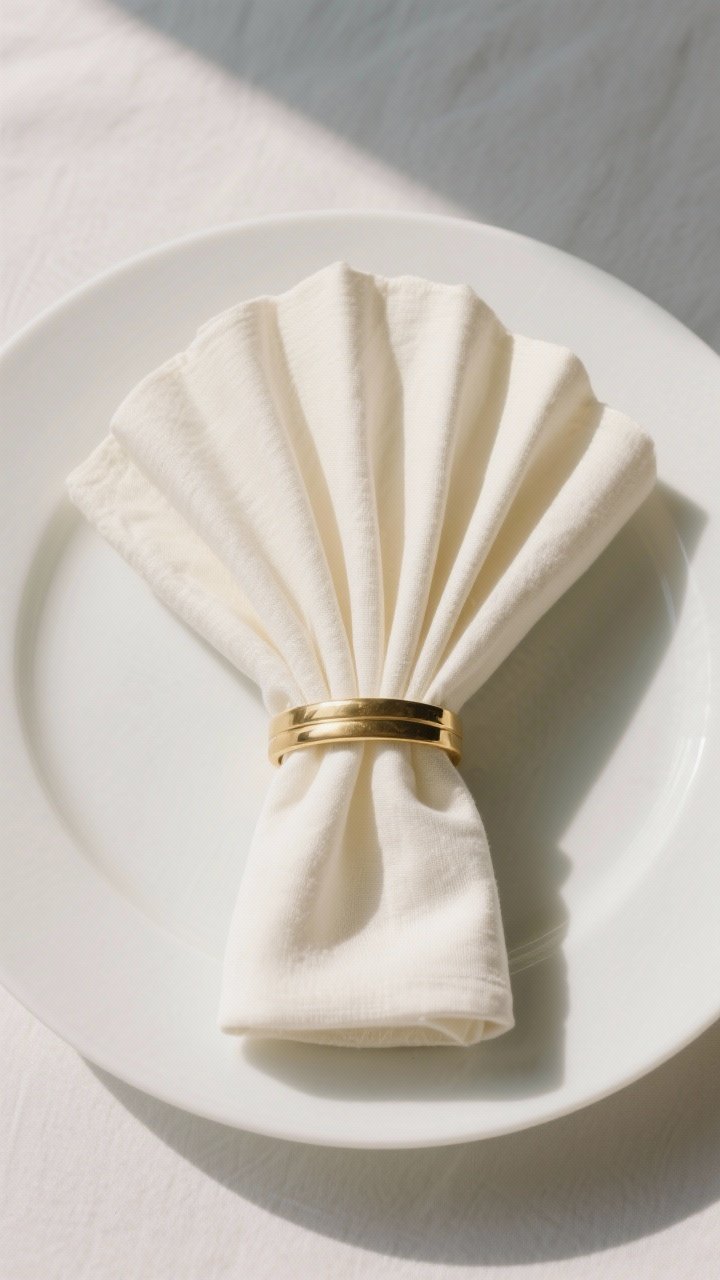
Dynamic, fun, and works beautifully with patterned napkins. Best part? It’s basically a fancy accordion fold, easy and impressive.
What you need
- 1 rectangular napkin (or square folded into a rectangle)
- Napkin ring (optional but helpful for the centre)
- Flat plate for display
How to fold it
- Fold the napkin lengthwise to make a long rectangle.
- Starting at a short end, accordion-fold the length in 1-inch pleats until you reach the end.
- Pinch the pleats at the centre. If using a ring, slide it onto the middle.
- If no ring, fold the pleated napkin gently in half and tuck one end into the other to secure.
- Fan out the pleats and lay it on the plate so it spreads like a lotus or open fan.
Use with bright, saturated napkins for visual pop. Stand the fan upright in a tumbler for a different look. A quick steam or iron over pleats helps the fan keep its shape all evening.
Paper napkin? Possible but fragile. The accordion pleats tear easily in paper. If you try it, use heavyweight cardstock-weight napkins and pleat gently.
5. The French Tuxedo — Makes Steak Night Feel VIP
Capsule: The French Tuxedo looks like a crisp dress shirt with lapels. It needs a well-starched solid-colour napkin and about two minutes, and it pairs with any meal that calls for a glass of red and low lighting.
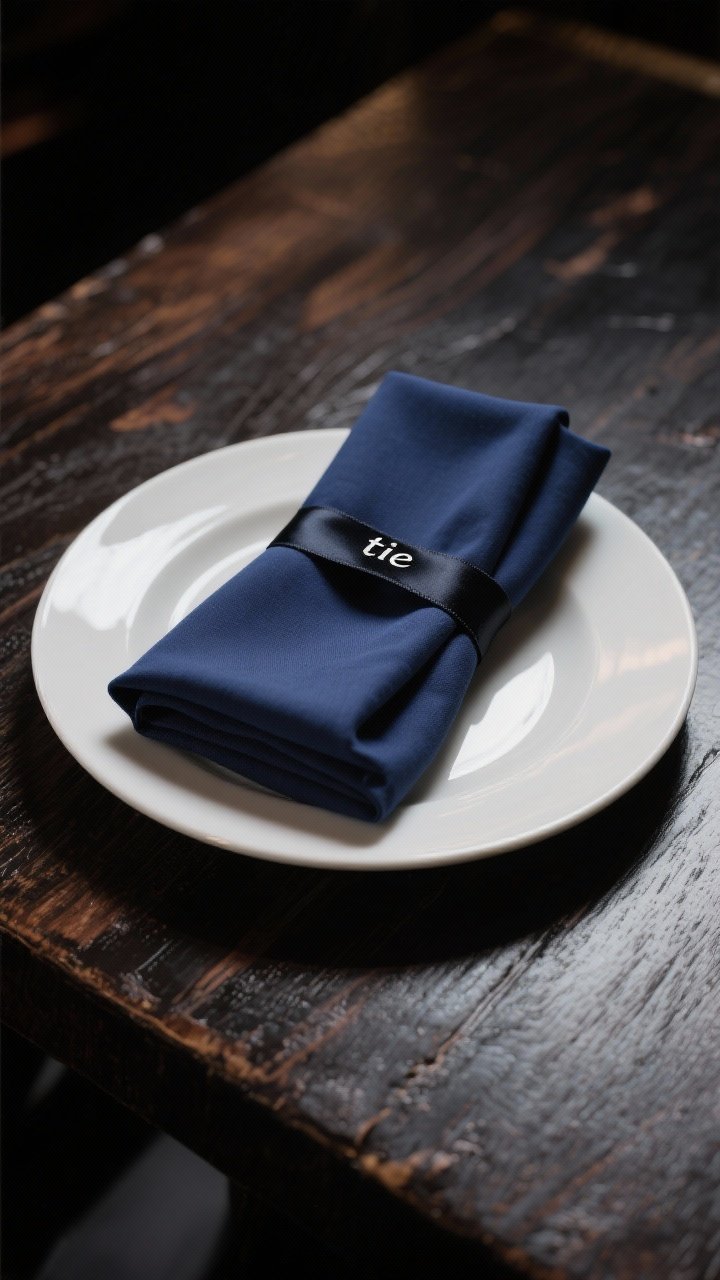
This fold looks like a crisp tuxedo shirt with lapels: clean, classic, and ridiculously suave. Perfect for black-tie vibes at home.
What you need
- 1 large square napkin (solid colour — navy, black, or white look most formal)
- Starch spray for sharp creases
- Optional: slim ribbon or bow for “tie” effect
How to fold it
- Lay the napkin flat. Fold it in half to create a rectangle, then fold again into a long, narrow rectangle.
- Position the long rectangle with the open edges at the top.
- Fold both top corners diagonally down toward the centre to form a V, creating “lapels.”
- Fold the bottom edge up to meet the base of the V, forming a neat block.
- Flip the napkin over and tuck any excess fabric behind to square off the edges. Add ribbon as a “tie” if you like.
Serve with a “steakhouse at home” menu on a simple white plate. Use pinstriped or subtly textured napkins for a couture look. Heavier fabrics and starch make the lapels stay razor-sharp.
Paper napkin? No. The lapels need fabric that holds a pressed crease.
6. The Leaf Fold — Farm-to-Table Energy
Capsule: The Leaf Fold looks like a sculpted herb leaf resting on the plate. It’s organic and low-fuss, pairs well with rustic meals, and works best in earth-toned cotton with a bit of texture.
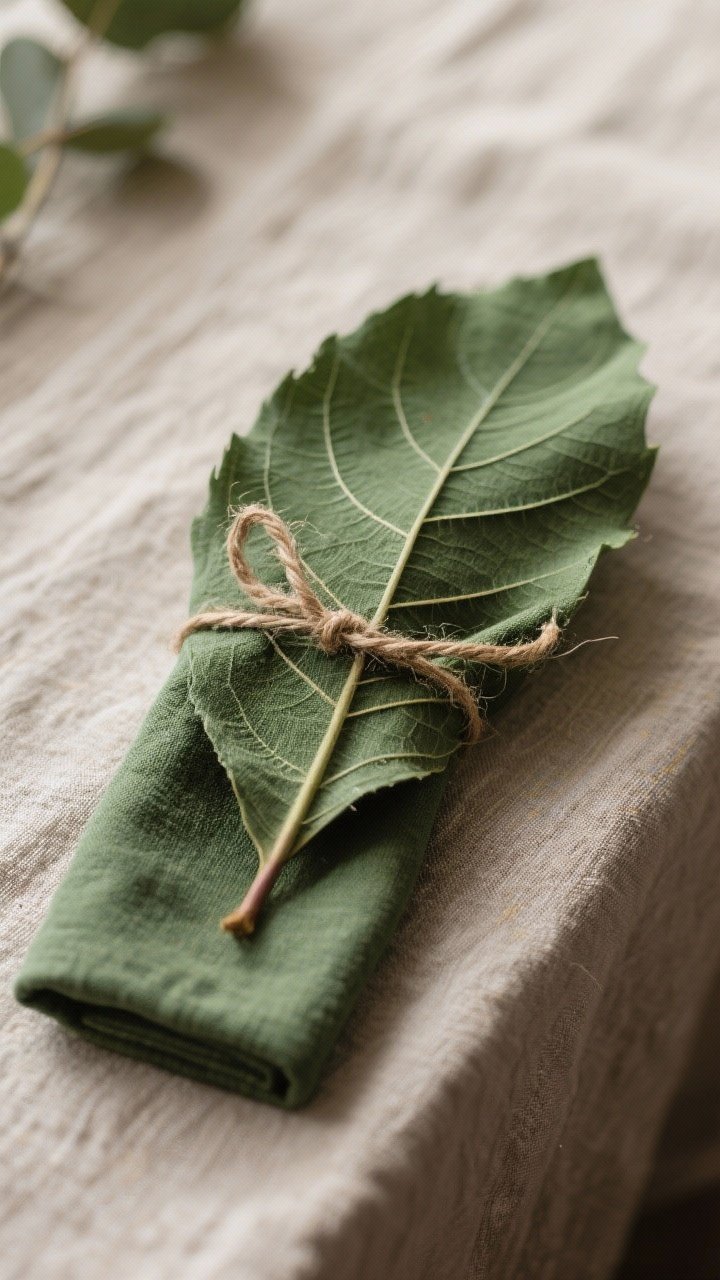
Organic, sculptural, and low-fuss. The Leaf Fold looks like a chic herb leaf resting on the plate, instant farm-to-table charm for anything from rustic roasts to summer salads.
What you need
- 1 square napkin (greens and earth tones work beautifully)
- Optional: small twine or thin ribbon “stem”
How to fold it
- Lay the napkin flat with a corner pointing toward you (diamond shape).
- Fold the bottom corner up to the top to form a triangle.
- Starting at the wide base, make small accordion folds upward toward the tip — about 1-inch pleats.
- Once pleated, fold the strip in half so the tip points up.
- Pinch the base and slightly splay the pleats to create a leaf shape. Tie the base with twine if desired.
Lay one leaf per plate or layer two for fuller foliage. Tuck a fresh bay leaf or rosemary sprig at the base for aroma. A slightly textured napkin helps the “veins” read more clearly in photos.
Paper napkin? No. The accordion pleating and splaying need fabric with body.
7. The Crown Fold — Makes Birthdays Feel Royal
Capsule: The Crown Fold stands upright with sharp points, like a miniature crown on each plate. It needs a stiff, well-starched napkin and a bit of patience, but the payoff is immediate drama for birthdays and celebrations.
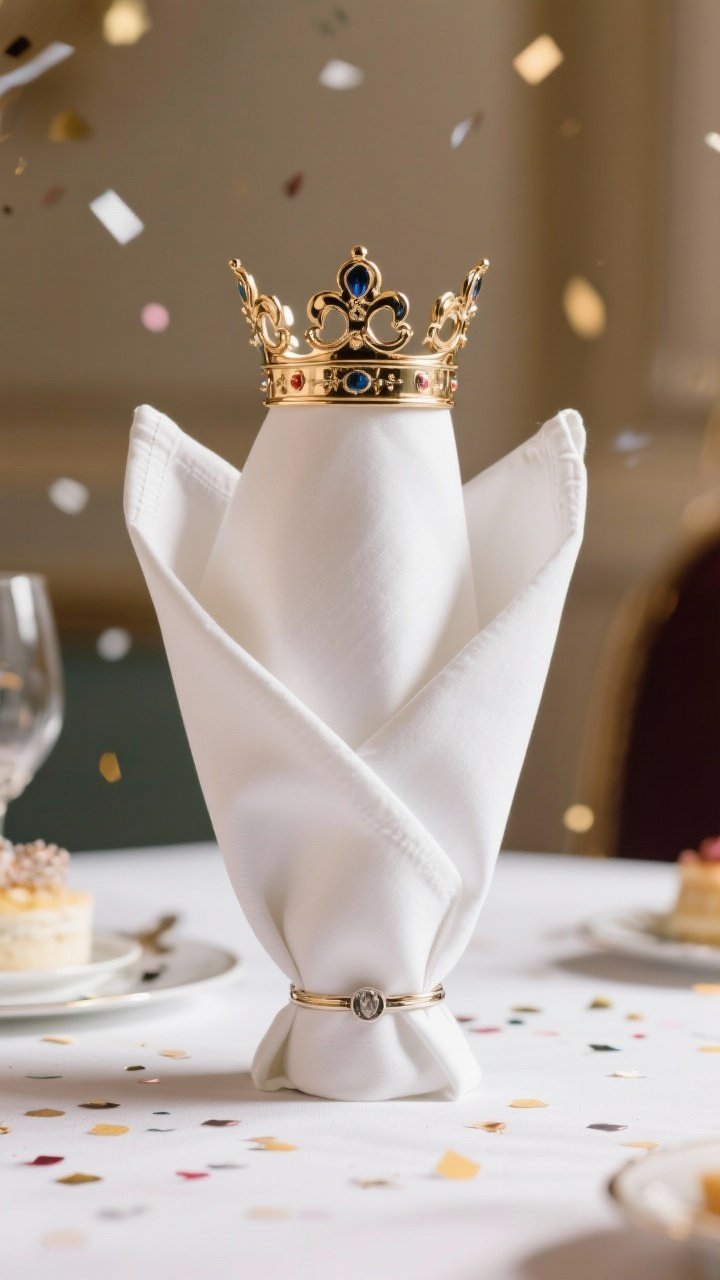
The Crown Fold stands tall and proud like the centrepiece it is. A classic for banquets and holiday tables, and yes, it really does look like a crown.
What you need
- 1 stiff, square napkin (linen or well-starched cotton)
- Stable surface and a bit of patience
- Optional: napkin ring to secure the base
How to fold it
- Lay the napkin in a diamond. Fold the bottom corner up to the top to form a triangle.
- Fold the left and right corners up to meet the top point, making a diamond.
- Fold the bottom corner up to just below the top tip, leaving a small gap.
- Flip the napkin over. Fold the left and right edges toward the centre so they overlap slightly.
- Roll or tuck one side into the other to form a ring. Stand it upright and gently pull the top layers open to form “crown” points.
Perfect for birthdays, graduations, or any excuse to feel fancy. Place a name card inside the crown for a personal touch. Heavily starched napkins or polyester blends hold crown points best. Limp crowns are a mood killer.
Paper napkin? No. The standing structure demands stiffness that paper can’t provide.
8. The Bread Basket — Doubles as a Warm Roll Cosy
Capsule: The Bread Basket fold turns a large napkin into a functional basket that cradles warm rolls or crackers. It’s one of the few folds that actually does something beyond looking good, and it works best with a 20-inch-plus cotton or linen napkin.
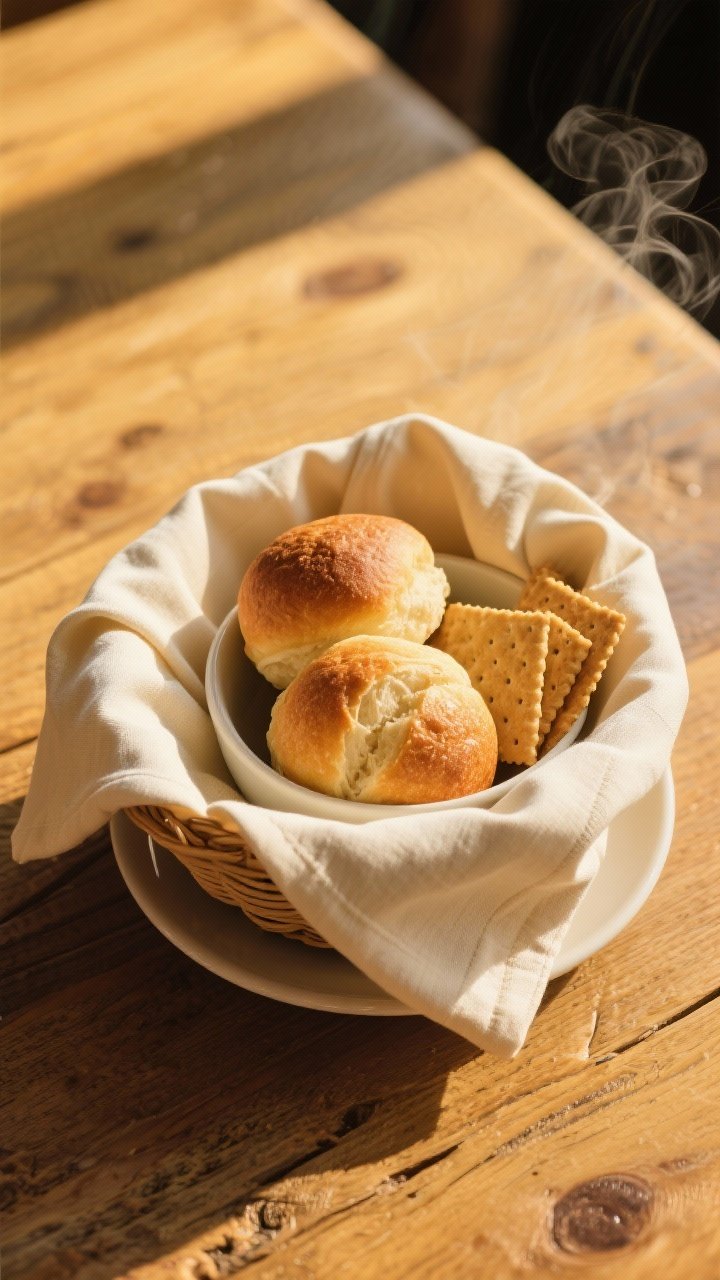
Hosting brunch or soup night? This fold turns a napkin into a mini bread basket that keeps rolls warm and your table adorable. Functional and festive.
What you need
- 1 large square napkin (20–22 inches works best)
- Small bowl or plate for structure (optional)
- Bread rolls, crackers, or cookies for serving
How to fold it
- Lay the napkin flat. Fold each corner toward the centre to make a smaller square.
- Repeat once more so you have a compact square.
- Place one hand on top and carefully flip the napkin over.
- Fold the corners to the centre again, but don’t flatten too hard.
- Gently pull out the flaps from underneath each side to create pockets. These are your basket walls.
- Place the napkin into a shallow bowl or on a small plate and open the pockets. Tuck rolls inside.
Keep the basket on the table for cosy vibes. Use two layered napkins in contrasting colours for a pretty liner effect. Pre-warm the napkin fresh from the dryer and transfer quickly to keep bread toasty.
Paper napkin? No. The pocket-pulling step and the weight of bread need real fabric.
9. The Silverware Roll With Ribbon — Makes Weeknights Look Planned
Capsule: The Silverware Roll is the fastest fold alongside the Pocket Envelope — 30 seconds, any fabric, any occasion. It’s ideal for picnics, buffets, and large gatherings where guests serve themselves.
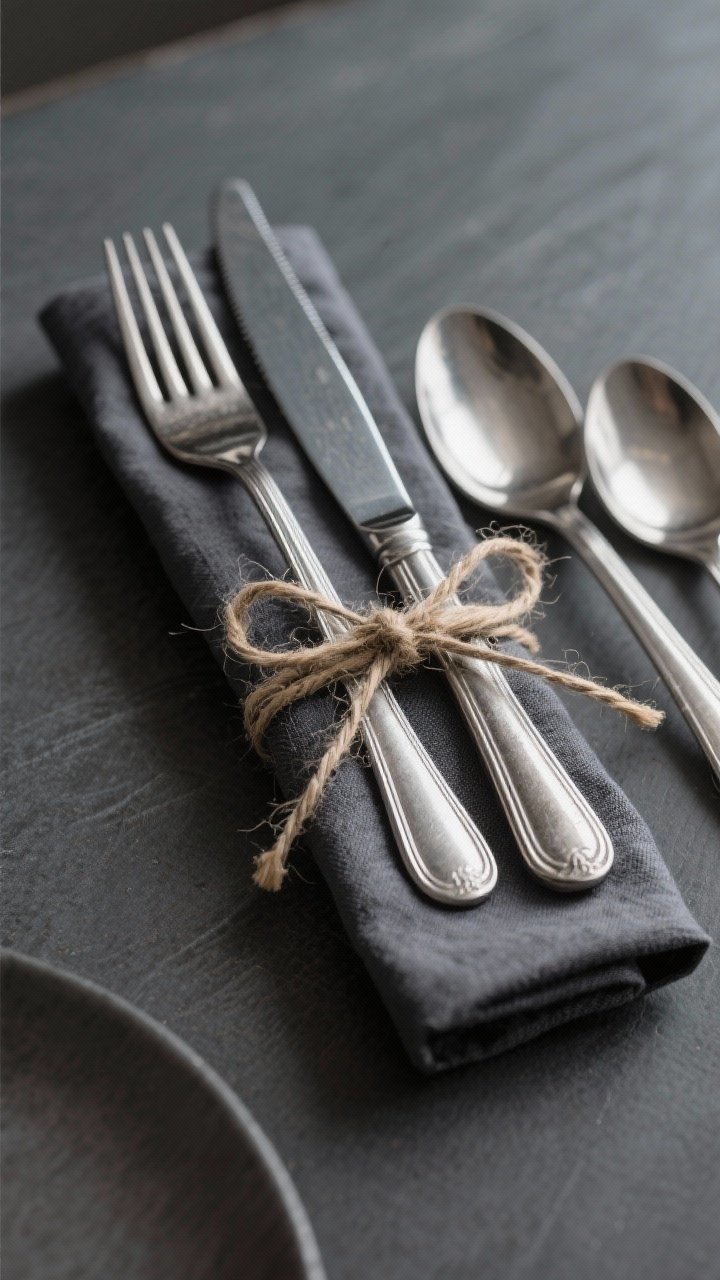
Simple, sleek, and great for casual dinners or buffets. The Silverware Roll keeps everything neat and portable, ideal for picnics and big gatherings where people serve themselves.
What you need
- 1 rectangular napkin (or fold a square into a rectangle)
- Fork, knife, spoon (or any combo)
- Thin ribbon, twine, or napkin ring
How to fold it
- Lay the napkin flat, short side toward you. Fold the bottom edge up about 3–4 inches to create a pocket.
- Place the silverware side by side inside the pocket near the left edge.
- Fold the left side over the silverware snugly.
- Roll the bundle tightly toward the right.
- Secure with ribbon, twine, or a napkin ring around the centre.
Line these up in a basket for easy grab-and-go. Slip a sprig of herbs under the ribbon for colour. Choose a napkin that isn’t too thick or the roll gets bulky. Nobody wants a burrito-sized cutlery roll.
Paper napkin? Yes. A sturdy paper napkin handles a simple roll without issue. Just don’t pull the twine too tight.
10. The Waterfall Drape — “I Woke Up Like This”
Capsule: The Waterfall Drape is the easiest fold in this guide — 20 seconds, no folding skill required. It cascades over the plate edge or under a charger, and it’s the go-to for modern, editorial-style tables.
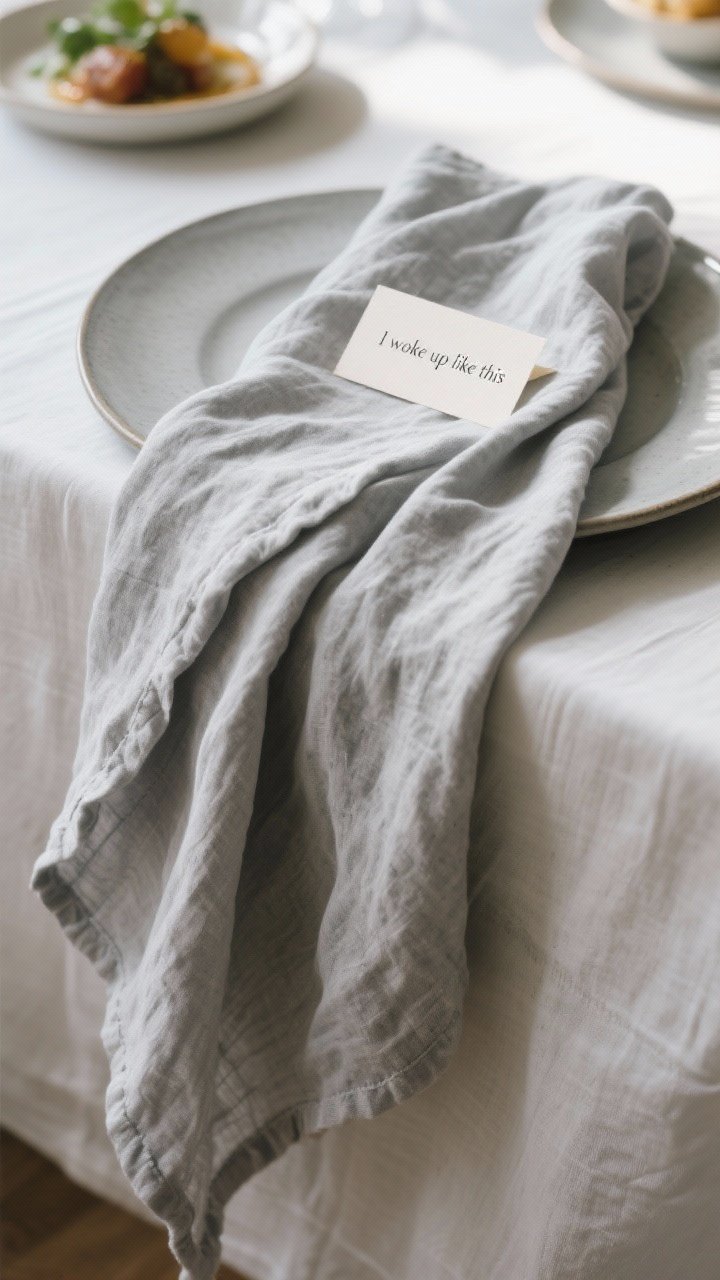
Effortless and chic. The Waterfall Drape is what you use when you want drama without fuss. It cascades over the plate or under the charger with just enough flair to feel styled but not stiff.
What you need
- 1 large rectangular napkin (linen or stonewashed cotton looks stunning)
- Charger plate or dinner plate
- Optional: place card or napkin weight
How to fold it
- Fold the napkin in thirds lengthwise to create a long, clean panel.
- Lay one end under the charger plate so it anchors the napkin, with the long tail draping down the front of the table edge.
- Centre your dinner plate on top (if using a charger) so the napkin peeks out and cascades evenly.
- Smooth lightly and add a place card or small decorative element at the top where the napkin meets the plate.
Use this for modern, minimalist tables. Angle the drape slightly for asymmetry. A heavier napkin gives that luxe waterfall effect; thin napkins can look flimsy, so double-layer if needed. See the full waterfall fold guide for a deep dive on this technique.
Paper napkin? No. The drape effect relies on the weight and flow of real fabric.
Which Fabric Holds Which Fold (And Why)
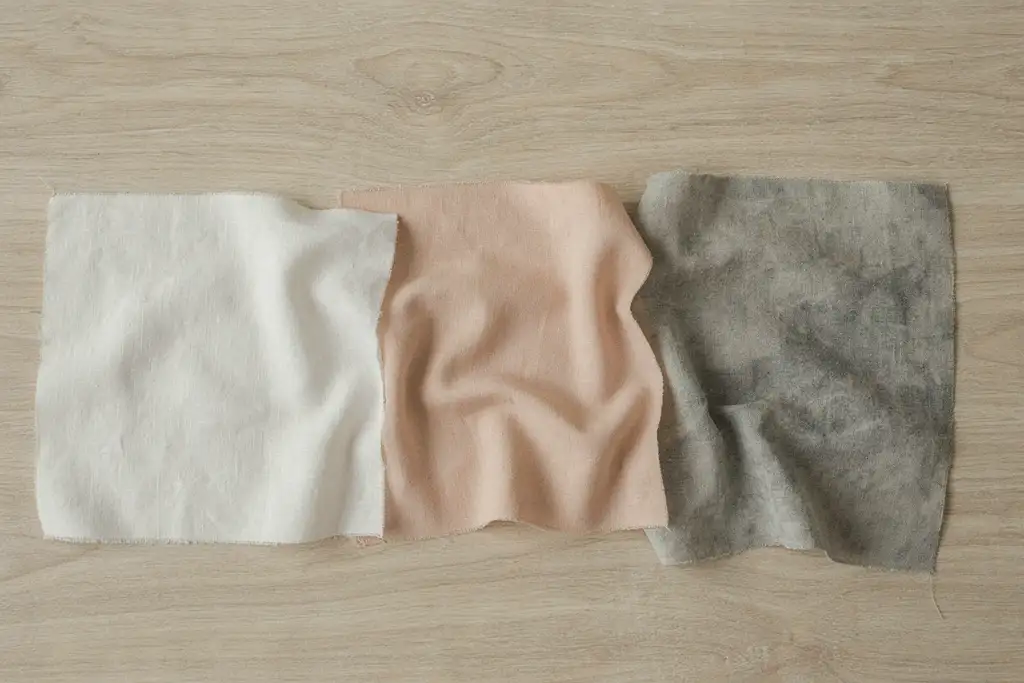
Capsule: The napkin fabric determines whether a fold stands, blooms, or collapses. Linen holds crisp architectural shapes; soft cotton makes sculptural blooms; polyester blends offer durability and sharp pleats at a lower price.
The reason matters more than most guides let on. [SERP] Fabric stiffness, measured in GSM (grams per square metre) and weave tightness, controls how well a fold holds its shape. A 200 GSM linen napkin starched lightly will stand as a Bishop’s Hat for hours. The same fold in a 120 GSM cotton napkin will wilt before the appetiser arrives.
| Fabric | Best For | Avoid For | Starch? | Care Notes |
|---|---|---|---|---|
| Linen | Crisp folds: Bishop’s Hat, Crown, French Tuxedo | Soft blooms (too stiff) | Light spray for standing folds | Wash warm, iron while damp |
| Cotton (medium-weight) | Versatile: works for nearly all folds | None (the safest choice) | Optional | Machine wash, tumble dry low |
| Soft cotton / gauze | Sculptural blooms: Rose, Bread Basket | Standing folds (too floppy) | No | Gentle cycle, air dry |
| Polyester blend | Durability, sharp pleats: Lotus Fan, Crown | Soft, romantic looks | Rarely needed | Machine wash, wrinkle-resistant |
| Stonewashed linen | Drapes: Waterfall, relaxed settings | Any fold requiring crisp edges | No | Machine wash, embrace the texture |
| Paper | Simple folds only: Pocket Envelope, Silverware Roll | Everything sculptural or standing | N/A | Use heavyweight (2-ply minimum) |
One practical rule: if you’re buying napkins specifically for folding, get 18–20 inch squares in medium-weight cotton. They handle every fold on this list except the Bread Basket (which needs 20+ inches) and the Waterfall Drape (which prefers a rectangle).
Occasion-Matching Guide: Pick the Right Fold in 10 Seconds
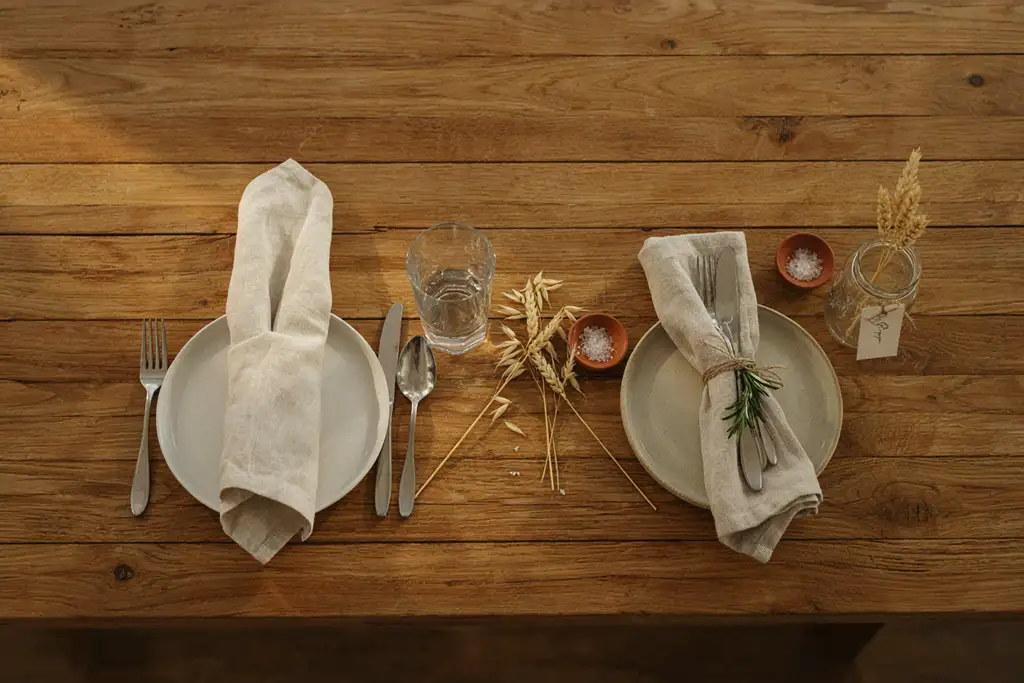
Capsule: Not every fold fits every meal. This table matches common occasions to the folds that work best, so you don’t waste time on a rose bloom when a pocket fold would do.
| Occasion | Best Fold(s) | Why | Napkin Colour Hint |
|---|---|---|---|
| Weeknight dinner | Pocket Envelope, Silverware Roll | Fast, clean, no fuss | White, grey, any solid |
| Dinner party (formal) | Bishop’s Hat, French Tuxedo | Architectural, impressive | White, navy, black |
| Birthday celebration | Crown Fold | Festive, photograph-ready | White, gold, or birthday colour |
| Brunch / shower | Rose Bloom, Lotus Fan | Soft, romantic, photogenic | Blush, sage, pastels |
| Picnic / outdoor | Silverware Roll, Pocket Envelope | Wind-resistant, portable | Earth tones, checks |
| Buffet / large crowd | Silverware Roll, Pocket Envelope | Fast to produce at scale | Match the tablecloth |
| Date night | Rose Bloom, Waterfall Drape | Romantic without trying too hard | Blush, deep red, ivory |
| Holiday (Christmas, Easter) | Crown Fold, Bishop’s Hat | Traditional, celebratory | Seasonal colours |
| Modern / editorial table | Waterfall Drape, Pocket Envelope | Clean lines, minimal effort | Stonewashed grey, oatmeal |
| Farm-to-table / rustic | Leaf Fold, Lotus Fan | Organic, natural textures | Forest green, terracotta, ochre |
Multi-Angle Guide: Which Fold for Whom and Where
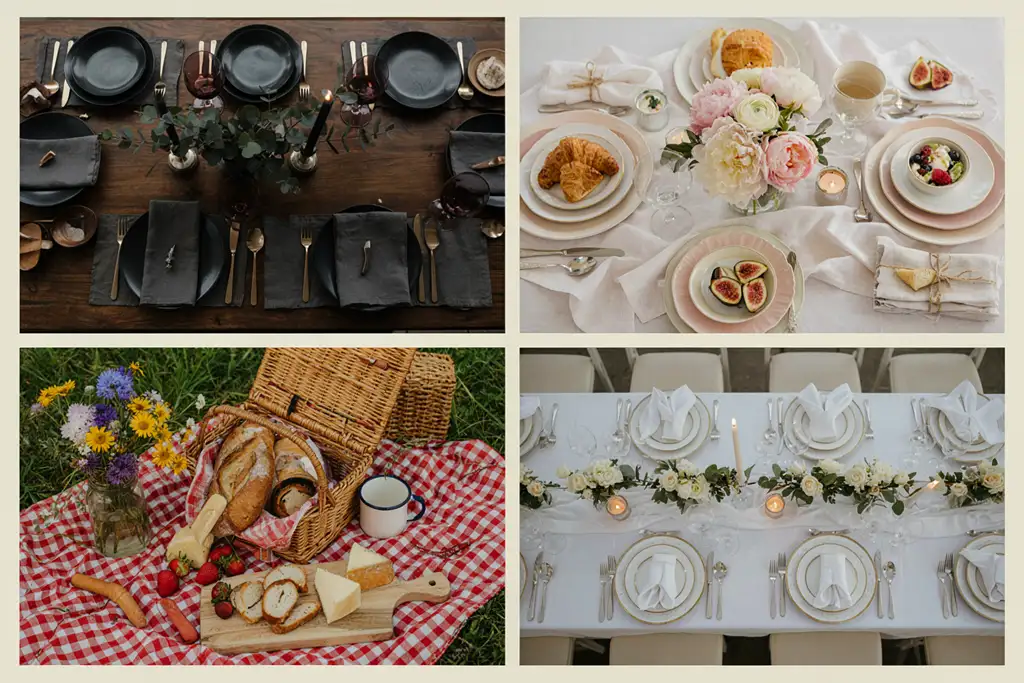
Capsule: The “right” fold changes depending on who’s hosting, who’s eating, and where the meal happens. This table breaks it down by host style, guest mix, and setting.
| Angle | Go-To Fold | Why It Works | Pair With |
|---|---|---|---|
| Men hosting a dinner party | French Tuxedo or Bishop’s Hat | Clean, structured, reads intentional without feeling fussy | Dark wood table, simple white plates |
| Women hosting brunch | Rose Bloom or Lotus Fan | Soft, photogenic, pairs with pastels and florals | Mismatched vintage cups, edible flowers |
| Older guests / traditional meal | Bishop’s Hat or Silverware Roll | Familiar, elegant, doesn’t feel gimmicky | Crisp white linen, silver flatware |
| Younger crowd / casual gathering | Pocket Envelope or Waterfall Drape | Modern, low-effort-cool, Instagram-ready | Kraft paper runner, ceramic mugs |
| Family with children | Silverware Roll or Pocket Envelope | Durable, fast to replace if unfolded, no delicate petals to crush | Wipeable placemats, unbreakable cups |
| Formal setting (wedding, anniversary) | Bishop’s Hat, Crown Fold, or French Tuxedo | Architectural, photograph-ready, signals effort | Chargers, crystal, taper candles |
| Casual picnic or park outing | Silverware Roll | Portable, wind-resistant, doubles as a carrying pouch | Checkered blanket, mason jars |
| Fair or festival-style buffet | Silverware Roll or Pocket Envelope | High volume, fast to produce, guests grab and go | Baskets, wooden crates |
| Plated service (restaurant-style) | Waterfall Drape or Bishop’s Hat | Each plate gets its own statement, individual not communal | White plates, minimal centrepiece |
| Social / standing mixer | Pocket Envelope (with menu card) | Guests can read the menu; napkin doubles as info card | High tables, cocktail napkins |
What Most Guides Get Wrong About Napkin Folding
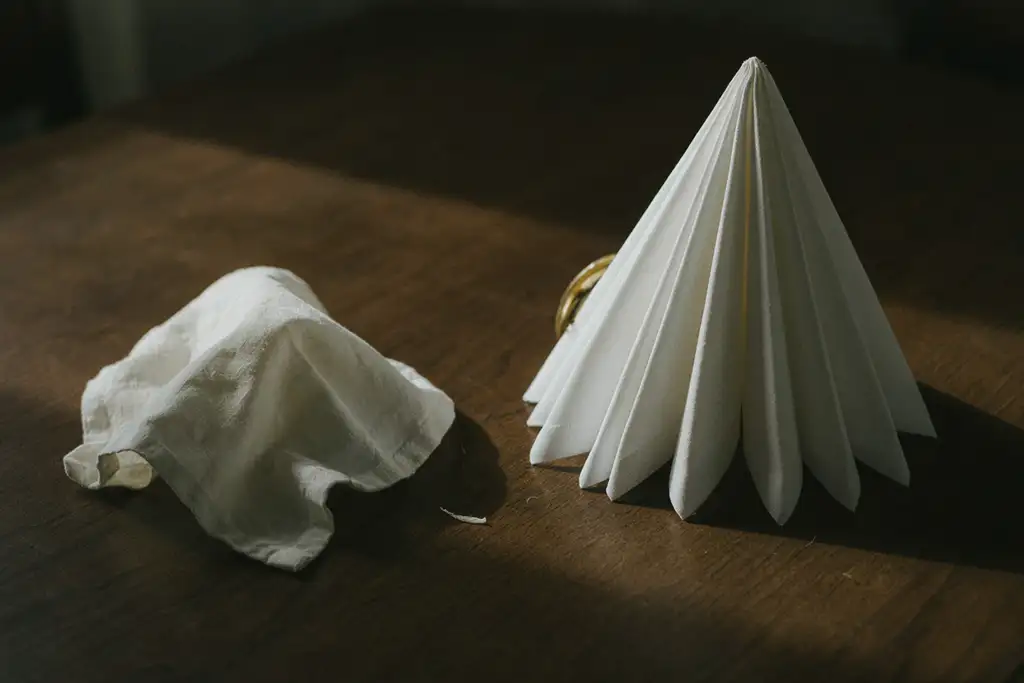
Capsule: The three mistakes that appear across almost every napkin folding guide online: skipping the fabric conversation, showing only the hardest folds, and ignoring the time cost for large gatherings.
1. They ignore fabric. A fold that looks stunning in 200 GSM linen will collapse in a thin cotton napkin from a discount store. Most guides show the fold without naming the fabric or explaining why it matters, so readers try it with whatever they have and wonder why theirs looks nothing like the photo.
For a dinner party of eight, that’s 40 minutes of folding. Most people need the Pocket Envelope or the Silverware Roll, not a swan.
3. They don’t account for scale. Folding for four is a different task from folding for forty. A guide that shows you a 12-step fold without mentioning that it takes three minutes per napkin isn’t helping you plan a wedding reception for 80 guests. The cheat sheet at the top of this article exists for exactly this reason: match the fold to the guest count and your available time.
Frequently Asked Questions
What is the easiest napkin fold?
The Waterfall Drape takes 20 seconds and requires no folding skill. Just fold in thirds and let it cascade. For a fold that holds silverware, the Pocket Envelope and the Silverware Roll both take about 30 seconds.
What size napkin is best for folding?
18 to 20 inches square covers most folds on this list. The Bread Basket needs a larger napkin (20–22 inches), and the Waterfall Drape prefers a rectangular shape. Anything smaller than 17 inches will feel cramped in the sculptural folds.
What fabric is best for napkin folding?
Medium-weight cotton is the safest all-rounder. It handles every fold here. Linen is best for crisp standing folds like the Bishop’s Hat and Crown. Soft cotton works for the Rose Bloom. Avoid silk (too slippery) and very thin synthetics (they won’t hold shape).
Do you iron napkins before folding them?
For formal folds (Bishop’s Hat, French Tuxedo, Crown), yes, iron while the fabric is slightly damp or use a steam setting. For casual folds like the Waterfall Drape or the Leaf Fold, skip it; a bit of natural texture adds to the look.
How far in advance can you fold napkins for an event?
Up to 48 hours ahead. Store folded napkins flat in a large ziplock bag or between sheets of tissue paper to prevent unfolding and creasing. Standing folds like the Bishop’s Hat and Crown should be folded the day of. They lose their shape overnight.
How do you keep folded napkins from unfolding?
Light starch spray adds grip. For rolls and pouches, a napkin ring or twine holds them in place. For standing folds, make sure the fabric is starched and the tuck is tight. A quick pass with a steamer after folding “sets” the creases.
Can you use paper napkins for decorative folding?
Only for simple folds. The Pocket Envelope and the Silverware Roll work well with heavyweight paper napkins (2-ply minimum). Sculptural folds like the Rose Bloom or standing folds like the Bishop’s Hat need real fabric.
How do you fold a napkin like a restaurant?
Restaurants typically use the Pocket Envelope (silverware pouch), the Presidential fold (simple rectangle), or the standing fan. The key is consistency. Every place setting gets the same fold, ironed, in the same fabric. Speed matters more than complexity.
The Bottom Line
Start with the Pocket Envelope for a quick win tonight. When you want to show off, the Bishop’s Hat and Crown Fold deliver the most reaction for the least effort. And if you’re hosting a crowd, the Silverware Roll scales to any guest count without burning through your prep time.
One thing I’d do this week: grab four cotton napkins (18–20 inches, medium weight), practise the three folds you’ll use most, and time yourself. Once you can do each in under a minute, you’ll never reach for a napkin ring again.
Pair these folds with the right tablecloth
how to sit gracefully once you’re seated
📌 Pin this cheat sheet for your next dinner party. The fold table alone is worth saving.
How do you fold the gray square one on your Ten napkin folding ideas. It’s not one of the ten
That elegant fold is known as the Bird of Paradise. It’s a classic choice because it adds vertical height to a table setting without being overly complicated once you get the rhythm of the folds down.
To achieve this look, it is best to use a square cloth napkin that has been starched; a floppy napkin won’t hold the “feathers” upright.
Step-by-Step Instructions
The Base Square: Lay the napkin flat. Fold it in half, then fold it in half again to create a smaller square. Ensure the open corners (the edges not on a fold) are facing away from you at the top right.
The Triangle: Fold the square diagonally by bringing the bottom-left corner up to the top-right corner. You should now have a triangle with the open corners at the peak.
The Diamond: Pivot the triangle so the open peak is facing away from you. Fold the right side toward the center line, then fold the left side toward the center line. It should now look like a kite or a diamond shape.
Tuck the Bottom: Take the two bottom flaps that are hanging below the diamond shape and fold them underneath so you have a clean triangle shape again.
The Fold Back: Fold the entire triangle in half vertically along the center line, so the “flaps” are on the outside.
The Lift: Set the napkin down on its base. While holding the base firmly with one hand, gently pull up the four layers of the open corner one by one.
Pro-Tips for Success
Ironing is Key: If your napkin isn’t staying crisp, give it a quick press with an iron and a little spray starch before you start.
Placement: This fold looks best when placed directly in the center of the dinner plate or slightly to the left of the forks.
The “Plume”: When pulling the layers up in the final step, pull them to different heights to create that tiered, feathered effect seen in your photo.