Potato Samosas With Filo Pastry – Crisp, Light, and Comforting
· Samantha Jones
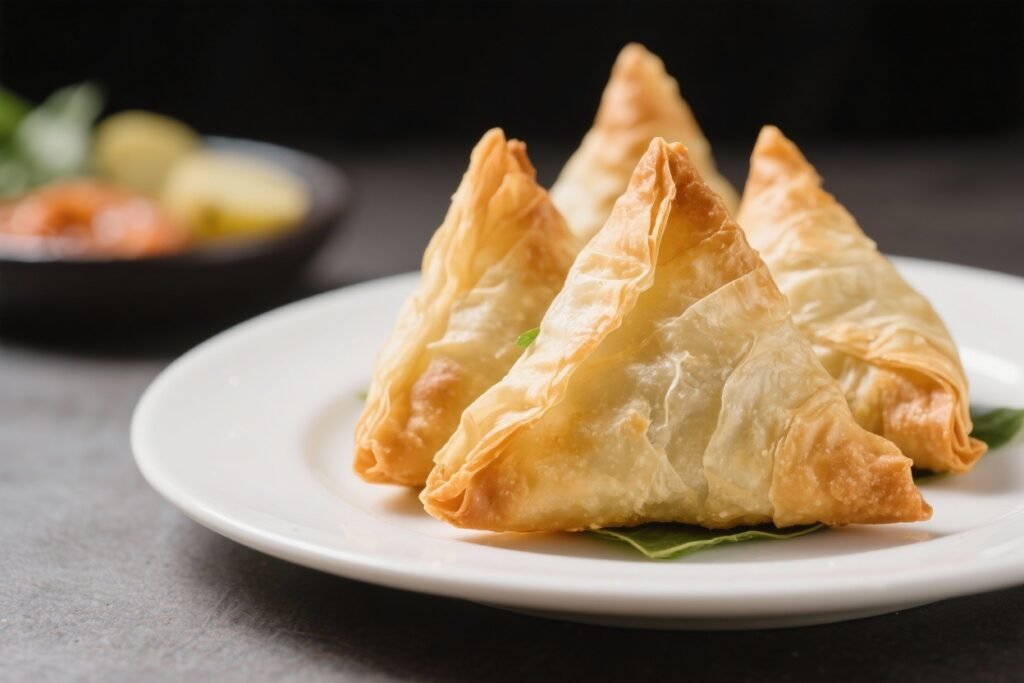
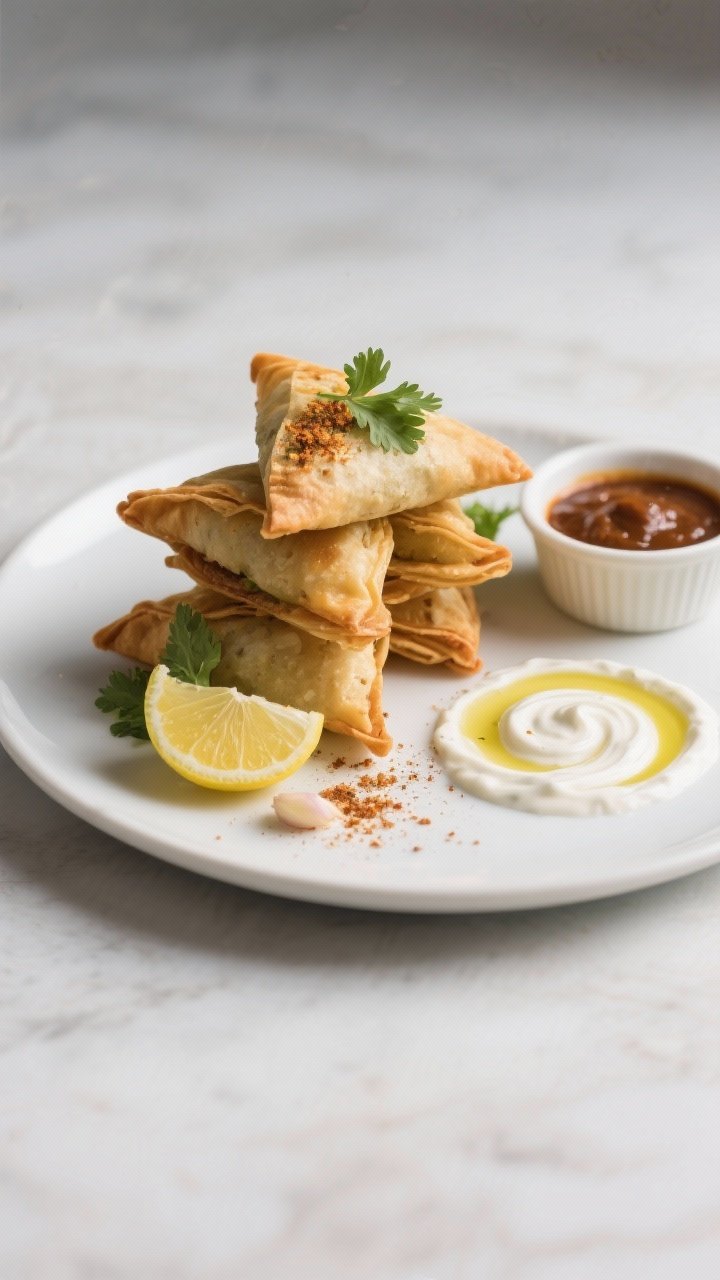
Samosas are the kind of snack that makes everyone linger in the kitchen, waiting for the next batch to come out. This version uses filo pastry, so you still get that addictive crunch without the heavy, oily feel of a deep-fried shell. The filling is classic and cozy: spiced potatoes, peas, and a hint of lemon.
They’re simple enough for a weeknight, yet impressive enough to serve at a party. Make a batch, and watch them disappear.
What Makes This Recipe So Good

Potato Samosas With Filo Pastry - Crisp, Light, and Comforting
Ingredients
- 6–7 sheets filo pastry, thawed if frozen
- 3 medium potatoes, peeled and diced
- 1/2 cup frozen peas
- 1 small onion, finely chopped
- 2 cloves garlic, minced
- 1-inch piece fresh ginger, grated
- 1 green chili, finely chopped (optional, adjust to taste)
- 2 tablespoons neutral oil (plus more for brushing)
- 1 teaspoon cumin seeds
- 1 teaspoon ground cumin
- 1 teaspoon ground coriander
- 1/2 teaspoon turmeric
- 1/2 teaspoon garam masala
- 1/2 teaspoon red chili powder or paprika (optional)
- Juice of 1/2 lemon (about 1–2 tablespoons)
- 2 tablespoons chopped fresh cilantro
- Salt and black pepper to taste
- 2–3 tablespoons melted butter or oil for brushing the filo
Instructions
- Boil the potatoes: Add diced potatoes to a pot of salted water. Simmer until just tender, about 10–12 minutes. Drain well and set aside to steam dry.
- Sauté the aromatics: Warm 2 tablespoons oil in a skillet over medium heat. Add cumin seeds and let them sizzle for 30 seconds. Stir in onion and cook until translucent, 5–6 minutes. Add garlic, ginger, and green chili; cook 1 minute more.
- Spice it up: Add ground cumin, coriander, turmeric, garam masala, and chili powder or paprika. Stir for 30 seconds to bloom the spices.
- Finish the filling: Add the peas and cooked potatoes. Stir gently to coat. Season with salt and pepper. Cook for 2–3 minutes to let flavors meld. Turn off the heat, add lemon juice and cilantro, and mash lightly so the mixture holds together but still has texture. Let it cool completely.
- Prep the filo: Heat oven to 375°F (190°C). Line a baking sheet with parchment. Keep filo covered with a slightly damp kitchen towel to prevent drying. Melt butter or warm oil for brushing.
- Create strips: Place one sheet of filo on the counter and brush lightly with butter or oil. Fold it lengthwise into thirds to create a long strip. Cut the strip in half crosswise to make two manageable lengths. Repeat with remaining sheets.
- Fill and fold: Place 1–2 tablespoons of the potato filling at one end of a strip. Fold the corner over to form a triangle, then keep folding the triangle along the strip (like a flag) to encase the filling. Brush the last flap with a bit of butter or oil to seal. Repeat with all strips.
- Bake: Arrange samosas on the lined tray. Brush tops lightly with more butter or oil. Bake 18–22 minutes, flipping halfway, until golden and crisp.
- Serve: Let them rest for 5 minutes. Serve warm with mint chutney, tamarind chutney, or a simple yogurt sauce with lemon and salt.
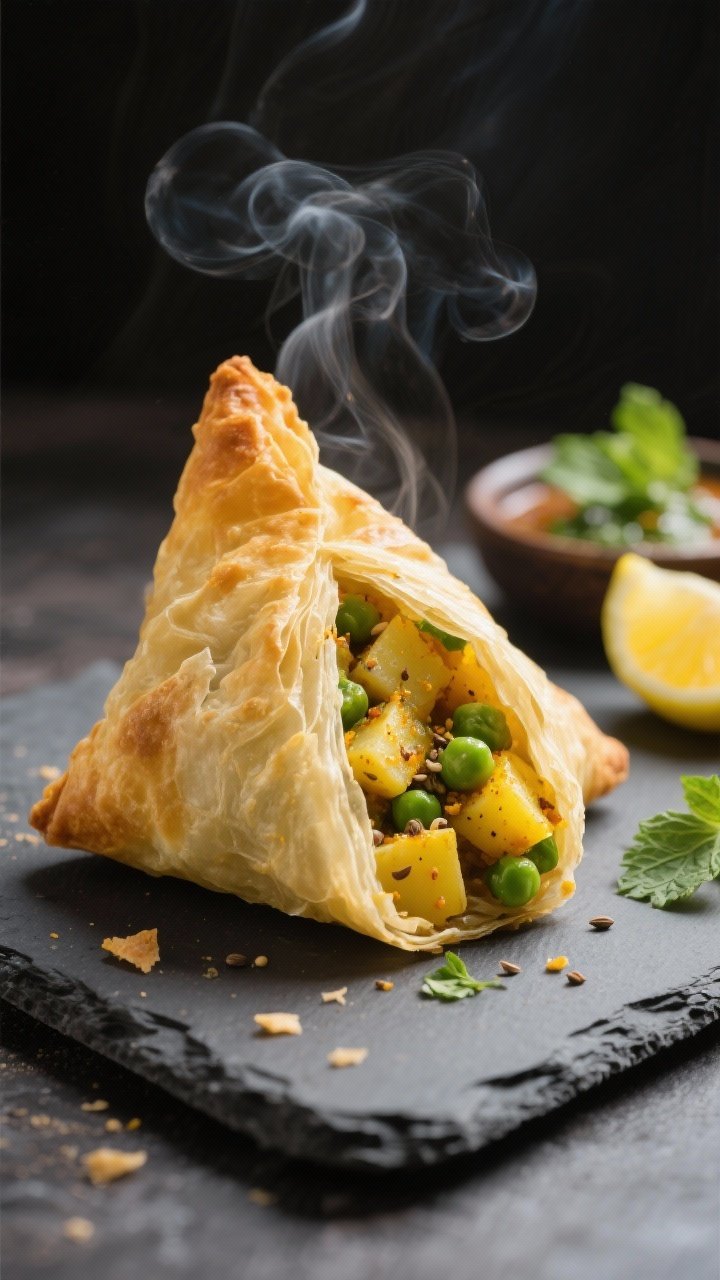
- Light and crispy: Filo pastry bakes up beautifully thin and flaky, so you get crunch without the grease.
- Big flavor, simple method: Everyday spices and pantry ingredients create bold, warm flavors.
- Make-ahead friendly: Assemble and freeze unbaked samosas for quick snacks or easy appetizers.
- Versatile: Great with chutney, yogurt, or a squeeze of lemon. Works as a snack, side, or light lunch.
- Vegetarian and crowd-pleasing: A filling that satisfies everyone at the table.
Ingredients
- 6–7 sheets filo pastry, thawed if frozen
- 3 medium potatoes, peeled and diced
- 1/2 cup frozen peas
- 1 small onion, finely chopped
- 2 cloves garlic, minced
- 1-inch piece fresh ginger, grated
- 1 green chili, finely chopped (optional, adjust to taste)
- 2 tablespoons neutral oil (plus more for brushing)
- 1 teaspoon cumin seeds
- 1 teaspoon ground cumin
- 1 teaspoon ground coriander
- 1/2 teaspoon turmeric
- 1/2 teaspoon garam masala
- 1/2 teaspoon red chili powder or paprika (optional)
- Juice of 1/2 lemon (about 1–2 tablespoons)
- 2 tablespoons chopped fresh cilantro
- Salt and black pepper to taste
- 2–3 tablespoons melted butter or oil for brushing the filo
Step-by-Step Instructions
- Boil the potatoes: Add diced potatoes to a pot of salted water.Simmer until just tender, about 10–12 minutes. Drain well and set aside to steam dry.
- Sauté the aromatics: Warm 2 tablespoons oil in a skillet over medium heat. Add cumin seeds and let them sizzle for 30 seconds.Stir in onion and cook until translucent, 5–6 minutes. Add garlic, ginger, and green chili; cook 1 minute more.
- Spice it up: Add ground cumin, coriander, turmeric, garam masala, and chili powder or paprika. Stir for 30 seconds to bloom the spices.
- Finish the filling: Add the peas and cooked potatoes.Stir gently to coat. Season with salt and pepper. Cook for 2–3 minutes to let flavors meld.
Turn off the heat, add lemon juice and cilantro, and mash lightly so the mixture holds together but still has texture. Let it cool completely.
- Prep the filo: Heat oven to 375°F (190°C). Line a baking sheet with parchment.Keep filo covered with a slightly damp kitchen towel to prevent drying. Melt butter or warm oil for brushing.
- Create strips: Place one sheet of filo on the counter and brush lightly with butter or oil. Fold it lengthwise into thirds to create a long strip.Cut the strip in half crosswise to make two manageable lengths. Repeat with remaining sheets.
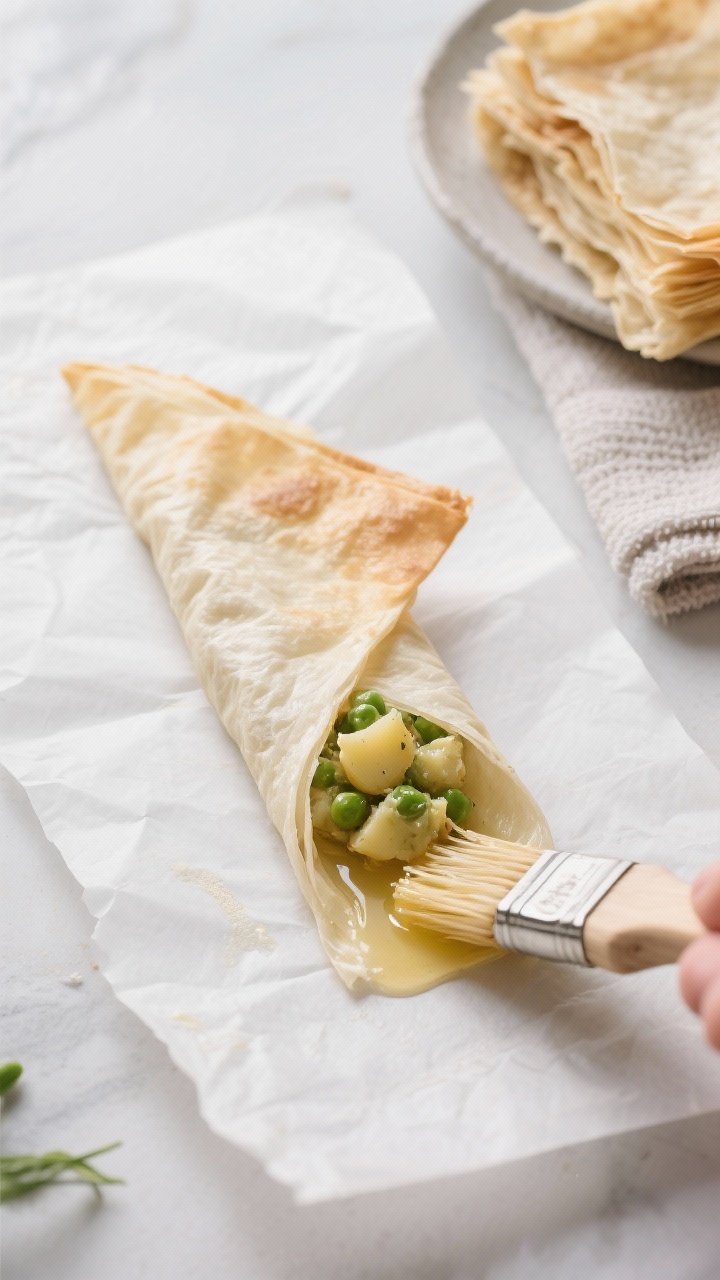
- Fill and fold: Place 1–2 tablespoons of the potato filling at one end of a strip. Fold the corner over to form a triangle, then keep folding the triangle along the strip (like a flag) to encase the filling.Brush the last flap with a bit of butter or oil to seal. Repeat with all strips.
- Bake: Arrange samosas on the lined tray. Brush tops lightly with more butter or oil.Bake 18–22 minutes, flipping halfway, until golden and crisp.
- Serve: Let them rest for 5 minutes. Serve warm with mint chutney, tamarind chutney, or a simple yogurt sauce with lemon and salt.
Keeping It Fresh
- Fridge: Store baked samosas in an airtight container for up to 3 days. Reheat in a 350°F (175°C) oven for 8–10 minutes to re-crisp.
- Freezer (unbaked): Freeze assembled, unbaked samosas on a tray until solid, then transfer to a freezer bag.Bake from frozen at 375°F (190°C) for 22–26 minutes, until golden.
- Freezer (baked): Cool completely, then freeze. Reheat at 350°F (175°C) for 12–15 minutes.
- Moisture control: Let the filling cool fully before assembling, and avoid overfilling to keep the pastry crisp.
Why This is Good for You
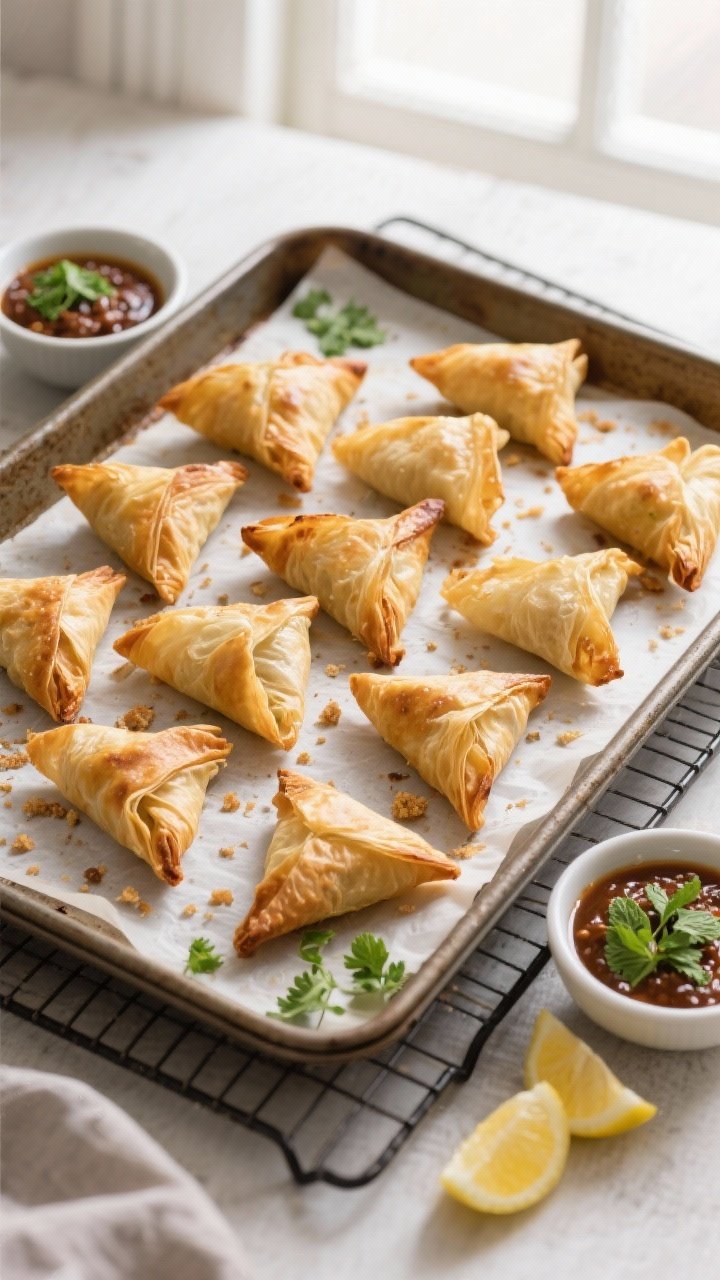
- Less oil, more crunch: Baking and using filo reduces fat compared to deep-fried samosas, while staying satisfyingly crisp.
- Fiber and vitamins: Potatoes and peas provide fiber, vitamin C, potassium, and plant-based protein.
- Spice benefits: Ginger, turmeric, and cumin bring antioxidants and digestive support, plus loads of flavor without extra calories.
- Customizable nutrition: Add spinach, cauliflower, or chickpeas for extra nutrients and variety.
Common Mistakes to Avoid
- Wet filling: If the potato mixture is steamy or watery, the pastry turns soggy. Cool the filling completely and let potatoes steam dry after boiling.
- Overworking filo: Filo dries out fast.Keep it covered with a damp towel and work quickly. Brush lightly; too much butter or oil can make it greasy.
- Overfilling: Too much filling makes leaks and tears. One to two tablespoons per samosa is enough.
- Skipping the flip: Turn the samosas halfway through baking for even browning and crisp edges.
- Undersalting: Taste the filling before assembling.A well-seasoned filling makes all the difference.
Alternatives
- Different fillings: Try sweet potato and black beans, curried cauliflower and peas, or paneer and spinach. Keep the texture somewhat chunky so it holds together.
- Gluten-free option: Use gluten-free phyllo if available, or wrap the filling in rice paper and bake or air-fry for a different texture.
- Air fryer: Cook at 360°F (180°C) for 10–14 minutes, flipping once, until crisp and golden.
- Spice swaps: Add mustard seeds instead of cumin seeds, or use chaat masala at the end for a tangy finish.
- Dipping sauces: Mint-cilantro chutney, tamarind-date chutney, garlic yogurt, or even mango chutney for sweetness.
FAQ
Can I make the filling ahead of time?
Yes. Make the filling up to 2 days in advance and keep it in the fridge.
Bring it to room temperature before assembling so the pastry doesn’t soften.
Do I have to use butter for brushing?
No. Neutral oil works well and keeps the samosas lighter. For extra flavor, mix oil with a bit of melted butter or ghee.
How do I keep the filo from tearing?
Work gently and keep it covered with a damp towel.
If a sheet tears, just patch it by overlapping another small piece and brushing with a little butter or oil.
Can I add other vegetables?
Absolutely. Finely diced carrots, cauliflower, or spinach work nicely. Sauté or steam extra vegetables to remove moisture before mixing into the filling.
What if I want them spicier?
Increase the green chili or add more chili powder.
You can also serve with a spicy chutney to boost heat at the table.
How many samosas does this make?
Depending on how large you fold them, you’ll get about 14–18 small samosas from 6–7 filo sheets. If you prefer larger samosas, expect fewer.
Can I pan-fry instead of baking?
You can shallow-fry in a thin layer of oil over medium heat, turning often, until golden. Filo is delicate, so handle with care and don’t let the oil run too hot.
Why did my samosas leak?
Likely overfilling or a warm, wet filling.
Use less filling, cool it completely, and fold tightly, sealing the final flap with butter or oil.
What’s the best way to serve them?
Serve hot with chutney and a wedge of lemon. They pair well with a simple cucumber raita or a crisp salad.
In Conclusion
Potato samosas with filo pastry are a fast, lighter take on a beloved classic. The flaky layers stay crisp, the filling is warmly spiced, and the whole process is manageable for home cooks of any level.
Keep a stash in the freezer, and you’ll always have something special to serve guests or enjoy as an easy snack. One bite, and you’ll see why this version becomes a staple.
Printable Recipe Card
Want just the essential recipe details without scrolling through the article? Get our printable recipe card with just the ingredients and instructions.
Leave a Reply